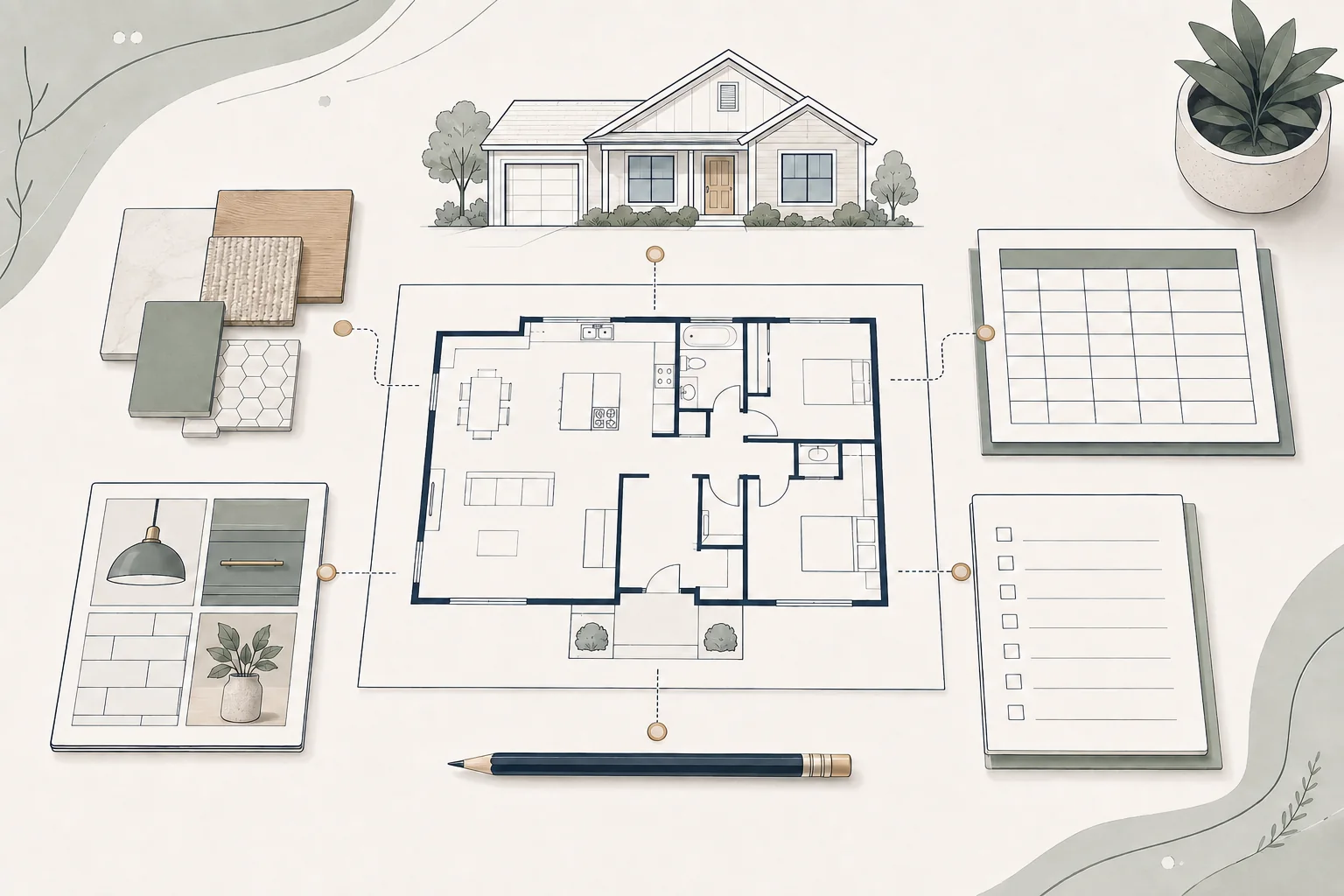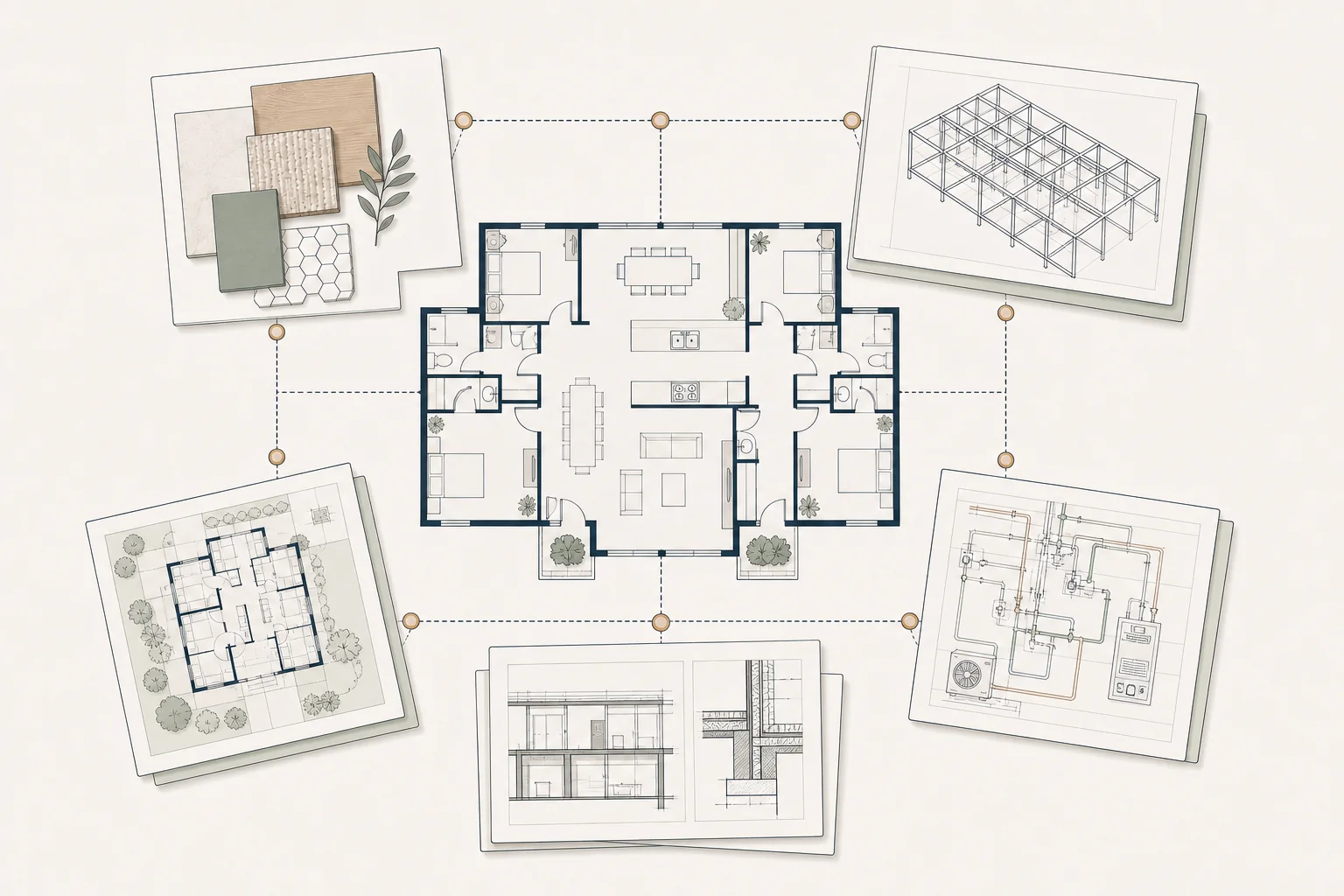
What Is the Foundation Renovation Roadmap™?
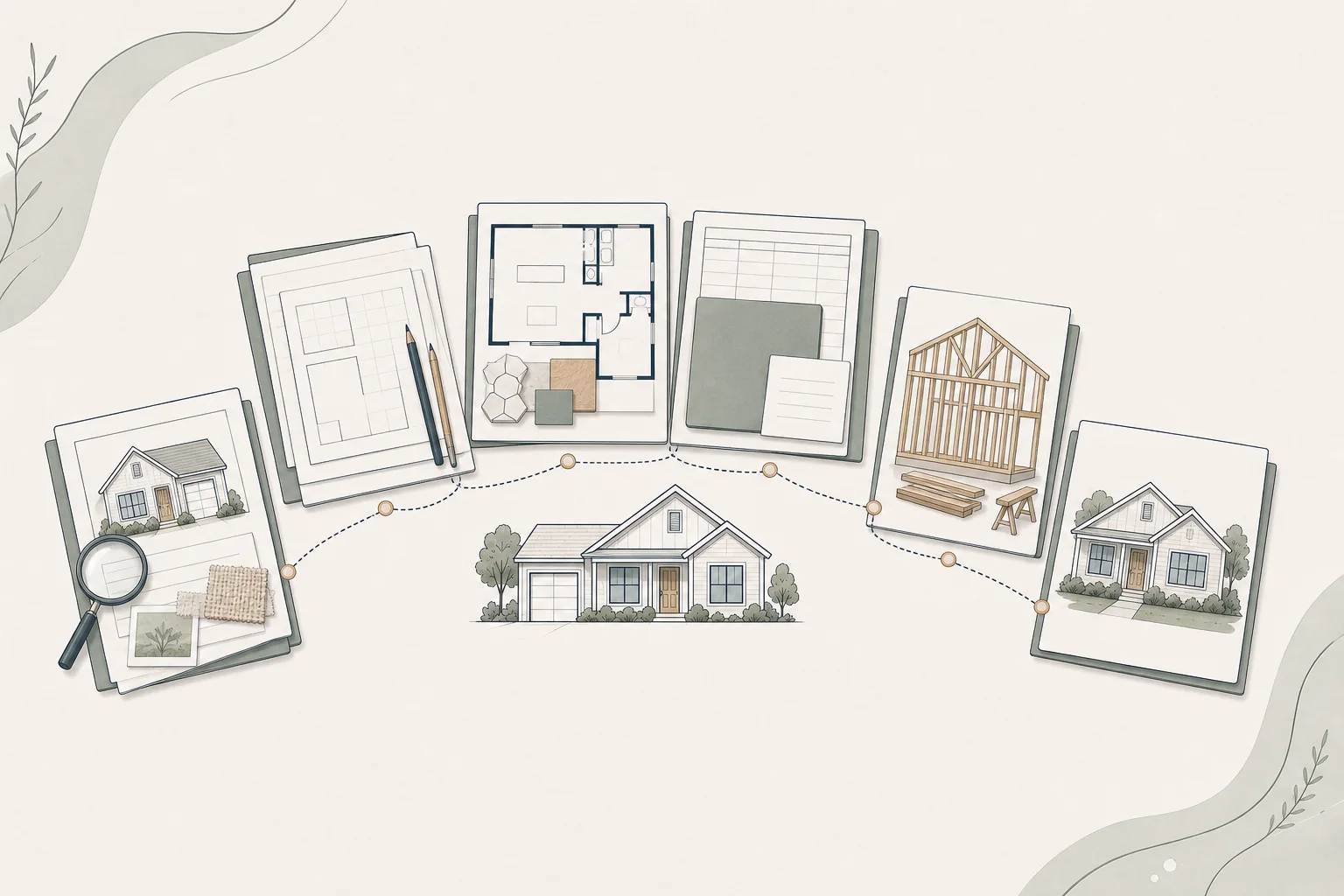
The Foundation Renovation Roadmap™ organizes a home renovation into six connected phases: Discover, Plan, Design, Prepare, Build, and Complete. It helps homeowners understand where their project stands, which decisions deserve attention now, and what information should be in place before the next major commitment.
A home renovation does not begin with demolition and it does not end when the contractor leaves. The full process starts when a homeowner identifies a problem or opportunity and continues through planning, design, preparation, construction, and deliberate project closeout.
This is a homeowner decision framework—not a construction schedule. A contractor's schedule may show demolition, framing, rough-in work, inspections, finishes, and punch-list activities. The Roadmap begins earlier and looks more broadly at the goals, financial boundaries, team structure, design information, household preparation, construction decisions, and closeout records that shape the entire renovation.
For a detailed action-oriented guide to planning a project, read How to Plan a Home Renovation. This article focuses on understanding the overall sequence and identifying the phase that owns your next important decision.
Because project requirements vary by property, jurisdiction, and scope, homeowners should confirm permitting, technical, contractual, financial, insurance, and safety questions with the appropriate agencies and qualified professionals. The Roadmap provides general homeowner education; it does not replace project-specific professional advice.
The six phases at a glance
Discover the problems and desired outcomes. Plan the priorities, financial boundaries, and overall direction. Design a coordinated solution. Prepare the project and household for construction. Build while making informed decisions and maintaining clear records. Complete the remaining work, documentation, and closeout.
Why Renovation Decisions Need an Overall Framework
Decisions made in one phase often create the conditions for the next. Goals influence the scope. Scope and existing conditions influence the budget and team. Design decisions affect pricing, permits, selections, and construction. Changes during construction can affect schedule, cost, and closeout.
The framework helps homeowners notice those relationships. It does not guarantee a problem-free renovation, and it does not eliminate the need to revisit earlier assumptions. Its value is in making the sequence visible so a homeowner can ask, “What needs to be understood before we move forward?”
That question is especially useful when a project feels stuck. An apparent construction problem may trace back to an unresolved design decision. Bids that cannot be compared may reflect inconsistent scope information. A design that keeps changing may signal that the goals or financial boundaries are not yet clear.
Local requirements also interact with the sequence. In Southern California, the applicable permitting authority and review path depend on the property and proposed work. The City of San Diego provides current information about its permits and approvals, but a San Diego-area property may fall under another city or San Diego County. Confirm the governing jurisdiction and project requirements before relying on assumptions about approvals or timing.
Discover: Understand Why the Renovation Matters
Discover is the phase for understanding the problems to solve and the outcomes the household wants. It comes before committing to a particular layout, finish, professional, or construction approach.
What belongs in this phase
Homeowners consider how the home works today, what creates frustration, who uses the spaces, how needs may change, and what a successful result would feel like. The goal is not to produce a finished scope. It is to create a clear basis for evaluating future options.
Signs you may be in Discover
- You know parts of the home are not working, but you are unsure what should change.
- Household members have different priorities.
- You are collecting inspiration without a shared definition of success.
- You are deciding whether to renovate, move, phase the work, or do nothing for now.
Questions that move the project forward
- What problems are we actually trying to solve?
- Which outcomes are essential and which are preferences?
- How should the home support us over the next several years?
- What would make the disruption and investment worthwhile?
Plan: Establish Priorities and Direction
Plan turns the discoveries into a practical project direction. This is where goals begin to meet financial boundaries, timing constraints, existing conditions, and decisions about what belongs in the project.
What belongs in this phase
Homeowners organize priorities, identify major budget categories and uncertainties, consider whether work might be phased, and decide what information is needed before design advances. Early team conversations may begin here, but the appropriate participants depend on the project's scope and complexity.
Signs you may be in Plan
- Your goals are becoming clear, but the project boundaries are not.
- You need to test whether the desired outcomes and available investment align.
- You are identifying existing conditions that could affect feasibility.
- You are deciding what needs professional evaluation before design decisions are made.
Questions that move the project forward
- Which priorities must the eventual solution protect?
- What does the whole-project budget need to account for?
- What assumptions remain uncertain?
- Which decisions can wait, and which must be resolved before design?
Design: Develop and Test the Solution
Design translates the project's goals and constraints into a coordinated solution. The work may involve architects, residential designers, interior designers, engineers, contractors, design-build firms, or specialty consultants in different combinations.
What belongs in this phase
The team evaluates layouts, systems, materials, constructability, approvals, and cost implications at an appropriate level for the project. The solution should be checked against the goals and budget assumptions rather than judged only by its appearance.
No delivery method or team structure is universally best. The right approach depends on the project, required expertise, homeowner preferences, and how responsibilities will be assigned and coordinated.
Signs you may be in Design
- You are comparing concepts or refining plans.
- Consultants are coordinating technical information.
- Selections or design decisions are changing cost assumptions.
- You need to confirm that the proposed solution still addresses the original goals.
Questions that move the project forward
- Does the design solve the problems identified in Discover?
- Are team roles and decision responsibilities clear?
- What information is still missing for approvals, pricing, or construction?
- Has the current design been reconciled with the project budget?
Prepare: Make the Project Ready to Build
Prepare is the bridge between design and active construction. It is the phase for resolving the information, agreements, selections, approvals, and household logistics needed before work begins.
What belongs in this phase
Depending on the project, homeowners and their professionals may confirm permit status, finalize critical selections, compare contractor proposals, clarify scope and exclusions, review agreements, establish communication procedures, and plan for access and disruption.
Signs you may be in Prepare
- You have plans or scope information and are obtaining proposals.
- You are comparing allowances, exclusions, schedule assumptions, and responsibilities.
- Permits or other approvals are in process or need confirmation.
- You are deciding whether to remain in the home and how the household will function during work.
Questions that move the project forward
- Are the documents and selections clear enough for the next commitment?
- Do the proposals describe substantially consistent work?
- Are responsibilities, communication, and change procedures understood?
- What must be resolved before construction rather than during it?
Build: Stay Oriented While the Work Progresses
Build is when the planning and design are carried into construction. The homeowner's role is not to take over the contractor's responsibilities or direct trades. It is to remain informed, make timely decisions, understand proposed changes, and maintain useful records through the agreed communication process.
What belongs in this phase
The project team coordinates work, inspections, questions, selections, changes, documentation, and progress. Homeowners continue checking major decisions against the project's goals while respecting the professional and contractual roles established for the work.
Signs you may be in Build
- Construction is active or mobilization has begun.
- You are receiving progress information, decision requests, or proposed changes.
- New conditions are causing the team to revisit earlier assumptions.
- Household access, utilities, or logistics need continuing coordination.
Questions that move the project forward
- What decision is being requested, and when is it needed?
- How does a proposed change affect scope, cost, schedule, or other work?
- Where will the decision and approval be documented?
- Does the issue require input from a qualified design, technical, legal, or safety professional?
Complete: Close Out the Renovation Deliberately
Complete begins as construction approaches the finish line, not simply when workers leave the property. The phase is about identifying remaining work, organizing records, understanding new systems and products, and completing the agreed closeout process.
What belongs in this phase
Homeowners may document visible incomplete items, track unresolved questions, collect permits and inspection records, receive warranties and manuals, understand maintenance needs, and confirm the contractual process for completion and final payment.
Signs you may be in Complete
- Most construction is finished, but items remain unresolved.
- A final walkthrough or punch process is approaching.
- You are collecting closeout documents, warranties, or operating information.
- You need clarity about remaining responsibilities and follow-up procedures.
Questions that move the project forward
- What work or documentation is still incomplete?
- Who is responsible for each remaining item?
- What records, instructions, warranties, or approvals should be retained?
- What maintenance or follow-up will the completed work require?
How to Identify Your Current Renovation Phase
Your current phase is usually defined by the next important decision—not by how long you have been thinking about the project. Start by asking what commitment is immediately ahead and what information you need to make it confidently.
- If the desired outcome is unclear, return to Discover.
- If goals are clear but scope, priorities, or financial boundaries are unresolved, focus on Plan.
- If the team is developing or coordinating a solution, you are primarily in Design.
- If plans exist and the work is moving toward approvals, proposals, agreements, and mobilization, focus on Prepare.
- If work is active and decisions concern progress or changes, you are in Build.
- If construction is nearing the end and attention has shifted to remaining items and records, focus on Complete.
A project can be in more than one phase at once. For example, construction may be underway while an unresolved room returns briefly to Design. The framework helps name that movement so the team can address the right question.
The Framework Is Flexible, Not a Rigid Checklist
The Foundation Renovation Roadmap™ is not a promise that every project will move neatly from one phase to the next. Small projects may compress phases. Complex projects may repeat them. Some activities may overlap, and new information may require an earlier decision to be reconsidered.
Returning to an earlier phase is not automatically a failure. It can be the responsible response to information that was not previously available. The important distinction is whether the team is revisiting an assumption deliberately or allowing unresolved decisions to drift into a later, less flexible stage.
The Roadmap also does not prescribe who must lead the project. Architect-led, designer-led, contractor-led, design-build, and independently assembled teams can each be appropriate in different circumstances. What matters is that the needed roles are understood, responsibilities are clear, and the process supports informed homeowner decisions.
Common Questions About Renovation Phases
Do all renovations use all six phases?
The underlying decisions appear in most significant renovations, but the amount of attention each phase needs varies. A focused project may move through some phases quickly, while a complex addition or whole-home renovation may require extensive work and repeated coordination.
Can phases happen at the same time?
Yes. Planning may continue while early design begins, and some selections may continue during preparation or construction. Overlap is manageable when the team understands which decisions depend on one another and what risk is created by moving forward before something is resolved.
What if construction has started but an earlier question is still unresolved?
Identify which earlier phase owns the question. A scope or priority conflict may belong in Plan; an unresolved technical solution may belong in Design; an unclear agreement or selection may belong in Prepare. Then involve the appropriate project professionals before authorizing a decision you do not understand.
Does the Roadmap recommend one type of renovation team?
No. The framework is neutral about project-delivery methods. The appropriate team depends on the scope, technical needs, approvals, budget, desired design support, and how the homeowner prefers to participate.
Where can I find detailed steps for planning my renovation?
Use How to Plan a Home Renovation for a more detailed homeowner guide to goals, budgeting, team structure, design, preparation, construction, and closeout.
Use the Roadmap to Find Your Next Decision
You do not need to solve the entire renovation at once. Identify the phase that owns your next important decision, confirm what information is missing, and understand how that choice affects what follows.
Foundation Renovation Coaching provides independent, homeowner-first guidance. Foundation does not sell construction, select project professionals, accept referral compensation, or promote one delivery method as universally best.
A Foundation Strategy Session™ helps organize project goals, priorities, budget assumptions, risks, and next steps into a written Foundation Renovation Roadmap™. If you are unsure whether a Strategy Session is the right place to begin, schedule a complimentary Discovery Call to discuss your project and determine whether the service is a good fit.