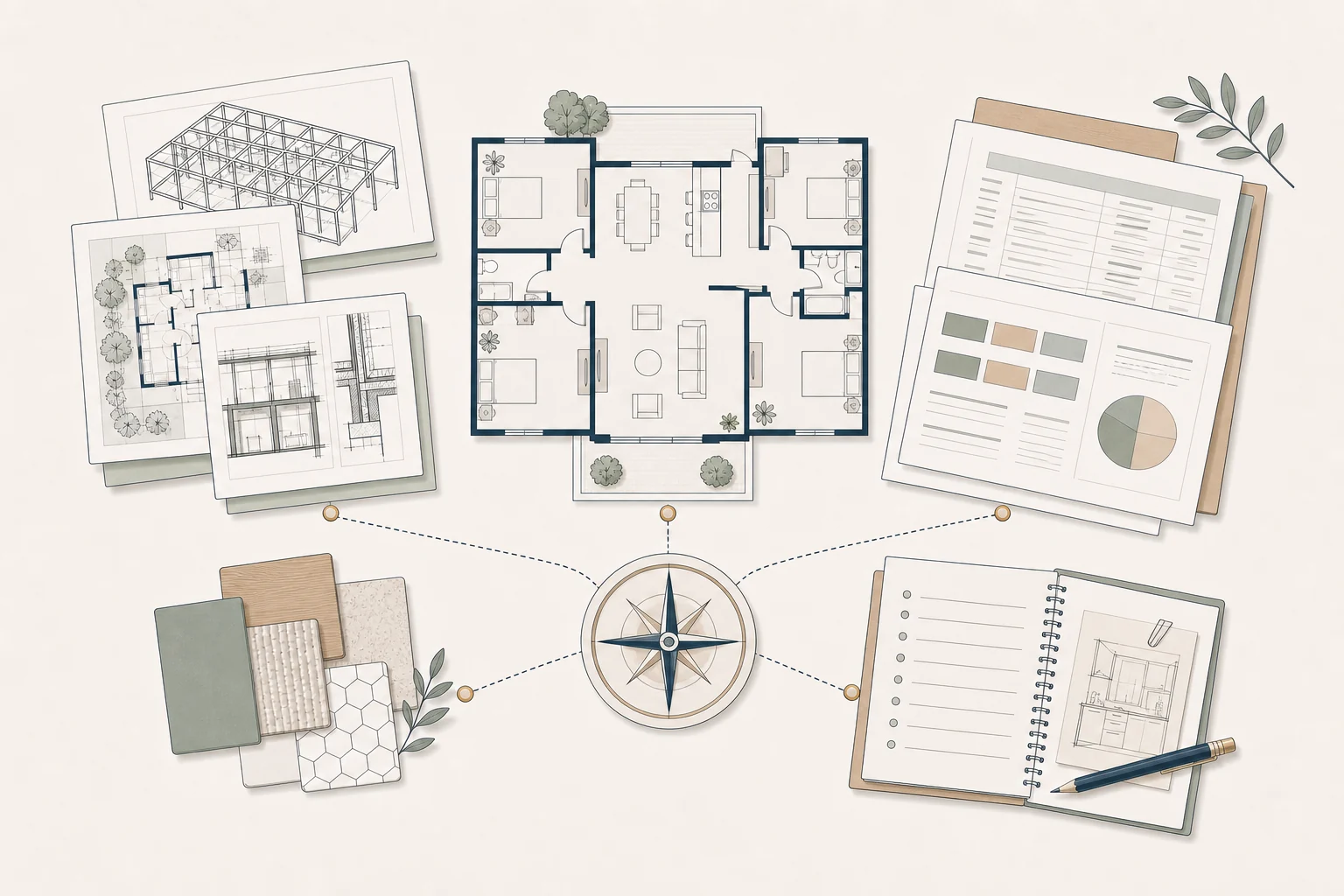
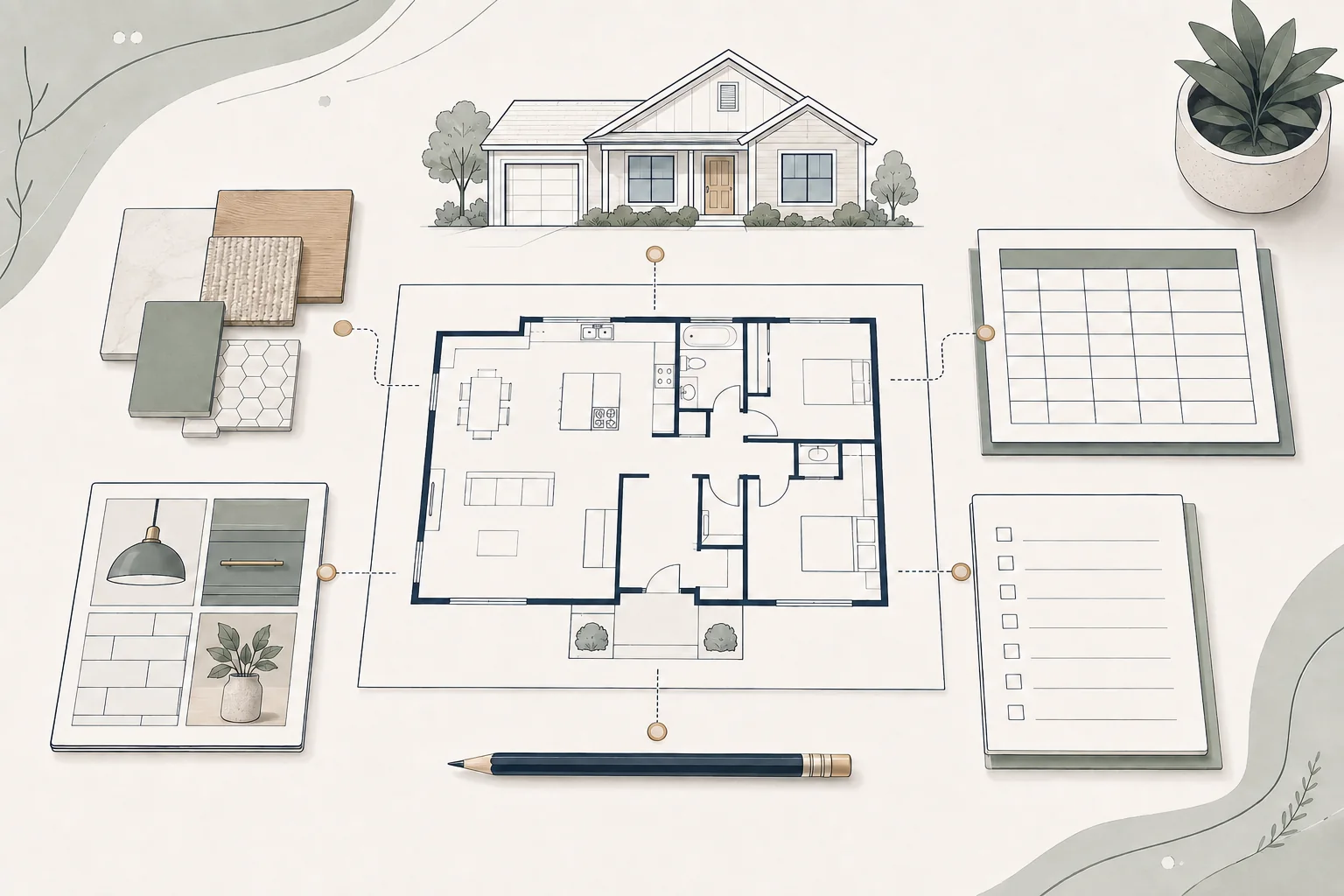
How Do You Plan a Home Renovation?
A successful home renovation usually starts long before demolition. The planning stage is where you decide what problems the project needs to solve, how much you are prepared to invest, which professionals you may need, and how the work should fit your home and your life.
Many homeowners understandably begin with finishes, inspiration photos, cabinets, fixtures, or contractor searches. Those decisions matter, but they are easier to make when the larger project has already been defined.
A useful renovation plan answers five basic questions: Why are you renovating? What is included? What can you realistically spend? Who should help you develop and build the project? What needs to be decided before construction begins?
There is no single correct way to renovate a home. A design-build firm, architect-led process, independent designer, or other project structure may each be appropriate depending on the homeowner, property, scope, and goals. Good renovation planning is less about forcing every project into one process and more about making the important decisions in the right order.
1. Define Why You Are Renovating
Start with the problems you want the renovation to solve rather than the products you want to buy.
Ask yourself:
- What is not working in the home today?
- What activities or routines are difficult because of the current layout?
- What needs to change for the project to feel successful?
- How long do you expect to stay in the home?
- Are your needs likely to change over the next several years?
- Why does the project make sense now?
These answers become the basis for scope, design, budget, and tradeoff decisions later. If the project becomes more expensive or complicated than expected, you can return to the original goals and protect the parts that matter most.
2. Turn Your Goals Into a Clear Scope
Once the goals are clear, translate them into an initial renovation scope. The scope does not need to be a finished construction document yet, but it should describe what areas of the home are affected and what type of work you expect.
For example, “remodel the kitchen” can mean anything from replacing finishes in the existing layout to moving walls, relocating plumbing, opening the kitchen to another room, upgrading electrical service, and replacing adjacent flooring. Those are very different projects.
At this stage, identify:
- Which rooms or areas are included.
- Whether walls, doors, windows, or structural elements may change.
- Whether plumbing, electrical, HVAC, or other systems may need to move or be upgraded.
- Which existing elements you hope to keep.
- Which improvements are essential versus optional.
- Whether the work could affect adjacent rooms or exterior areas.
A clearer scope improves budgeting, design, and contractor pricing because the project team has a more consistent understanding of what the homeowner is trying to accomplish.
3. Establish a Realistic Renovation Budget
Your budget and scope need to develop together. It is difficult to make meaningful design decisions without a financial framework, and it is difficult to establish a useful budget without knowing what the project is supposed to include.
Think beyond the contractor's construction price. A complete project budget may also need to account for design, engineering, permits, owner-purchased products, temporary living costs, storage, landscaping, utility work, and contingency.
At the planning stage, the budget does not have to be perfectly accurate. It does need to be honest enough to guide decisions. As plans, selections, and contractor pricing become more detailed, the budget should become more detailed too.
4. Prioritize Needs, Wants, and Future Options
Most renovations involve tradeoffs. Creating priorities before design becomes detailed makes those tradeoffs easier.
A simple way to organize the project is:
- Must have: items the renovation needs in order to solve the core problem.
- High value: improvements that meaningfully improve function or quality of life.
- Nice to have: features you would like if budget and space allow.
- Future option: work that could be planned for now but completed later.
Priorities are especially useful when bids come in higher than expected. Instead of cutting randomly, you already have a framework for deciding what can change without undermining the project.
5. Understand the Existing Home Before Designing Around It
Renovation planning is different from new construction because the project must work with an existing building. Existing framing, plumbing, electrical systems, structural conditions, site access, drainage, previous modifications, and permitting history can all affect what is practical.
Not every condition can be discovered before construction, but identifying important unknowns early can improve design decisions and budgeting.
Depending on the project, early investigation may include:
- Existing-condition measurements.
- Permit or property-record research.
- Structural review.
- Electrical-service or utility review.
- Plumbing or sewer evaluation.
- Hazardous-material testing where appropriate.
- Site, access, drainage, or grading considerations.
6. Decide What Kind of Project Team You Need
The right team depends on the project. Some homeowners may work with an architect, others with an interior designer, design-build company, contractor-led team, engineer, or combination of professionals.
The important part is understanding who is responsible for design, technical documentation, permitting, selections, estimating, construction, and project communication.
Before hiring anyone, understand the professional's role, what their proposal includes, what it excludes, how they are compensated, and what information they need from you.
7. Develop the Design Before Asking for Comparable Final Bids
Contractor pricing becomes more useful when the scope is defined enough that contractors are pricing substantially the same project.
If one contractor assumes custom cabinetry, another assumes stock cabinetry, one includes structural work, and another excludes it, the totals may look very different even though the contractors are not truly pricing the same scope.
The level of documentation needed before bidding depends on the project, but the principle is consistent: define important decisions before relying on contractor prices to make a final selection.
8. Make Key Selections Early Enough to Protect the Budget and Schedule
Selections can affect design, pricing, lead times, installation requirements, and construction sequencing. Waiting until construction begins to make every product decision can create unnecessary pressure.
You do not need to select every decorative item during the first planning conversation, but major products that influence layout, utilities, or budget should be identified early enough to support the project.
Examples may include:
- Cabinetry and appliance approach.
- Plumbing fixtures that affect rough-in requirements.
- Major lighting or electrical requirements.
- Tile, flooring, and countertop assumptions.
- Windows, doors, or specialty products with long lead times.
- Owner-purchased products that the contractor will need to install.
9. Compare Contractor Proposals on More Than Price
When contractor proposals arrive, compare the scope, allowances, exclusions, schedule, project-management approach, communication structure, warranty, and assumptions—not just the total price.
A bid that appears less expensive may simply include less work or carry lower allowances. A higher bid may include additional scope or a different level of management. Understanding those differences is part of renovation planning, not just contractor selection.
10. Prepare for Construction Before Demolition Starts
Good preconstruction planning reduces avoidable decisions during the most disruptive part of the project.
Before work begins, homeowners should understand:
- The signed scope and contract.
- How changes will be documented and approved.
- The anticipated schedule and major milestones.
- Who the primary project contacts are.
- Which selections remain outstanding.
- How the home will be protected and accessed.
- Whether the household will remain in the home during construction.
- How payments, meetings, and project documentation will be handled.
The Foundation Renovation Roadmap™
Foundation organizes the renovation journey into six phases. The Foundation Renovation Roadmap™ is not intended to dictate one project-delivery method. It is a decision framework that helps homeowners understand what should be addressed as a renovation progresses.
1. Discover
Identify why you are renovating, what problems you want to solve, what success looks like, and which household or property needs should shape the project.
2. Plan
Develop the initial scope, budget, priorities, constraints, and overall project strategy. Decide what information you still need before moving forward.
3. Design
Work with the appropriate design and technical professionals to turn the project goals into a buildable solution while continuing to test the design against budget and priorities.
4. Prepare
Complete critical selections, obtain and compare contractor proposals, review contracts, resolve major scope questions, plan for construction logistics, and establish expectations before work begins.
5. Build
Navigate construction through clear communication, timely decisions, documentation, budget awareness, and a structured approach to changes and unexpected conditions.
6. Complete
Finish the project with walkthroughs, punch-list completion, warranties, closeout documents, and an understanding of ongoing maintenance or follow-up needs.
How Long Should Home Renovation Planning Take?
There is no universal planning timeline. A straightforward cosmetic project may require relatively little design or permitting, while a kitchen reconfiguration, addition, ADU, or whole-home renovation may require months of design, engineering, approvals, selections, and contractor pricing before construction begins.
Trying to compress the planning period does not always shorten the overall project. Unresolved decisions often reappear later as redesign, change orders, delays, or rushed selections.
A better goal is to move efficiently while making the decisions that materially affect scope, budget, schedule, and constructability before they become expensive to change.
Common Home Renovation Planning Mistakes
- Starting with finishes before defining the problem the renovation needs to solve.
- Designing a project without establishing a realistic financial framework.
- Assuming the contractor's price will represent the entire project budget.
- Hiring professionals before understanding their roles and scopes.
- Requesting final bids before the project is defined enough to compare them fairly.
- Leaving major product decisions until construction is underway.
- Treating the schedule as a construction-only issue and ignoring design, permitting, and procurement time.
- Making decisions one at a time without considering how they affect the rest of the project.
When Independent Renovation Planning Help Can Be Useful
Some homeowners know they want to renovate but are not yet ready to hire a contractor or commit to a design direction. Others already have plans or proposals and want help understanding whether the project is aligned with their goals and budget.
An independent renovation coach or consultant can help organize the early decisions, identify gaps in the plan, review budgets or proposals, and prepare the homeowner for conversations with architects, designers, and contractors.
The value is not in making decisions for the homeowner. It is in helping the homeowner understand the decisions well enough to move forward deliberately.
Foundation Tip
A successful renovation does not begin when demolition starts. It begins when you define what the project needs to accomplish and build the scope, budget, team, and decisions around that goal.
Next Step
If you are early in the planning process and are unsure how to organize your renovation, start with a Foundation discovery call. If a Foundation Strategy Session™ is the right fit, we can review your goals, scope, budget assumptions, and major decision points and turn them into a written Foundation Renovation Roadmap™.