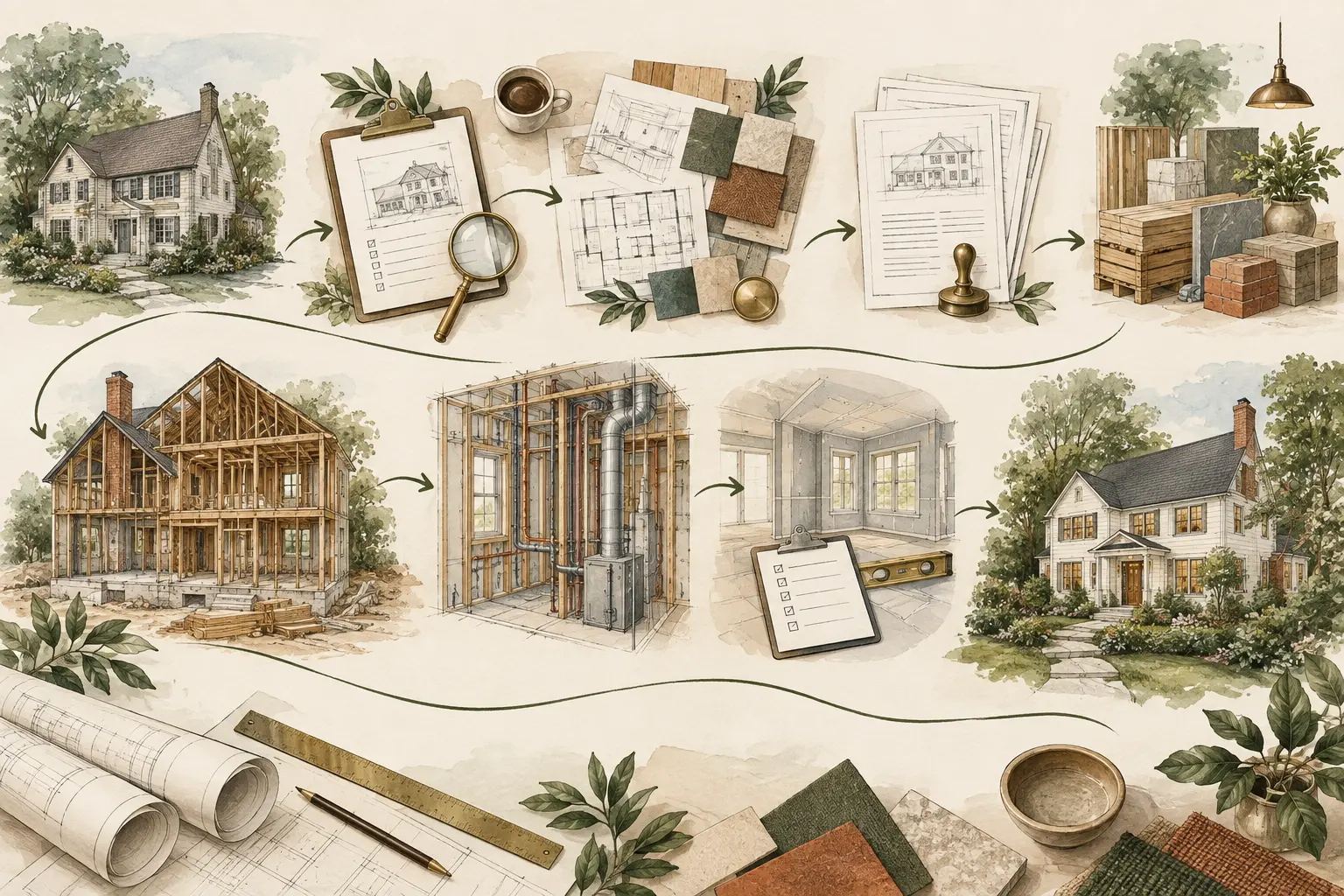

Why Renovation Schedules Change
Every renovation begins with a planned schedule, but construction projects are dynamic. Existing homes often contain unknown conditions, materials may arrive later than expected, inspections can take longer than planned, and homeowner decisions may evolve as the project progresses.
A delay does not automatically mean someone has done something wrong. Many schedule changes are the result of circumstances that could not reasonably be predicted before construction began.
Understanding the most common causes of delays helps homeowners set realistic expectations and make decisions that keep their project moving forward.
Common Causes of Renovation Delays
- Hidden conditions discovered after demolition.
- Permit reviews or inspection scheduling.
- Material availability and manufacturer lead times.
- Weather that affects exterior work.
- Changes to the project scope after construction begins.
- Delayed homeowner selections or approvals.
- Coordination between multiple trades working in sequence.
- Unexpected repairs required to meet current building codes.
What Homeowners Can Do to Reduce Delays
- Finalize as many design decisions as possible before construction begins.
- Order long-lead materials early whenever practical.
- Respond promptly to questions and requests for decisions.
- Understand that changes made during construction often affect both schedule and budget.
- Maintain open communication with the project team when unexpected issues arise.
Common Misconceptions
- Every delay is the contractor's fault. Many schedule changes result from factors outside any one person's control.
- A good schedule never changes. Construction schedules are planning tools that are updated as new information becomes available.
- Small changes won't affect the timeline. Even minor revisions may require new materials, additional labor, or resequencing of work.
- Ordering materials after construction starts is fine. Some products have lead times measured in weeks or months, making early planning valuable.
- A successful renovation has no surprises. Unexpected conditions are common. Success is measured by how effectively the team identifies, communicates, and resolves them.
Foundation Tip
Instead of asking whether delays are possible, ask how your project team plans to communicate schedule changes and respond when unexpected conditions arise. A clear plan for managing change is often more valuable than expecting a project to proceed exactly as originally scheduled.
Closing Thought
Renovation schedules are built around the best information available at the time, but every project reveals new information as work progresses. Homeowners who understand the causes of delays, make timely decisions, and communicate openly with their project team are better prepared to navigate changes with confidence.