Why Universal Design Matters
Bathrooms are one of the most frequently used rooms in the home and one of the areas where slips and falls are most likely to occur. Thoughtful planning can improve safety without sacrificing style.
Many universal design features are nearly invisible when incorporated into the original design, making them easier and less expensive to include during a renovation than to add later.
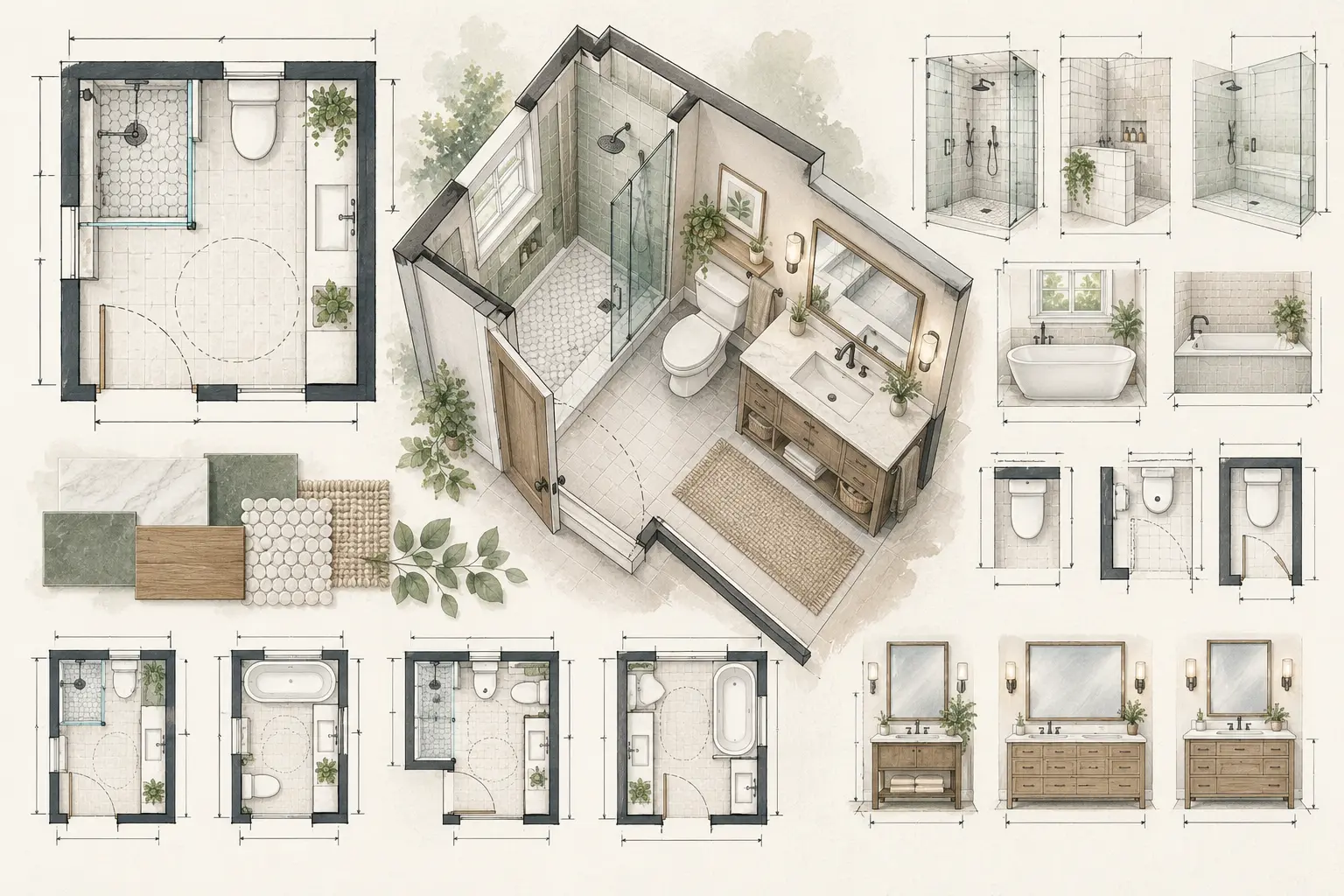
Consider the Type of Bathroom
- Primary Bathroom: Often the best location to incorporate long-term accessibility features because it is used every day.
- Hall or Shared Family Bathroom: Should balance safety, durability, and flexibility for users of different ages.
- Guest Bathroom: Simple accessibility features can make visitors feel more comfortable without changing the room's appearance.
- Powder Room: Even in a small space, thoughtful fixture placement and clear pathways can improve usability.
- Accessible or Aging-in-Place Bathroom: Accessibility becomes the primary design goal, with layout, fixtures, and storage planned around ease of movement.
Key Factors to Consider
- Clear Floor Space: Allow room to move comfortably throughout the bathroom.
- Curbless Showers: Reduce trip hazards while creating a clean, modern appearance.
- Slip-Resistant Flooring: Improve traction in wet areas.
- Comfort-Height Fixtures: Toilets and vanities should be comfortable for the people using them.
- Lighting: Provide bright, even lighting with minimal shadows for grooming and safety.
- Storage: Keep frequently used items within easy reach.
- Future Adaptability: Plan for features such as reinforced walls for future grab bars, even if they are not installed today.
Common Universal Design Features
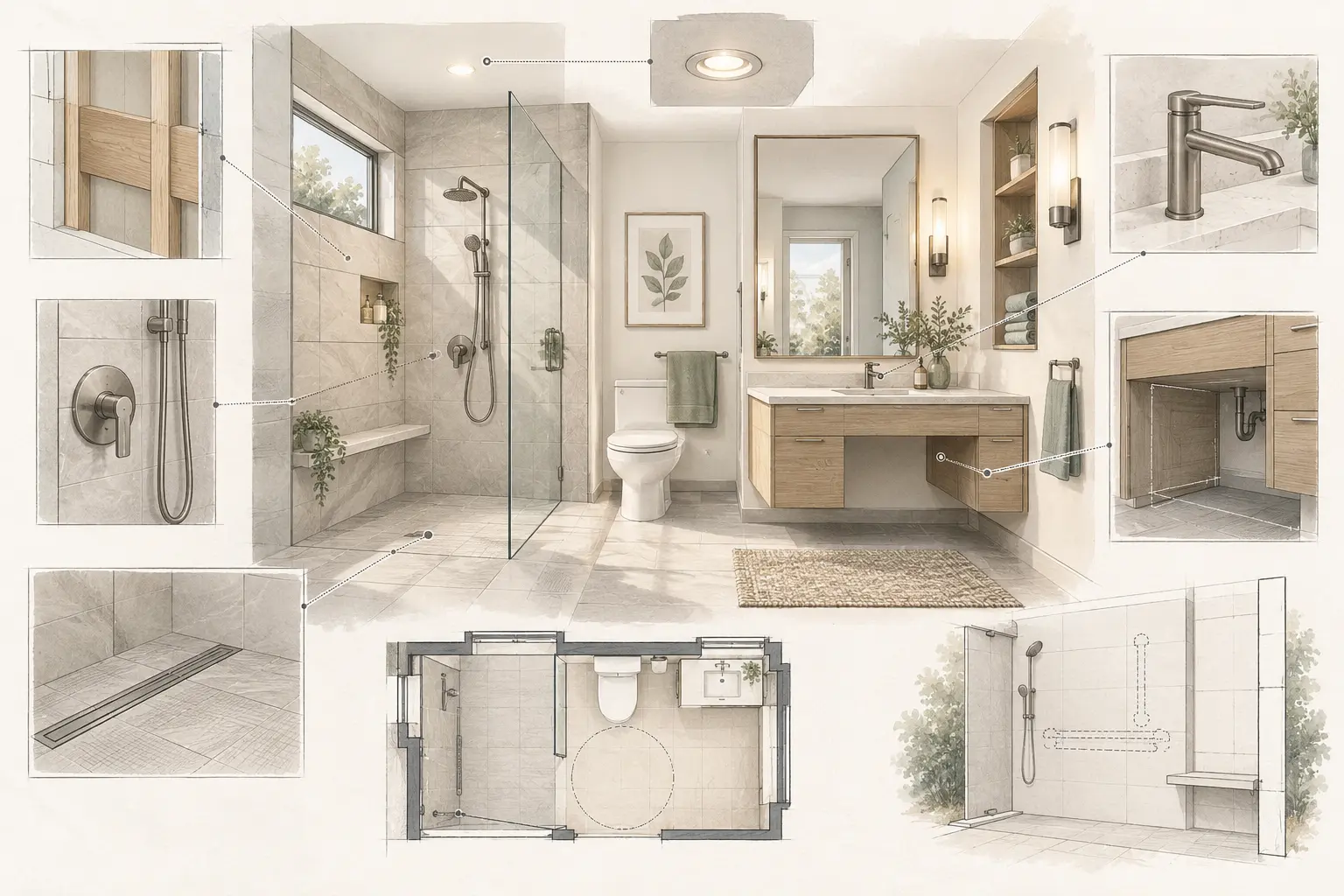
Curbless Showers
Provide easier entry while improving accessibility and modern aesthetics.
Handheld Showerheads
Offer greater flexibility for users of all ages.
Blocking for Future Grab Bars
Install reinforcement inside walls during construction for future flexibility.
Lever-Style Faucets
Require less grip strength than traditional knobs.
Floating or Open-Base Vanities
May improve accessibility while creating a more open appearance.
Layered Lighting
Combine ambient, task, and accent lighting to improve visibility.
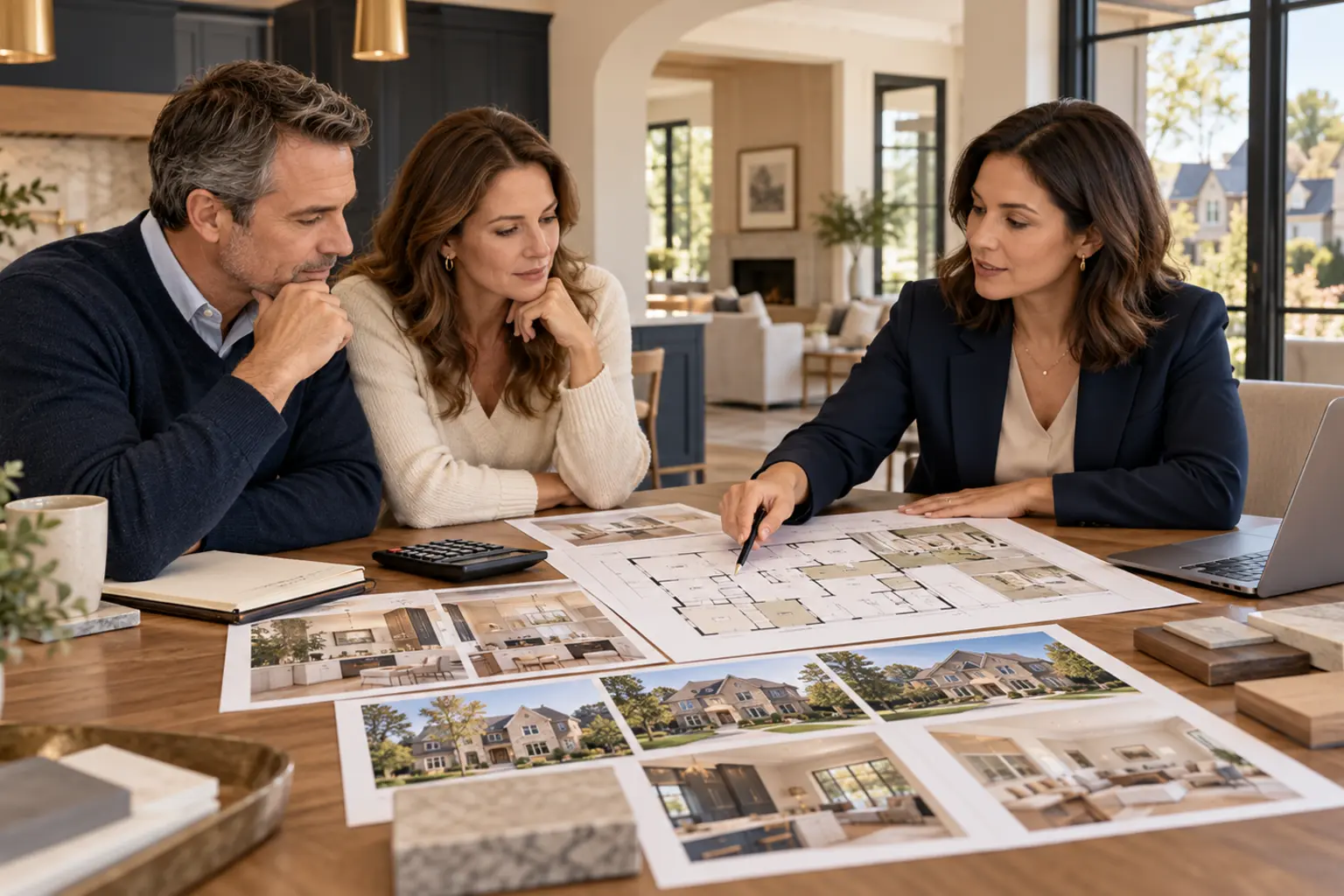
Questions Your Designer or Contractor May Ask
- Who uses this bathroom today?
- Do you expect your needs to change over the next 10–20 years?
- Are there mobility concerns now or in the future?
- Would you like the bathroom to support aging in place?
- Are there accessibility features you want integrated discreetly into the design?
Looking Beyond Accessibility
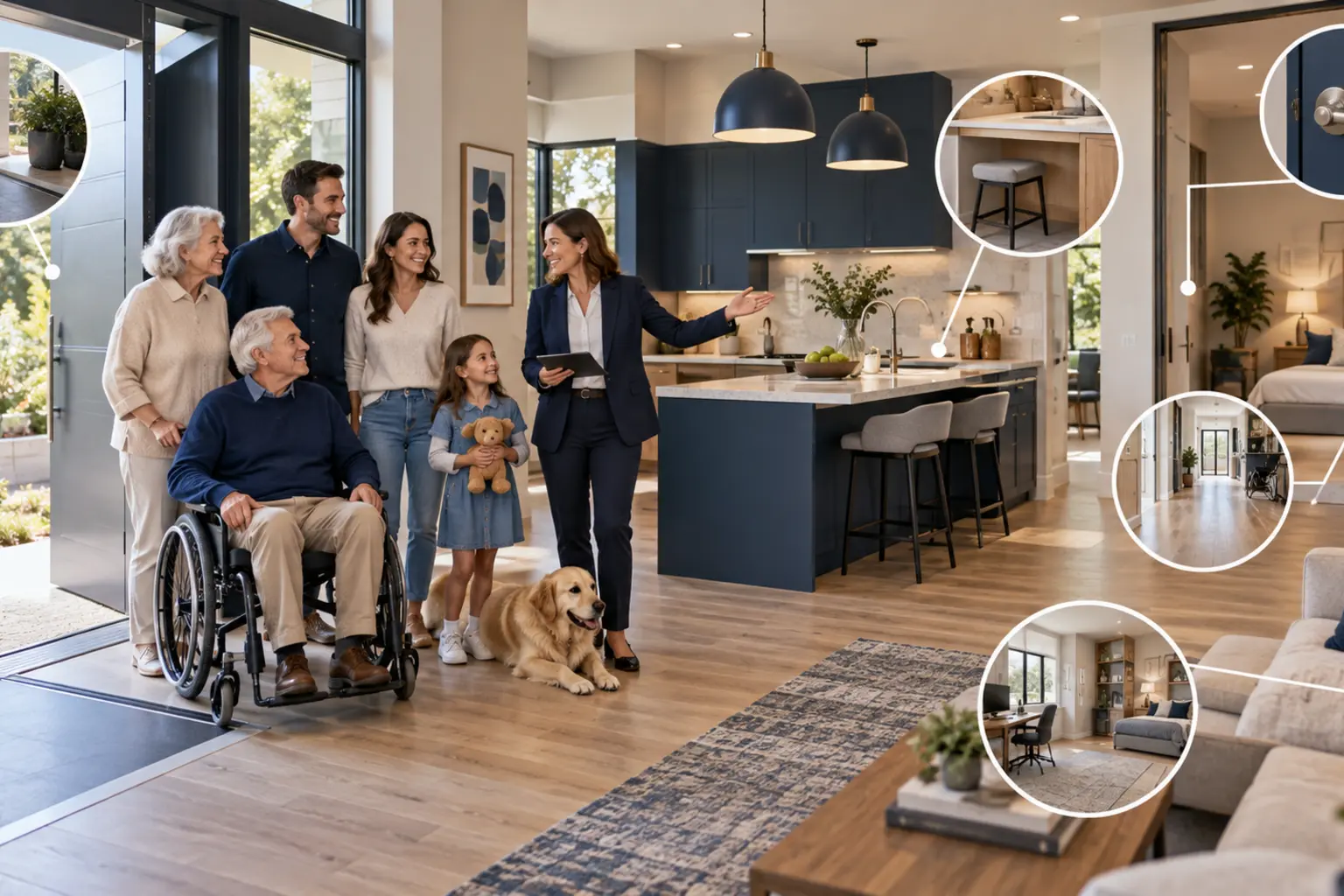
Universal design is about creating a bathroom that works well for everyone. Many features originally developed for accessibility also improve comfort, convenience, cleaning, and everyday usability for families, guests, and future homeowners.
Common Misconceptions
Universal design makes a bathroom look institutional. Modern universal design blends seamlessly with contemporary and traditional styles.
Accessibility features are only for seniors. People of every age benefit from safer, easier-to-use spaces.
Universal design is too expensive. Many features cost very little when included during the initial renovation.
You have to choose between style and accessibility. Good design integrates both without compromise.
Future planning can wait. Including adaptable features during construction is often much easier than retrofitting later.
Foundation Tip
Even if you don't need accessibility features today, ask your contractor about inexpensive improvements—such as reinforcing shower walls for future grab bars—that can make your bathroom easier to adapt in the future. Confirm project-specific accessibility decisions with qualified design and construction professionals and the local building department, using the requirements applicable to your home and project.
Closing Thought
A well-designed bathroom should serve you not only today, but for years to come. Universal design helps create spaces that remain comfortable, functional, and welcoming throughout every stage of life.