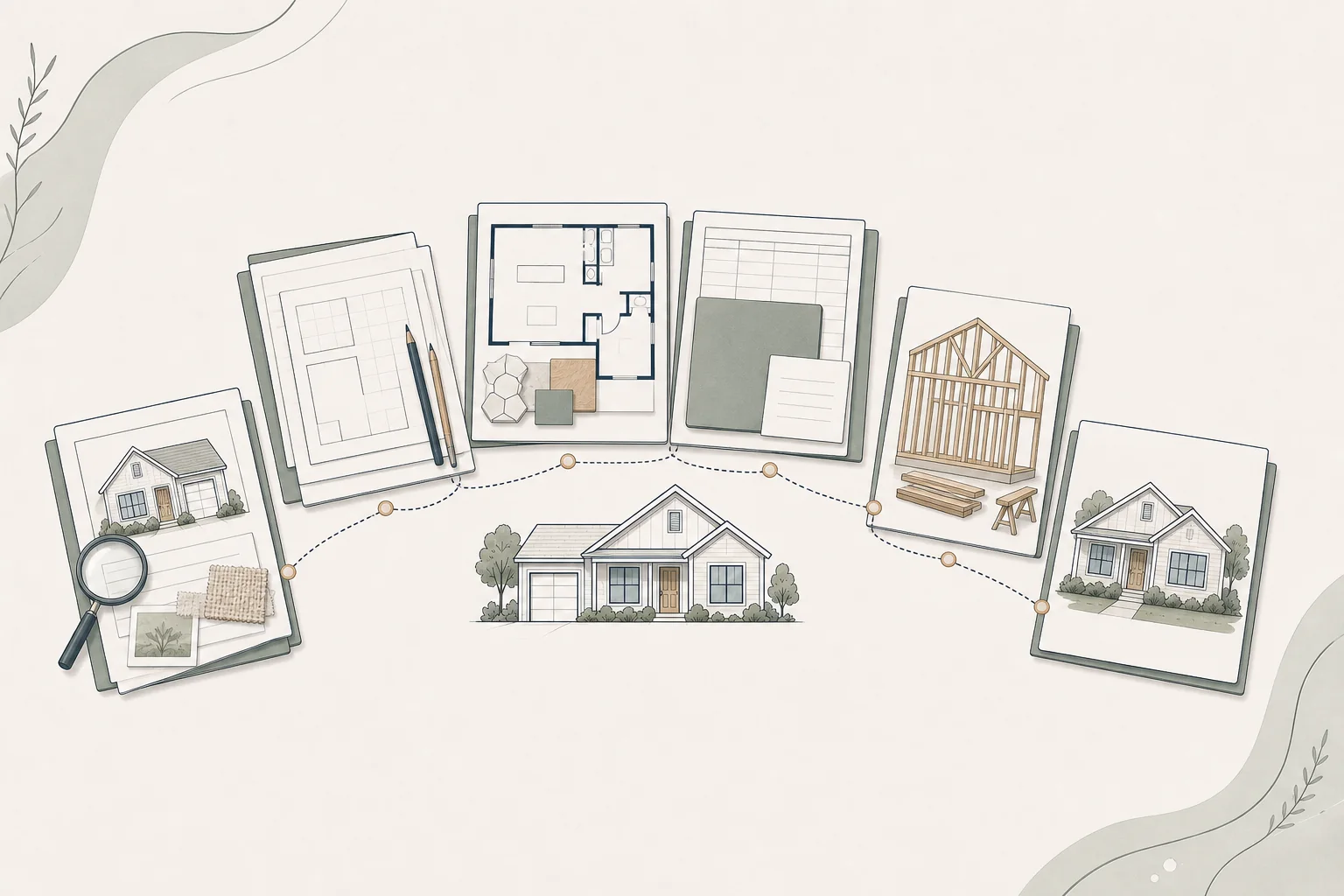
Preparation Connects Design to Construction
By the Prepare phase, the household has defined its goals, created a project plan and developed the design. The next task is confirming that the people, documents, approvals, products, logistics and expectations are ready for construction.
A start date should represent more than contractor availability. It should mean that the project team understands what is being built, the contract reflects that scope, required approvals are in place or properly sequenced, controlling selections are resolved and the household is prepared for the disruption.
Preparation cannot eliminate every unknown in an existing home. It creates a coordinated response plan for the issues that can be anticipated and a process for handling those that cannot.
Confirm the Design Is Ready to Build
Before construction commitments are finalized, confirm which drawings, specifications, schedules and engineering documents govern the work. The contractor, homeowner and design team should be working from the same revision.
Review whether:
-
The scope shown in the documents matches the homeowner’s expectations
-
Required engineering and consultant information is coordinated
-
Selections affecting dimensions, utilities and lead times are resolved
-
Allowances and unresolved items are clearly identified
-
Known alternates and value decisions are documented
-
Permit corrections or revisions have been incorporated
-
Construction-phase design support has been defined
A permit approval does not necessarily mean every pricing or construction detail is complete. The team should understand the difference between the approved submittal and the information required to execute the intended project.
Select the Contractor Using More Than Price
Contractor selection should consider relevant experience, team capacity, communication, references, schedule, financial structure, safety, quality-control approach and understanding of the project—not only the bottom-line number.
KB-2205 provides the detailed contractor-selection framework. KB-2206 explains how to compare proposals, and KB-2207 explains why prices can differ. During Prepare, the goal is to confirm that the selected contractor’s proposal and approach align with the project.
Foundation Bid Review can help homeowners organize proposals, identify material scope differences, review allowances and exclusions, and prepare focused follow-up questions. It does not replace legal review or the contractor’s responsibility for its proposal.
Align the Proposal With the Project Documents
A proposal should identify the drawing and specification versions used for pricing and disclose significant assumptions, exclusions, allowances and owner responsibilities.
Before contracting, reconcile:
-
Work shown in the documents but omitted from the proposal
-
Work included in the proposal but not documented in the design
-
Different interpretations of demolition, protection, repairs or finish restoration
-
Permit, utility, testing and inspection responsibilities
-
Allowances, alternates and unit-price assumptions
-
Owner-purchased materials and installation responsibilities
-
Temporary work, cleanup, storage, access and site restoration
Unresolved differences should become documented clarifications, not assumptions carried into construction.
Understand the Construction Contract
The contract should describe the parties’ responsibilities and incorporate the documents that define the work. Homeowners should understand the scope, price structure, payment process, schedule provisions, changes, insurance, warranties, dispute terms and closeout requirements before signing.
KB-2208 compares fixed-price and cost-plus structures, while KB-2209 explains the primary components of a renovation contract. Because contract requirements and lien laws vary, homeowners should obtain advice from a qualified local attorney when appropriate.
Confirm Permits and Approvals
Required building, planning, trade, utility, HOA or other approvals should be identified before mobilization. The team should know who submits, who responds to corrections, who pays fees, who schedules inspections and how revisions will be handled.
Some early activities may lawfully proceed while another approval remains pending, but that sequencing should be confirmed by the responsible professionals and jurisdiction. Do not assume an application, plan check or verbal conversation authorizes construction.
KB-2512 provides the primary general guidance on renovation permits and code requirements. Project-specific permit articles should be used for kitchens, bathrooms, additions and ADUs.
Build a Credible Construction Schedule
The construction schedule should reflect permit status, contractor and trade availability, owner decisions, long-lead products, inspections, utility work and dependencies among activities.
Before work begins, discuss:
-
The anticipated start and completion windows
-
Major milestones and critical dependencies
-
Products that must arrive before associated work begins
-
Owner decision deadlines
-
Planned shutdowns of water, power, HVAC or access
-
Inspection and jurisdiction dependencies
-
Known periods when the contractor, homeowner or key trades are unavailable
-
How schedule changes will be communicated
A schedule is a planning tool, not a guarantee that no condition will change. It should make assumptions visible and help the team respond when they do.
Coordinate Procurement and Long-Lead Items
Products can affect both design and schedule. Windows, doors, cabinetry, appliances, electrical equipment, plumbing fixtures, specialty finishes and custom items may require early release.
For each important item, confirm:
-
The approved product, model, finish and quantity
-
Who purchases and pays for it
-
Who verifies dimensions and compatibility
-
The expected lead time and required-on-site date
-
Delivery, inspection and storage responsibilities
-
The process for damage, backorders or substitutions
-
Whether early purchasing affects warranties or return rights
Ordering early is not automatically safer if dimensions, approvals or storage conditions are uncertain. Procurement should follow verified information and a documented responsibility plan.
Establish the Communication and Decision Process
Construction creates frequent questions. Before mobilization, identify the communication channels, meeting cadence, responsible contacts and approval authority.
The team should understand:
-
Who serves as the primary homeowner contact
-
Who directs the contractor and who may not
-
How requests for information and design questions are handled
-
How selections and submittals are approved
-
How cost and schedule changes are documented
-
Who can authorize additional work
-
How urgent safety or property issues are escalated
A clear process prevents informal conversations from becoming conflicting direction.
Prepare the Site and Existing Home
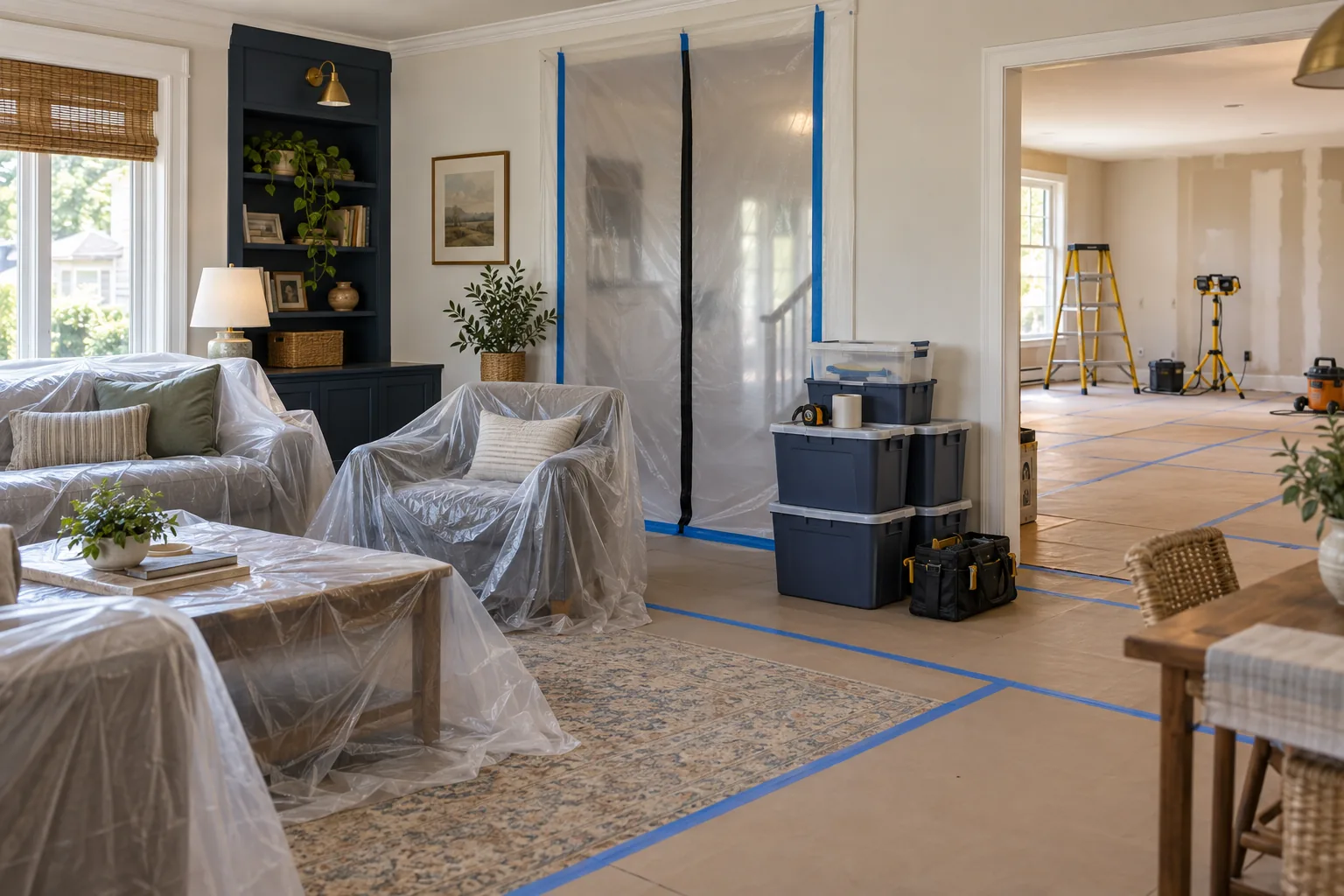
Site logistics affect safety, productivity and household experience. The team should agree on access, staging, deliveries, parking, debris, temporary protection, utilities and the limits of the work area.
Discuss:
-
Worker and delivery access routes
-
Material, tool and waste-container locations
-
Protection for floors, landscaping and areas outside the scope
-
Dust separation, ventilation and cleanup expectations
-
Temporary power, water, sanitation and security
-
Working hours and neighbor considerations
-
Emergency access and shutoff locations
KB-2530 provides detailed guidance for preparing the home for whole-home renovation construction. Room-specific articles address temporary kitchens, bathrooms and other specialized logistics.
Prepare the Household
The household needs a realistic plan for living arrangements, routines and belongings. Consider whether occupants will remain in the home, relocate entirely or use a hybrid arrangement.
Preparation may include:
-
Moving furniture, valuables and stored items
-
Creating temporary cooking, bathing or laundry arrangements
-
Planning for children, pets and mobility needs
-
Protecting remote-work and sleep schedules
-
Redirecting mail, deliveries or household services
-
Maintaining access to essential medications, documents and equipment
-
Establishing security boundaries and alarm procedures
-
Budgeting for temporary housing, meals, storage and transportation
Occupancy constraints should also be reflected in the contract and schedule where they affect the contractor’s work.
Confirm Insurance, Licensing and Administrative Requirements
Before construction, homeowners should verify the contractor information and insurance documentation required by the contract and local rules. Discuss the planned renovation with the homeowners insurer and lender when appropriate.
Depending on the project, questions may involve builder’s risk, course-of-construction coverage, vacant or temporarily unoccupied property, workers’ compensation, liability, bonds, lender draw procedures and proof of permits.
Coverage and licensing rules vary. Obtain advice from qualified insurance, legal, lending and jurisdictional professionals rather than relying on general assumptions.
Set Up Financial Controls
The homeowner should understand the payment schedule, invoicing documentation, allowance reconciliation, change authorization and lien-waiver process before the first payment is due.
Maintain a project record containing the contract, proposal, drawings, approvals, invoices, proof of payment, changes and important correspondence. Financial controls are easier to establish before the project becomes busy.
Plan for Changes and Hidden Conditions
Existing construction may conceal damage, undocumented work or conditions different from the plans. Preparation should define how work pauses, who investigates, how options are developed and who authorizes cost or schedule changes.
An appropriate contingency remains available for uncertainty. It should not be treated as permission to perform undocumented extra work.
Hold a Preconstruction Meeting
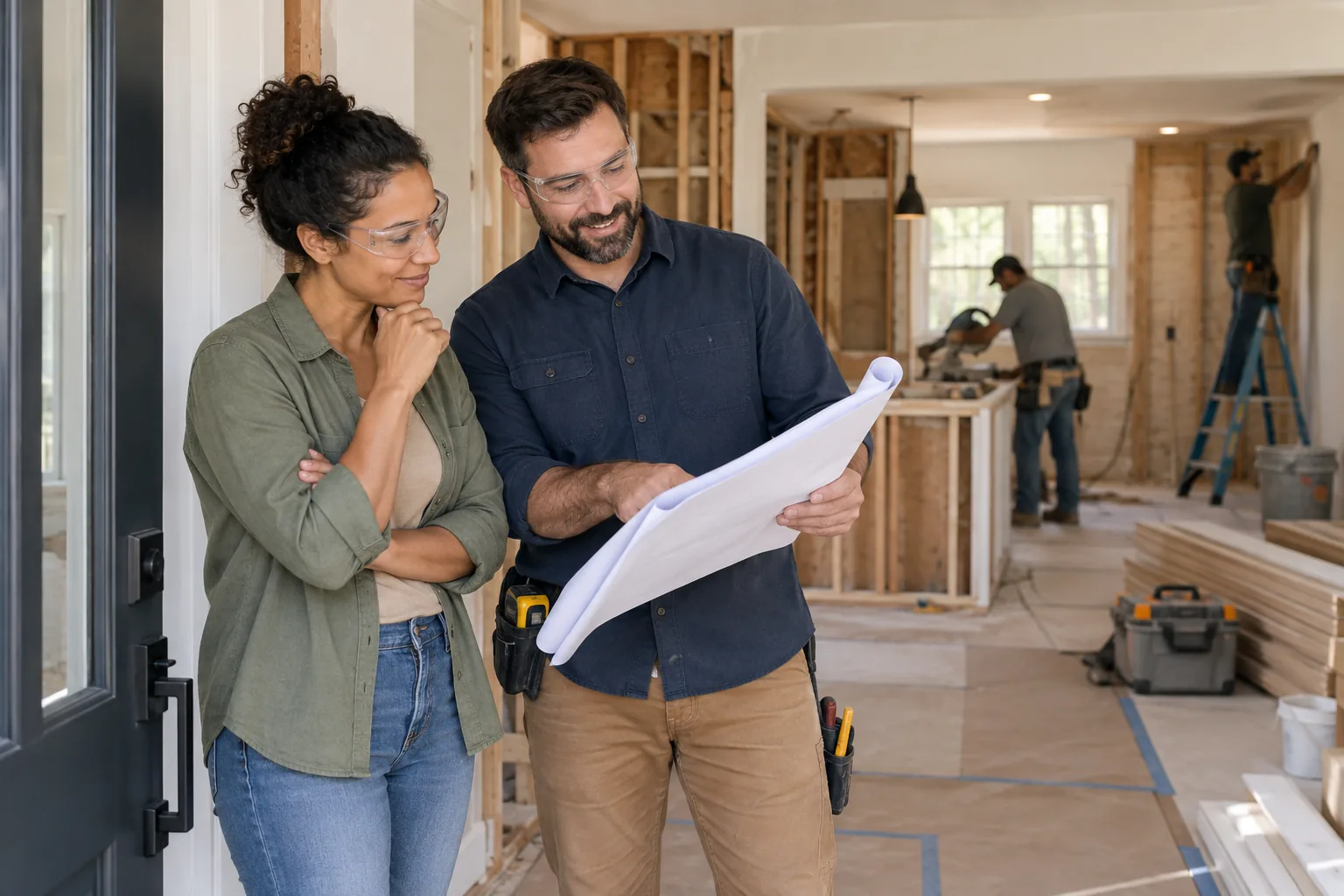
A preconstruction meeting brings the homeowner, contractor and relevant design professionals together to confirm the handoff from design to construction.
The agenda may include:
-
Contract scope and governing documents
-
Permit and inspection responsibilities
-
Schedule, milestones and procurement status
-
Site access, staging, protection and utilities
-
Household occupancy and security
-
Communication, meetings and decision authority
-
Submittals, selections and outstanding information
-
Changes, hidden conditions and emergency procedures
-
Quality-control expectations and construction-phase design support
-
Closeout deliverables that should be collected throughout the project
Record decisions and action items so that the meeting produces a working plan rather than a collection of verbal expectations.
A Construction-Readiness Check
Before authorizing mobilization, confirm:
-
The household, design team and contractor agree on the project scope
-
The contract incorporates the correct proposal and document versions
-
Required permits and approvals are in place or properly sequenced
-
Controlling selections and long-lead products are addressed
-
The schedule reflects known dependencies and household constraints
-
Site logistics and temporary arrangements are ready
-
Communication, payment and change processes are understood
-
Insurance and administrative responsibilities have been addressed
-
The project retains appropriate contingency
-
Open items have owners and deadlines
If a critical item is unresolved, the team should decide whether construction can proceed safely and efficiently or whether the start should be adjusted.
Common Prepare-Phase Mistakes
-
Setting a start date before design, permits and procurement are aligned
-
Selecting a contractor based only on the lowest price
-
Signing a contract before reconciling the proposal with the drawings
-
Accepting undefined exclusions or allowances
-
Assuming permit approval makes the documents construction-complete
-
Ordering products before dimensions or compatibility are verified
-
Failing to establish communication and change authority
-
Underestimating household disruption and occupancy constraints
-
Beginning work without a hidden-condition response process
-
Waiting until the end to define closeout requirements
How Foundation Can Help
A Foundation Strategy Session can help homeowners identify readiness gaps before a construction commitment. The Renovation Roadmap organizes the handoff among design, contracting, procurement, household preparation and construction.
Foundation Bid Review can help surface material differences among contractor proposals before selection. Foundation can also help homeowners prepare focused questions for the preconstruction meeting and organize the decisions that remain open.
Foundation does not provide legal, insurance, architectural, engineering, code or contracting determinations. Qualified professionals remain responsible for the services and advice within their scopes.
Foundation Tip
Do not ask only whether the contractor is ready to start. Ask whether the project information, approvals, products, household and decision process are ready too.
Important Note
Construction-readiness requirements vary by project, contract and jurisdiction. This article provides general educational information and is not legal, insurance, architectural, engineering, code, financial or construction advice. Consult qualified local professionals before authorizing work.
Related Foundation Articles
-
KB-1003 — The Foundation Renovation Roadmap™: Six Phases of a Home Renovation
-
KB-1006 — Design: Make Renovation Decisions in the Right Order
-
KB-1008 — Build: Manage the Renovation Construction Phase
-
KB-2205 — How Do You Choose the Right Renovation Contractor?
-
KB-2206 — How to Compare Contractor Bids for a Home Renovation
-
KB-2208 — Fixed-Price vs. Cost-Plus Remodeling Contracts
-
KB-2209 — What Should a Home Renovation Contract Include?
-
KB-2512 — Whole-Home Renovation Permits and Code Requirements
-
KB-2530 — How to Prepare Your Home for Whole-Home Renovation Construction