Why Storage Should Be Planned Early
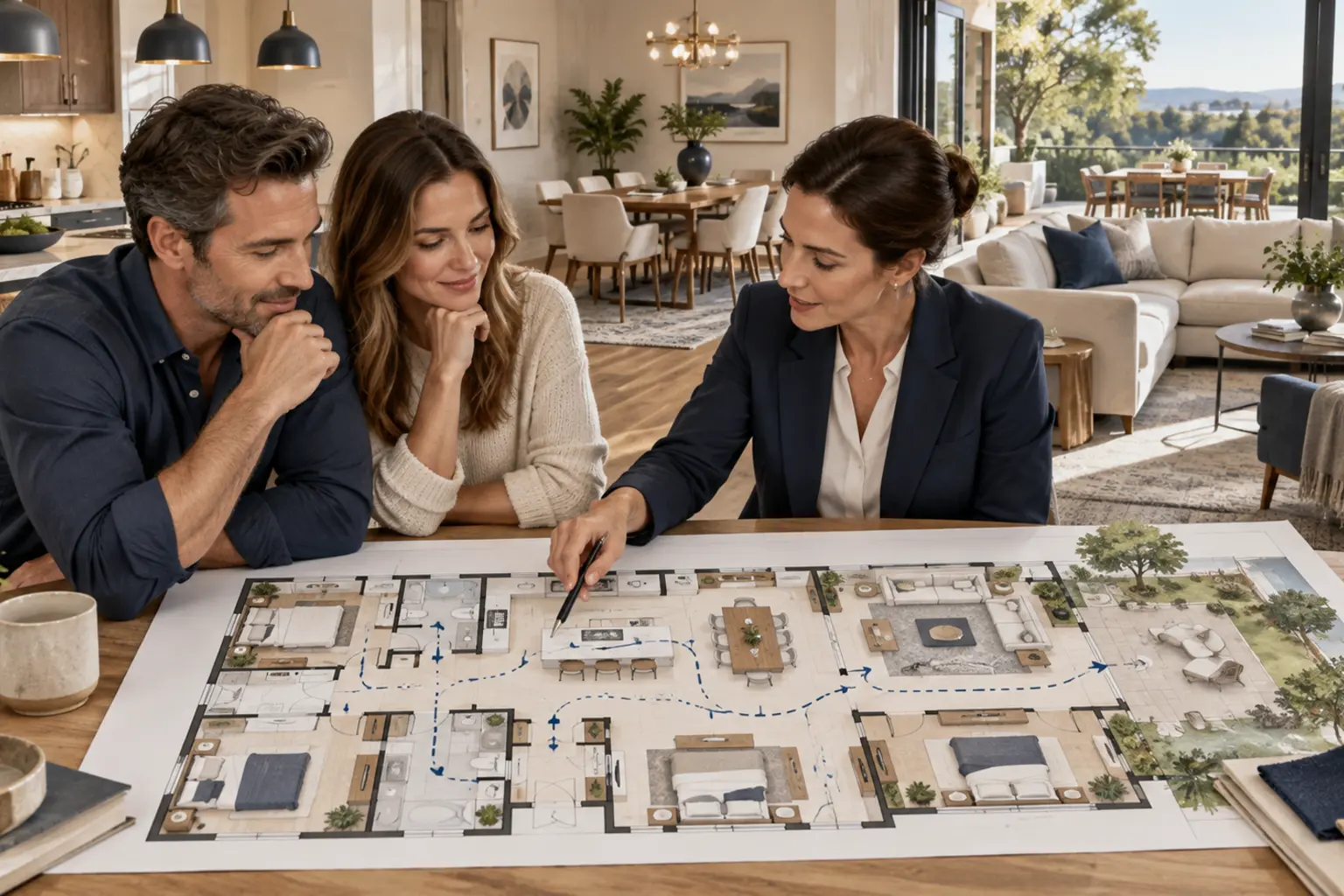
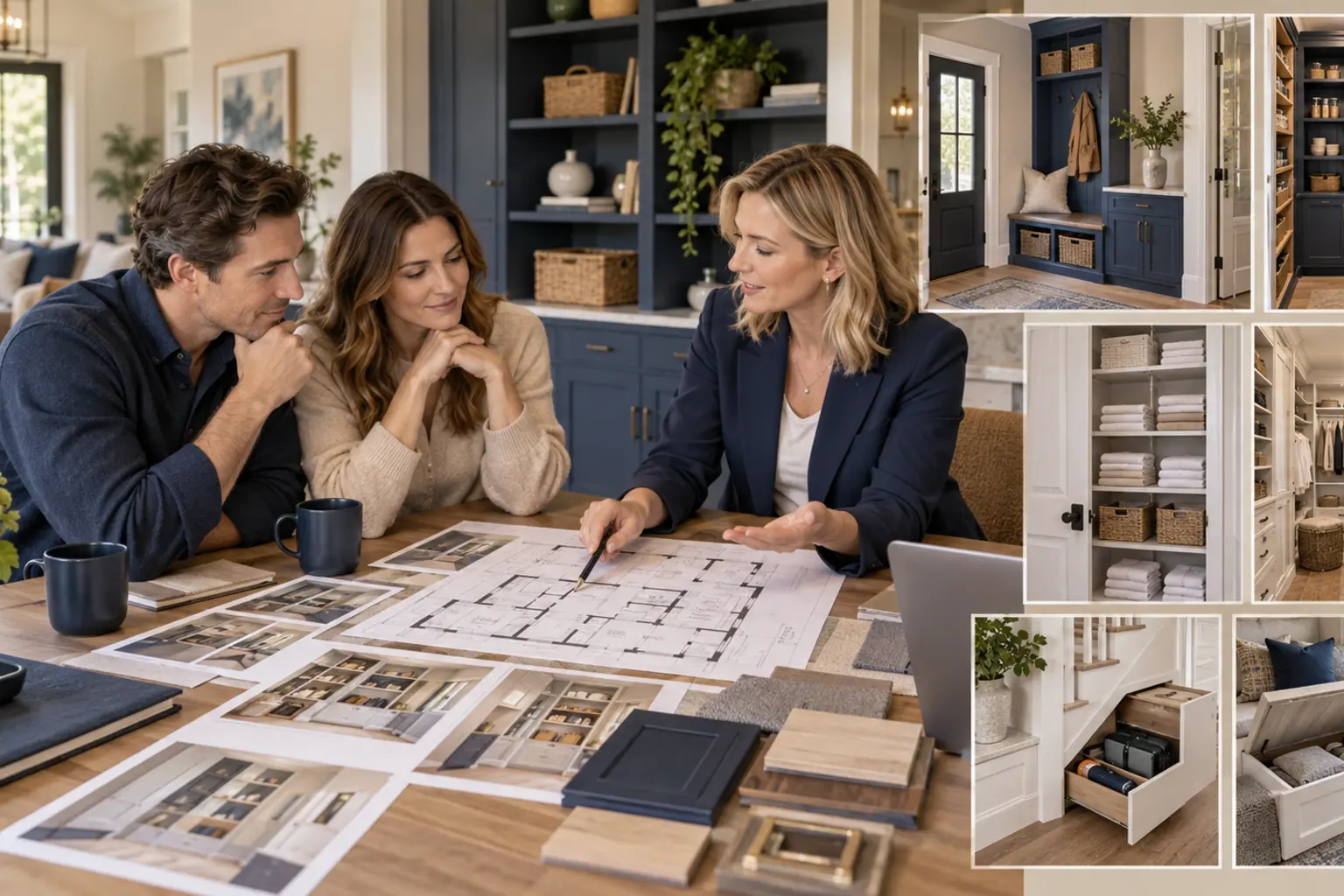
Many homeowners wait until late in the design process to think about storage. By then, the floor plan is complete and opportunities may have been lost. Storage should be considered alongside room layouts because it directly affects how each space functions.
Start with What You Own
Before deciding where storage should go, think about what you actually need to store. Designing around your belongings creates a more functional home than relying on generic closets or cabinets.
- Kitchen appliances and pantry items
- Cleaning supplies
- Sports and recreation equipment
- Seasonal decorations
- Luggage
- Pet supplies
- Office equipment
- Tools and household maintenance items
- Linens and towels
Storage Throughout the Home
- Kitchen: Pantries, appliance garages, deep drawers, recycling centers, and food storage.
- Entry: Drop zones for shoes, backpacks, keys, mail, and coats.
- Living Areas: Built-in shelving, media storage, and concealed storage where appropriate.
- Bedrooms: Well-designed closets that maximize usable space.
- Bathrooms: Linen storage, medicine cabinets, and vanity organization.
- Laundry Room: Storage for detergents, cleaning supplies, and household items.
- Garage: Wall storage, overhead storage, cabinets, and dedicated work areas.
Think About Daily Habits
Good storage supports the way your family lives. Consider where clutter naturally accumulates today and ask why. The goal is not simply to add more cabinets—it is to place storage where it is most convenient for the people using it.
Coach's Perspective
One of the most common comments I hear after a renovation is, 'I wish we'd added more storage.' In my experience, homeowners rarely regret building too much functional storage into a home—but they often regret overlooking it. Well-designed storage isn't about hiding clutter; it's about giving every item a logical place, making the home easier to maintain and more enjoyable to live in.
Questions to Ask Yourself
- Where does clutter collect in my current home?
- Does every frequently used item have a convenient storage location?
- Am I designing storage around how my family actually lives?
- Will my storage needs change over the next ten years?
- Can built-in storage improve functionality without increasing square footage?
Common Misconceptions
More square footage automatically means more storage. Larger homes can still lack functional storage if it isn't thoughtfully planned.
Closets alone provide enough storage. Different activities require different types of storage throughout the home.
Storage can always be added later. Built-in storage is often easiest and most cost-effective to incorporate during a renovation.
Storage is only about organization. Well-planned storage improves efficiency, reduces stress, and supports everyday routines.
Foundation Tip
Don't measure storage by the number of closets—measure it by how well it supports your daily routines. The most successful homes make it easy to put things away because storage is located exactly where it's needed.
Closing Thought
Storage is one of the few renovation investments that you'll appreciate every single day. By planning it early and designing it around your lifestyle, you can create a home that feels larger, more organized, and easier to enjoy without adding unnecessary square footage.