Start with Your Lifestyle, Not Your Floor Plan
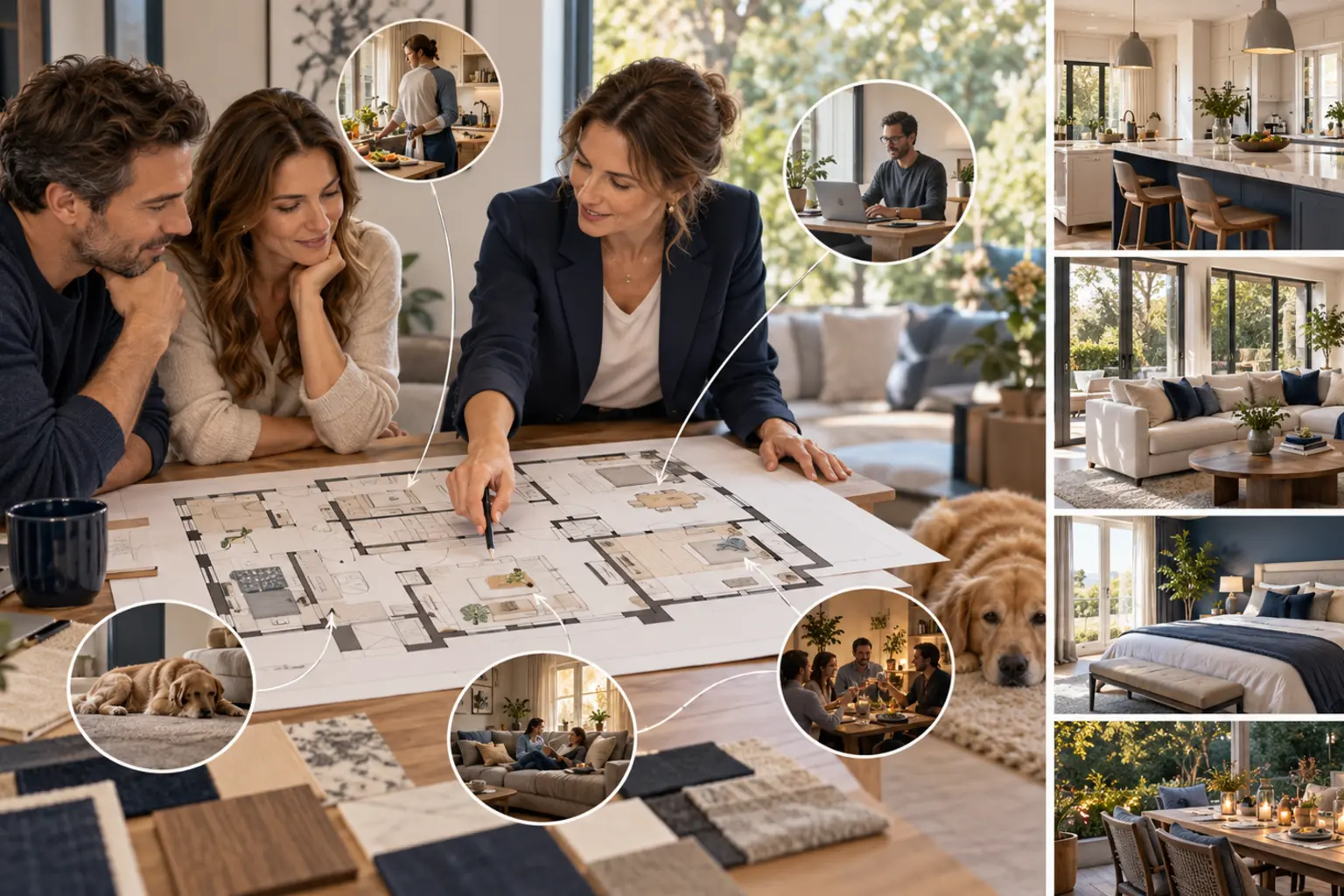
Many renovations begin with questions about walls, cabinets, or finishes. A better starting point is understanding how your family uses the home today and how you want to use it in the future. When your lifestyle drives the design, the finished home is more likely to remain functional for years to come.
Evaluate Your Daily Routines
Consider how your family moves through the home during a typical day.
- Morning routines and getting ready for work or school
- Working from home or studying
- Preparing and eating meals
- Entertaining friends and family
- Relaxing and watching television
- Laundry and household chores
- Outdoor living and recreation
- Storage and organization
Design Around the People
Instead of asking what each room should look like, ask how each space should function.
- Families with young children: Open sight lines, durable finishes, and easy supervision may be priorities.
- Frequent entertainers: Larger gathering spaces, strong connections between the kitchen and outdoor living areas, and ample seating may be more important than formal rooms.
- Remote workers: Dedicated office space, acoustic separation, and reliable technology become essential.
- Empty nesters: Main-level living, simplified maintenance, and flexible guest accommodations may take priority.
Think About the Future
Whole-home renovations are significant investments, so the design should anticipate how your needs may evolve over the next 10 to 20 years.
- Growing or changing family needs
- Aging in place
- Changing work arrangements
- New hobbies or interests
- Future resale considerations
Questions to Ask During Design
- What frustrates me about my home every day?
- Which rooms do we use the most?
- Which rooms rarely get used?
- Where does clutter naturally collect?
- How do we entertain guests?
- How much privacy does each family member need?
- If we stayed here for 20 years, what would we wish we had included?
Coach's Perspective
One of the first questions I ask homeowners isn't, 'What countertops do you want?' It's, 'Walk me through a typical Saturday.' That conversation usually reveals far more about how the home should function than discussing finishes. The best renovations solve daily frustrations first and choose materials second.
Common Misconceptions
A bigger home automatically functions better. A well-designed home often feels larger because the layout supports everyday living.
Open concept is right for everyone. Some families value openness, while others need quiet spaces and separation.
Design trends should drive the project. Trends change. A home designed around your lifestyle remains valuable much longer.
Every room needs a single purpose. Flexible spaces can adapt as your family's needs change.
Foundation Tip
When evaluating any design idea, ask one simple question: 'Will this make our everyday life easier?' If the answer is yes, it's probably a better investment than following the latest design trend.
Closing Thought
A successful whole-home renovation isn't measured by how closely it matches a magazine or social media post. It's measured by how well it supports the people who live there every day. Designing for the way you live creates a home that is more comfortable, more functional, and better prepared for whatever comes next.