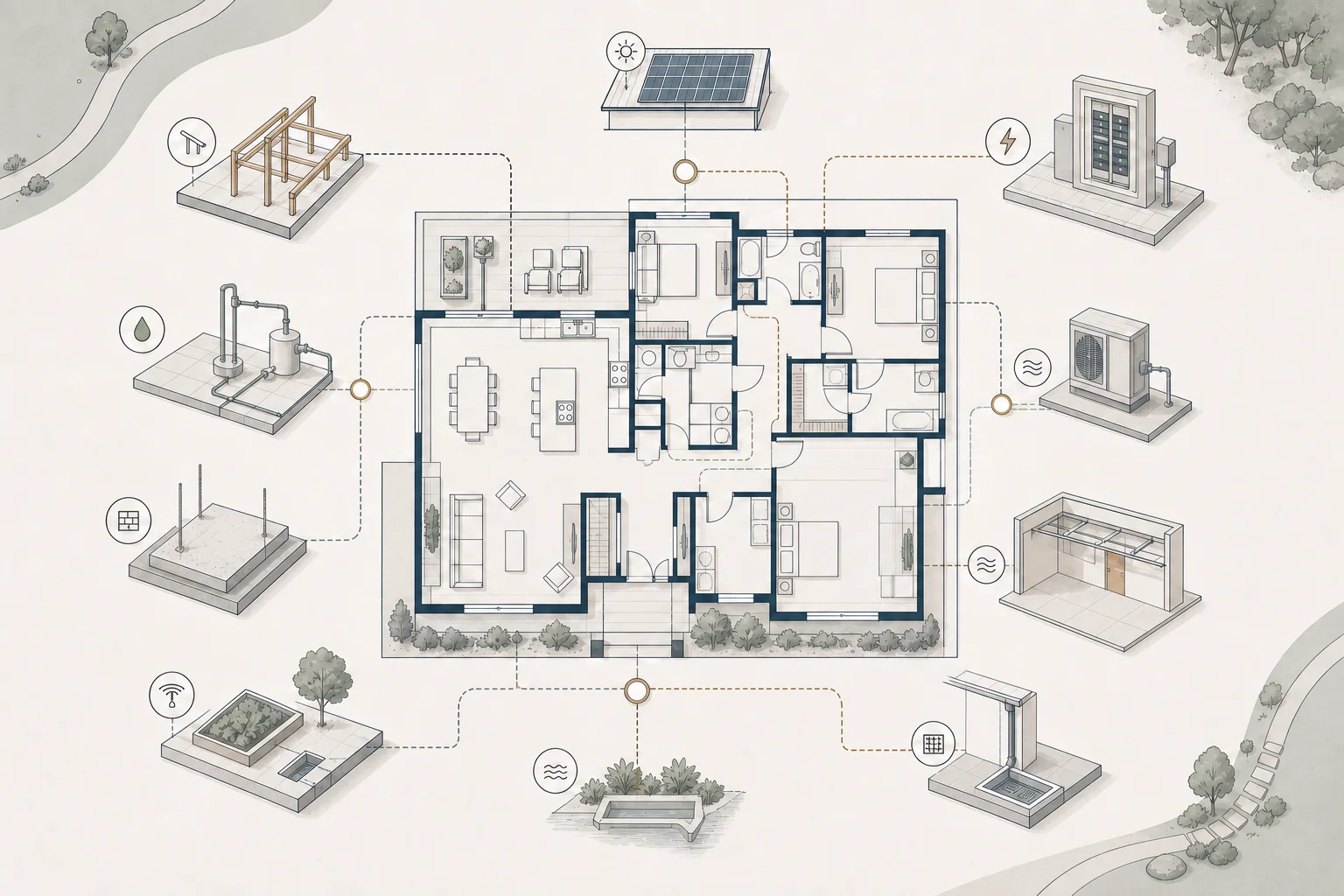

Why Decision Order Matters
Many renovation problems don't come from poor products or bad workmanship—they come from making the right decision at the wrong time. Choosing flooring before confirming the floor plan, or selecting cabinets before finalizing electrical layouts, often results in redesign, delays, and unnecessary costs.
The Recommended Decision Sequence
- 1. Define Your Goals: Identify the problems you're trying to solve and how you want your home to function.
- 2. Establish Your Budget: Determine a realistic investment range before making design decisions.
- 3. Create a Master Plan: Develop a long-term vision for the entire home, even if construction will occur in phases.
- 4. Finalize the Floor Plan: Decide how spaces will be arranged before selecting finishes.
- 5. Confirm Structural Changes: Identify walls, beams, and other structural modifications early.
- 6. Plan Mechanical Systems: Coordinate plumbing, electrical, HVAC, lighting, and technology before walls are closed.
- 7. Select Windows and Doors: These decisions affect framing, energy performance, and exterior appearance.
- 8. Design Cabinetry and Built-Ins: Cabinet layouts drive many plumbing, electrical, and finish decisions.
- 9. Choose Fixtures and Finishes: Select flooring, tile, countertops, paint, hardware, and plumbing fixtures after the major planning decisions are complete.
- 10. Furnish and Personalize: Furniture, artwork, and décor should complement the completed renovation rather than dictate it.
Why This Sequence Works
- Each decision builds on the previous one.
- Fewer design revisions and change orders.
- Better coordination between trades.
- More accurate pricing and scheduling.
- Less rework during construction.
Common Mistakes
- Choosing finishes before finalizing the layout.
- Purchasing materials before drawings are complete.
- Making structural changes after engineering is finished.
- Changing cabinet layouts after electrical rough-in.
- Rushing decisions because construction has already started.
Coach's Perspective
One of the biggest schedule killers I see is homeowners making decisions only when the contractor needs an answer. By then, every decision is urgent. The projects that run the smoothest are the ones where most of the important decisions are made before construction begins. Good planning doesn't eliminate every surprise, but it dramatically reduces avoidable ones.
Questions to Ask Yourself
- Am I making this decision because it's the right time—or because someone needs an answer today?
- Have I considered how this decision affects the rest of the project?
- Will this choice limit future options?
- Have all of the professionals who are affected reviewed this decision?
- Would waiting for more information produce a better outcome?
Foundation Tip
Think of your renovation as building a pyramid. The foundation—your goals, budget, and floor plan—must be solid before you start adding the visible finishes. The stronger the planning, the smoother the construction.
Closing Thought
A successful renovation isn't just about making good decisions—it's about making them at the right time. Following a logical decision sequence helps your project stay on budget, on schedule, and aligned with your long-term vision.