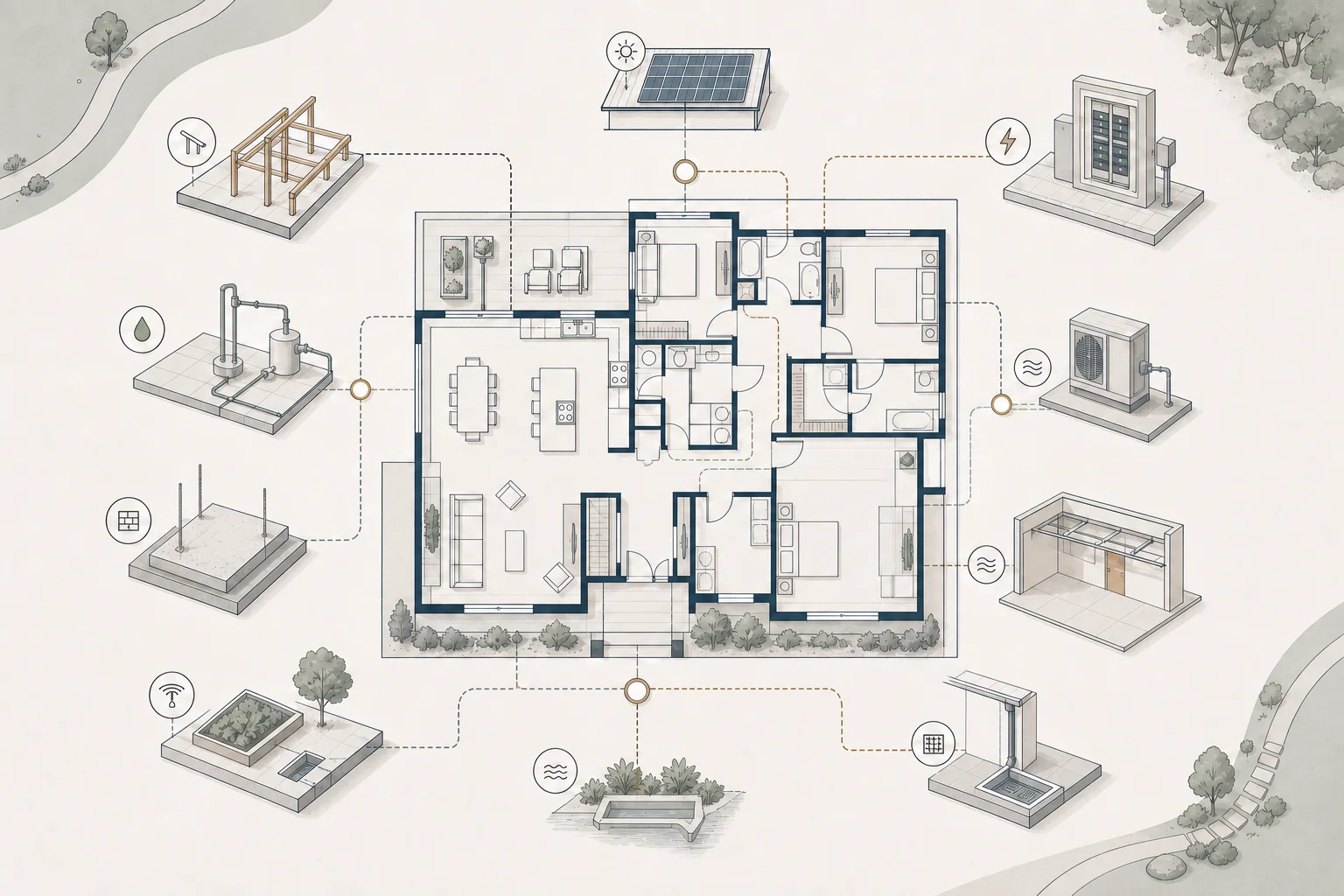
What Is Traffic Flow?
Traffic flow refers to how people move between rooms and activity areas throughout the day. Good traffic flow minimizes congestion, eliminates awkward pathways, and creates a natural connection between spaces without sacrificing privacy.
Signs Your Home Has Poor Traffic Flow
- You regularly walk through one room to reach another.
- Furniture blocks natural walking paths.
- The kitchen becomes crowded when multiple people are cooking.
- Hallways or doorways create bottlenecks.
- Guests frequently pass through private areas such as bedrooms.
- Daily routines cause family members to compete for the same space.
Principles of Good Traffic Flow
- Separate Public and Private Spaces: Keep bedrooms and other private areas away from primary guest circulation whenever practical.
- Minimize Dead Ends: Create logical connections between frequently used rooms.
- Reduce Congestion: Provide adequate space around kitchen islands, dining tables, and major furniture.
- Support Daily Routines: Design pathways that make common activities—like unloading groceries, doing laundry, or getting children ready for school—more efficient.
- Connect Indoor and Outdoor Living: When appropriate, create convenient access to patios, decks, and backyards.
- Consider Accessibility: Allow comfortable movement for people of all ages and abilities.
Whole-Home Renovation Opportunities
Major renovations provide a unique opportunity to rethink how the entire home functions. Removing or relocating walls, widening openings, repositioning doors, or changing room relationships can dramatically improve circulation without necessarily increasing the home's size.
Coach's Perspective
One of the biggest differences between an average renovation and a great one is how the home feels when you move through it. Homeowners often ask for larger rooms, but many times the real issue is poor circulation. Improving the way people move through a home can make existing spaces feel more open, functional, and enjoyable without adding square footage.
Questions to Ask Yourself
- Which pathways do we use most often?
- Where do people naturally bump into one another?
- Do guests pass through private areas?
- Are furniture layouts creating obstacles?
- Could changing one doorway or wall improve how the entire home functions?
Common Misconceptions
Open floor plans automatically improve traffic flow. A large open room can still have poor circulation if furniture placement and pathways aren't considered.
Bigger rooms solve circulation problems. Good layout is often more important than additional square footage.
Hallways are wasted space. Well-designed hallways can improve privacy and organize circulation.
Traffic flow only matters during entertaining. Good circulation improves everyday living just as much as special occasions.
Foundation Tip
As you review your floor plan, imagine walking through a typical day—from making coffee in the morning to locking the doors at night. If those daily routines feel natural and efficient on paper, they'll likely feel that way in the finished home.
Closing Thought
Improving traffic flow is about more than moving walls. It's about designing a home that supports the way people naturally live, work, gather, and relax. Small changes to circulation can have a lasting impact on comfort, functionality, and overall enjoyment of your home.