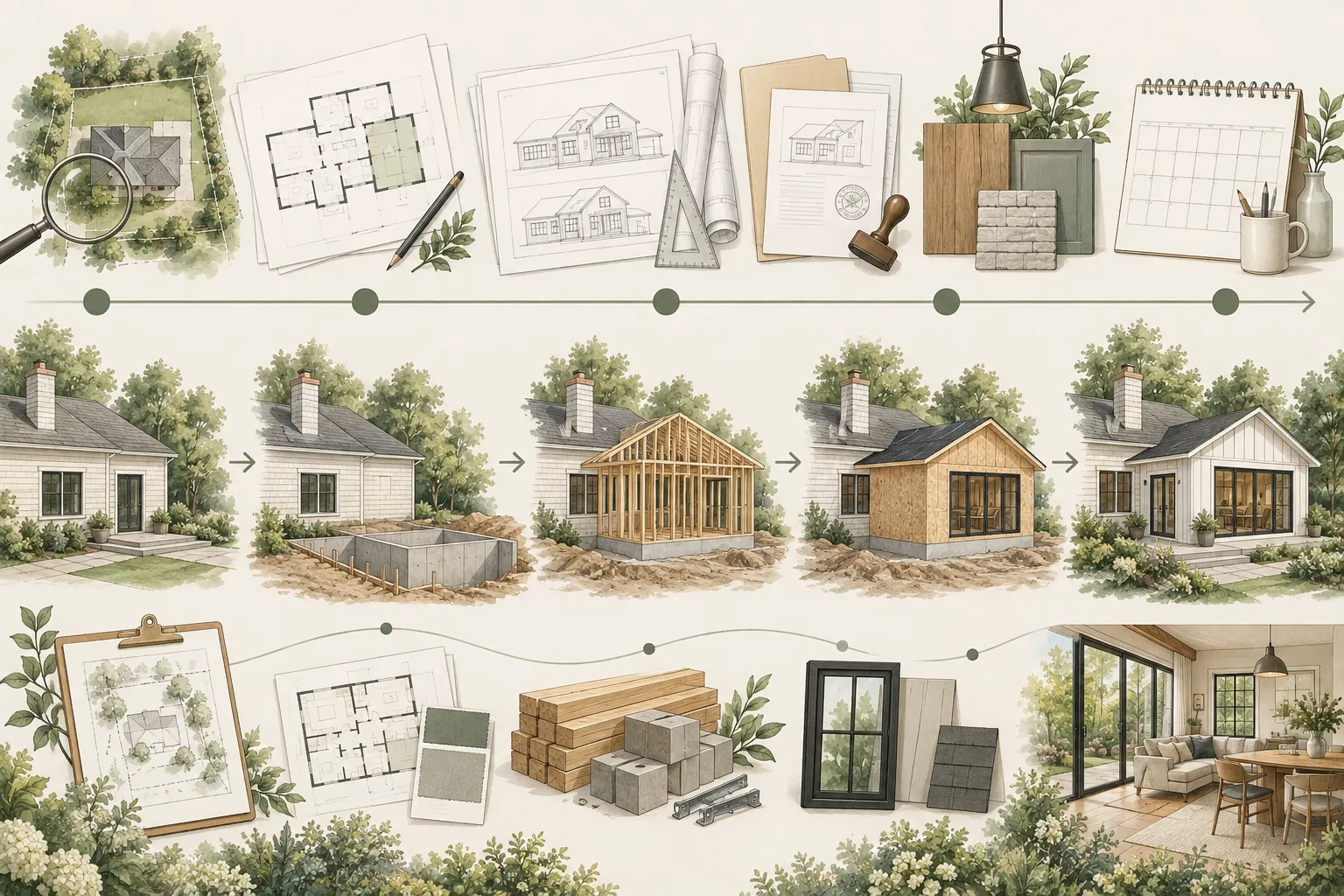

A home addition can appear to be moving smoothly until one unavailable item stops the next phase of work. Windows, structural components, electrical equipment, cabinets, and other products may need to be selected, approved, ordered, fabricated, delivered, and inspected well before installation. Managing those steps is a core part of schedule management—not simply a shopping task.
What Does “Long Lead” Mean?
A long-lead item is any material, product, or piece of equipment that must be committed early enough to avoid delaying the work. Its lead time includes more than shipping. The full sequence may involve:
-
Selection and specification
-
Field measurement or design coordination
-
Shop drawings, samples, or submittal review
-
Owner, designer, engineer, or jurisdiction approval
-
Deposit and order release
-
Manufacturing or fabrication
-
Freight, delivery, inspection, and replacement of damaged items
An item can become schedule-critical even when its published manufacturing time seems reasonable. A late decision, incomplete measurement, rejected submittal, missed deposit, or damaged delivery may consume the available schedule float.
Why Home Additions Have Unique Procurement Risks
An addition combines new construction with an existing building. That creates dependencies that may not exist in a stand-alone new home. Products may need to match existing profiles, colors, dimensions, roof assemblies, masonry, siding, flooring, trim, or hardware. Existing products may be discontinued, available only by special order, or impossible to match exactly.
Final dimensions may also depend on demolition or field verification. Ordering before hidden conditions are known can create expensive mistakes, while waiting too long can delay enclosure or finish work. The procurement plan should identify which dimensions are reliable from the drawings and which must be confirmed in the field.
Materials That Commonly Need Early Attention
The exact list varies by design, location, and contractor, but the following categories deserve early review:
-
Windows, skylights, and exterior doors—especially custom sizes, specialty finishes, or products intended to match the existing home
-
Structural steel, engineered lumber, roof trusses, hold-downs, connectors, and specialty hardware
-
Roofing, siding, masonry, stucco accessories, and exterior trim with matching requirements
-
Electrical panels, service equipment, meter assemblies, switchgear, and utility-provider equipment
-
Heating, cooling, ventilation, and specialty mechanical equipment
-
Plumbing fixtures, specialty valves, water heaters, and pumps
-
Cabinets, built-ins, countertops, and custom millwork
-
Appliances that affect cabinet, electrical, plumbing, ventilation, or gas rough-in
-
Tile, flooring, specialty finishes, and products requiring matching dye lots or production runs
-
Fire-sprinkler components or other specialty systems when required
This is a starting point, not a universal procurement list. The contractor, design team, suppliers, and utility providers should confirm current requirements and lead times for the specific project.
Owner Decisions Are Schedule Activities
Many delays attributed to “materials” begin as delayed decisions. A selection is not complete merely because the owner has chosen a general style. The team may still need an exact manufacturer, model, size, finish, accessory package, installation detail, approved price, and written authorization.
Decision deadlines should be tied to the date an item must arrive on site, then worked backward through approvals, ordering, fabrication, and contingency time. That makes the consequence of a missed decision visible before it affects construction.
Coordinate Submittals Before Releasing Orders
Shop drawings, product data, samples, and finish selections allow the team to verify that an item matches the design and interfaces correctly with adjacent work. Depending on the item, review may involve the contractor, architect, engineer, interior designer, energy consultant, owner, or permitting authority.
Ordering from incomplete drawings or before required approvals can be as risky as ordering late. Once a custom item enters production, changes may be costly or impossible. The contract should define who prepares, reviews, approves, and releases each submittal—and clarify that review does not transfer the supplier’s or contractor’s responsibility for dimensions and fabrication.
Use a Procurement Log
A simple procurement log gives the project team one place to track the decisions and actions that can affect the schedule. Useful fields include:
-
Item and specification
-
Responsible party
-
Selection and approval deadline
-
Submittal status
-
Deposit or payment requirement
-
Order-release date
-
Confirmed current lead time
-
Required-on-site date
-
Delivery location and storage plan
-
Inspection status
-
Potential substitution or backup plan
The log should be reviewed regularly with the construction schedule. A product is not safely managed simply because it has been discussed or quoted; the team needs confirmation that it was approved, released, and acknowledged by the supplier.
Confirm Lead Times at the Time of Order
Lead times change. A timeframe discussed during design or bidding may no longer be valid when the order is ready to release. Confirm availability, production time, freight assumptions, and delivery conditions directly with the responsible vendor when the order is placed. Ask whether the estimate begins at quotation, deposit, approved submittal, final field measurement, or factory release.
Utility-provider work deserves special attention because equipment availability and scheduling may be controlled by a third party. New or upgraded electrical service, meters, transformers, gas service, or other utility work may require separate applications, design reviews, payments, inspections, and scheduling windows.
Owner-Purchased Materials Need Clear Responsibility
Owners sometimes purchase appliances, fixtures, tile, lighting, or specialty products directly. This may offer more control, but it also shifts important procurement responsibilities. The team should document who is responsible for confirming compatibility, quantities, dimensions, code compliance, delivery, unloading, inspection, storage, returns, warranty claims, and replacement of damaged or missing items.
A contractor may not be able to guarantee the schedule when owner-supplied materials arrive late or are incompatible. These responsibilities and potential schedule effects should be addressed before orders are placed.
Plan for Delivery, Inspection, and Storage
Delivery is not the end of procurement. The project needs an appropriate location, access route, unloading plan, and inspection process. Materials stored too early can be exposed to theft, moisture, impact damage, UV exposure, or jobsite congestion. Some products must remain conditioned, dry, flat, upright, or in their original packaging.
The team should also consider when warranties begin. For certain products, an early purchase may start a warranty before installation or reduce the practical return window. Damaged, incomplete, or incorrect deliveries should be documented promptly so replacements do not become a new critical delay.
Ordering Too Early Can Also Create Problems
Early procurement is useful only when the design, dimensions, approvals, and storage conditions support it. Premature ordering can create:
-
Products that no longer fit after design or field-condition changes
-
Incorrect quantities or dimensions
-
Storage, handling, and damage costs
-
Cash-flow pressure or lender-draw complications
-
Expired return periods or reduced warranty value
-
Rework caused by substitutions elsewhere in the project
The goal is not to buy everything immediately. It is to release each item at the point when the information is sufficiently reliable and the remaining lead time aligns with the construction schedule.
Manage Substitutions Deliberately
When an item is unavailable, a substitution may affect more than appearance or price. It can change rough openings, structural support, energy performance, electrical loads, ventilation, waterproofing, finish transitions, maintenance needs, or permit compliance.
Before approving a substitute, the team should evaluate all affected trades and documents. Written approval, updated pricing, schedule impact, and revised drawings or submittals may be needed. A quick product swap made in isolation can create larger downstream costs.
Common Procurement Mistakes
-
Waiting for construction to begin before identifying long-lead items
-
Treating a preliminary quote as a confirmed order
-
Using an old lead-time estimate without reconfirming it
-
Failing to assign an owner for each selection and order
-
Ordering custom products before dimensions and approvals are reliable
-
Ignoring utility-provider applications and equipment
-
Assuming owner-purchased products are outside the project schedule
-
Delivering products without a secure, suitable storage plan
-
Approving substitutions without checking related trades and code requirements
Foundation Tip
Ask the contractor for a procurement log that works backward from required-on-site dates—not merely a list of selections. Review it alongside the construction schedule, and give special attention to items that affect dry-in, inspections, rough-in, cabinetry, and permanent utility service.
How Foundation Can Help
Foundation can help owners establish a clear decision and procurement framework for a home addition, coordinate responsibilities among the project team, and connect material deadlines to the broader schedule and budget. The goal is to surface time-sensitive decisions early and make procurement status easier to understand without replacing the contractor’s purchasing responsibilities.
Important Disclaimer
Product availability, lead times, utility requirements, code requirements, and supplier terms vary by location and change over time. This article provides general educational information and is not a substitute for project-specific advice from your contractor, architect, engineer, suppliers, utility providers, lender, insurer, or local jurisdiction. Confirm current requirements, dimensions, approvals, pricing, and delivery commitments before placing an order.