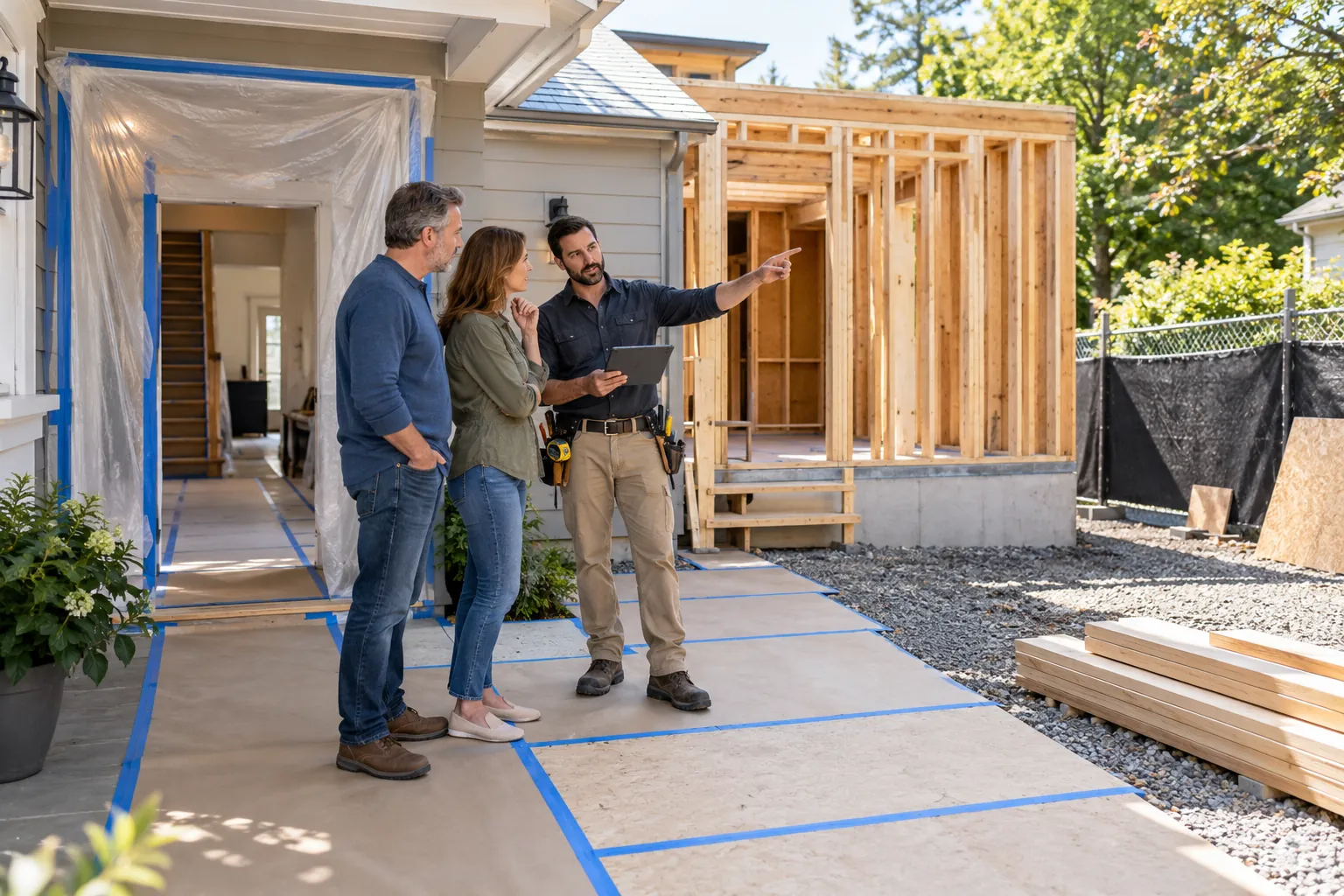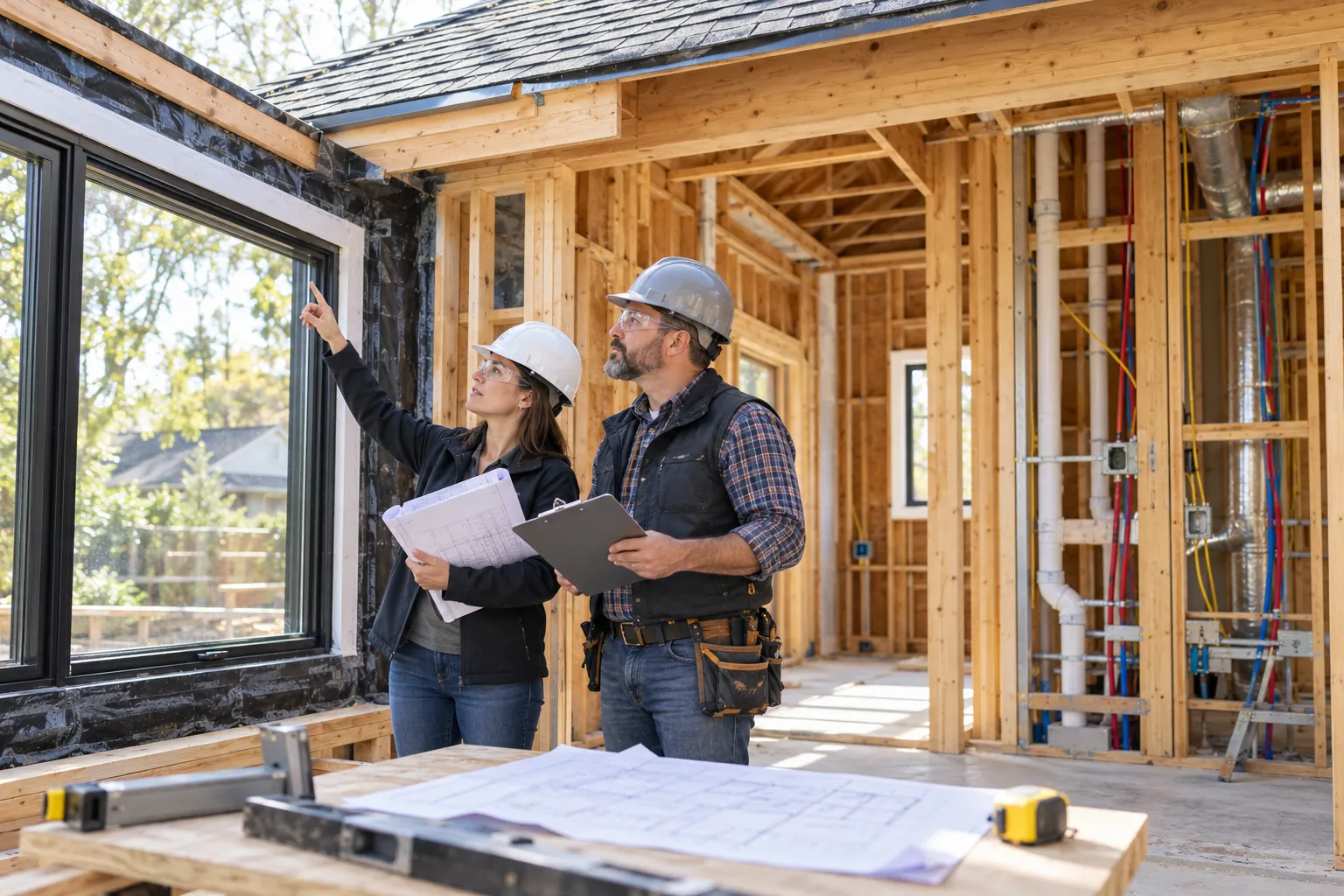
Home addition construction happens beside—and eventually inside—the existing house. Excavation, demolition, structural openings, roofing, sanding, cutting, deliveries, and daily trade access can affect spaces well beyond the new footprint.
Dust, noise, and security cannot be eliminated, but they can be managed through a clear site plan, physical separation, appropriate equipment, realistic schedules, controlled access, and consistent daily routines.
This article focuses on protecting the household and property during the work. For the broader decision about whether to remain at home during construction, see KB-2629.
Begin With a Written Occupied-Home Plan
Before work starts, the homeowner and contractor should agree on how the construction zone will operate. The plan should reflect the project’s phases because access and risks change when work moves from exterior excavation to opening the existing house and completing interior finishes.
The plan should address:
-
Work-zone boundaries and household no-entry areas
-
Temporary partitions, doors, weather protection, and covered openings
-
Worker, delivery, and subcontractor access routes
-
Dust-control equipment and cleanup responsibilities
-
Normal work hours and advance notice for unusually disruptive activities
-
Utility shutdowns and emergency contacts
-
Keys, gates, alarms, cameras, and daily lockup
-
Children, pets, mobility needs, and health sensitivities
-
Changes required when the existing exterior wall is opened
A brief plan that the team follows is more useful than a detailed document that no one reviews. Include the key rules in the preconstruction meeting and make them available to site personnel.
Create a Real Physical Separation
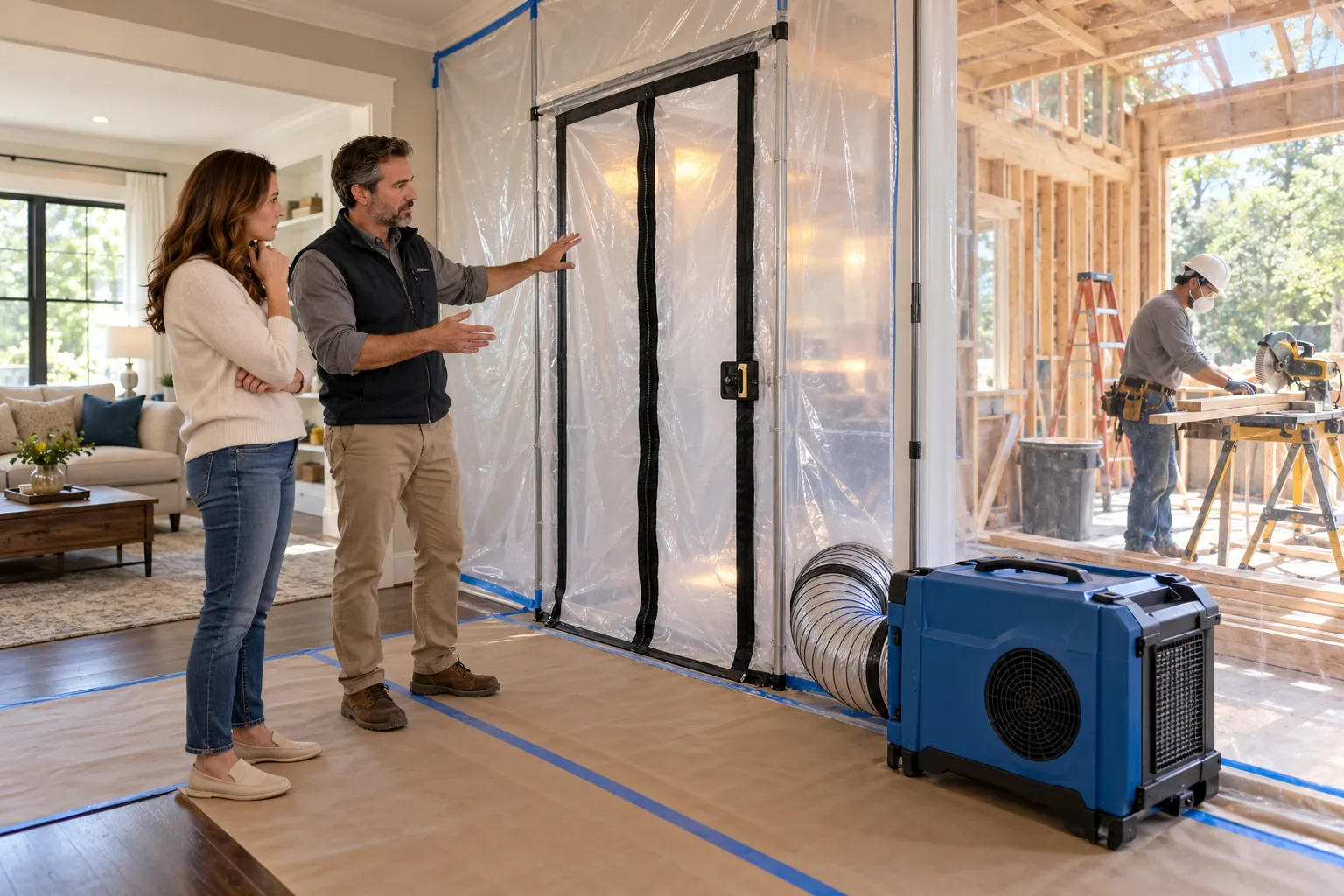
A closed interior door is rarely adequate protection beside active demolition or construction. The contractor may need temporary framed partitions, durable sheeting systems, sealed doors, floor protection, and separate circulation routes.
An effective separation should:
-
Define a clear boundary between occupied and construction areas
-
Remain stable despite air movement and repeated use
-
Seal practical gaps at floors, ceilings, walls, and penetrations
-
Provide a controlled entry point rather than multiple informal openings
-
Allow required emergency egress and safe household circulation
-
Accommodate utility work without being repeatedly dismantled
Partitions must also coordinate with fire safety, structural shoring, ventilation, and inspections. A barrier should not conceal an unsafe condition or block a required exit.
Control Dust at the Source
Dust control is more effective when it begins where dust is generated. Cutting methods, tool-connected extraction, wet methods where appropriate, local collection, and work sequencing can reduce the amount released into the air.
Depending on the work and hazards, contractor controls may include:
-
Tools connected to suitable dust-extraction equipment
-
Portable air-cleaning devices with appropriate filters
-
Negative-pressure arrangements that direct air away from occupied spaces
-
Sealed debris containers or controlled removal paths
-
Regular HEPA vacuuming and damp cleaning rather than dry sweeping
-
Protection or isolation of return-air and supply-air pathways
The correct approach depends on the material and activity. Silica-containing products, lead-based paint, asbestos-containing materials, mold, and other hazards require specific assessments and regulatory controls. General housekeeping methods do not replace hazard-specific procedures.
Protect the HVAC System and Air Pathways
Dust can travel through ductwork, return-air grilles, plumbing penetrations, recessed fixtures, attic spaces, and gaps around temporary partitions. Operating the home’s HVAC system without a plan can distribute contaminants beyond the work area.
The contractor and appropriate building-system professionals should determine which registers or zones need isolation, whether equipment should run during particular operations, and how occupied spaces will maintain safe temperatures and ventilation.
Filters are only one part of the strategy. A restrictive or incorrect filter can affect equipment performance, and replacing filters does not compensate for an open return inside the construction zone.
Establish Cleanup Standards
“Broom clean” can mean different things. Define the expected condition of work paths and occupied-home interfaces during construction.
A practical routine may include:
-
Control and collect debris during the work.
-
Remove waste through the designated route.
-
Vacuum or damp-clean affected surfaces and pathways.
-
Inspect barriers, door closures, and floor protection.
-
Remove tripping hazards and secure tools and materials.
-
Complete an end-of-day check before the crew leaves.
Periodic deeper cleaning may be needed when phases change or before a barrier moves. Final cleaning should not be expected to correct months of uncontrolled dust migration.
Plan for High-Dust Phases
Dust levels are not constant. Demolition, concrete cutting, drywall sanding, floor preparation, and opening the wall between the addition and the house are typically more disruptive than many finish activities.
The team should identify these periods in advance so the household can protect belongings, close interior rooms, adjust work-from-home plans, relocate pets, or leave temporarily if appropriate. Advance notice is especially important for occupants with respiratory sensitivities or other health concerns.
Set Realistic Noise Expectations
Construction noise includes more than power tools. Trucks, backup alarms, compressors, radios, demolition, fastening, concrete work, and workers moving through the site all contribute.
Noise planning should address:
-
Permitted work hours and any neighborhood restrictions
-
The contractor’s normal start and finish times
-
Advance notice for demolition, concrete cutting, roofing, or other intense work
-
Quiet periods that are feasible without disrupting the schedule
-
Work-from-home meetings, sleep schedules, and household needs
-
Communication with immediate neighbors
It may not be practical to schedule every loud task around household preferences. The goal is predictability: homeowners can plan better when they know which days or phases will be difficult.
Protect Hearing and Limit Household Entry
Household members should not enter an active construction zone without permission and appropriate personal protective equipment. Noise levels that are tolerable for a quick conversation may be unsafe during extended exposure.
Children and pets should never rely on verbal instructions alone. Physical barriers, closed gates, supervision, and clear no-entry rules are essential.
Control Worker and Trade Access
An addition may involve dozens of workers, subcontractors, inspectors, delivery drivers, and service personnel over time. The homeowner should not have to independently authorize every individual, but the contractor should manage who is expected onsite and where they may go.
A basic access protocol should define:
-
The approved entrance, gate, driveway, and interior route
-
Who may unlock the property or receive a key or code
-
Whether workers may enter when no homeowner is present
-
Which bathrooms, sinks, parking areas, and storage locations may be used
-
How unexpected visitors and deliveries are verified
-
Who locks doors, gates, windows, and temporary openings each day
Access rules should be communicated by the contractor to subcontractors. Homeowners should not need to renegotiate the same boundary with each arriving trade.
Manage Keys, Codes, Alarms, and Cameras
Decide whether the contractor receives a physical key, temporary code, lockbox, smart-lock access, or access only when the homeowner is present. Temporary credentials are often easier to monitor and revoke than permanent household codes.
If alarms or cameras will remain active, identify how they interact with construction traffic, power shutdowns, removed doors, exterior work, and privacy. Cameras should not be used in a way that violates applicable privacy or workplace laws.
At project completion, collect keys and access devices, remove temporary codes, restore alarm zones, and confirm that temporary locks or openings have been replaced.
Secure Temporary Openings and the Building Envelope
During portions of the project, walls, roofs, doors, windows, fences, or gates may be removed. Temporary protection must address weather, unauthorized entry, pests, and fall hazards—not just visibility from the street.
The contractor should plan how openings will be protected during the workday, overnight, on weekends, and during weather events. Temporary coverings should be stable, lockable where needed, and coordinated with emergency exit requirements.
Protect Valuables, Identity, and Personal Information
Even with a trusted contractor, occupied homes contain valuables, medication, documents, financial information, and personal devices that should not remain along a shared route.
Before construction, homeowners should:
-
Move valuable or sensitive items away from work and access areas
-
Secure documents, mail, medication, keys, and portable electronics
-
Back up computers and protect equipment from dust and power interruptions
-
Limit visibility of alarm instructions, passwords, and household schedules
-
Review insurance requirements for stored materials and construction conditions
This is sensible risk management, not an assumption that workers are untrustworthy.
Plan for Pets
Pets can be stressed by unfamiliar people, noise, vibration, open gates, fumes, and disrupted routines. A pet that normally stays inside may escape through a temporary opening or react unpredictably to workers.
The plan should identify:
-
A secure room or offsite location during active work
-
Who is responsible for doors and gates
-
How workers will know a pet is present
-
Where food, medication, litter, and walking routes will be maintained
-
Which high-noise or high-traffic days require relocation
Temporary fencing and barriers should be checked daily; construction activity can move or damage them.
Manage Deliveries and Material Security
Windows, doors, appliances, fixtures, lumber, and finish materials may arrive before installation. The team should identify who accepts deliveries, documents damage, provides secure storage, and protects products from weather or theft.
Materials should not block household access, exits, sidewalks, utility equipment, or required site circulation. High-value items may require locked storage or scheduled just-in-time delivery.
Use a Daily Closeout Checklist
Many household problems occur after workers leave. A consistent end-of-day check can confirm that:
-
Temporary barriers and weather protection remain secure
-
Doors, gates, windows, lockboxes, and storage areas are locked
-
Tools, chemicals, ladders, and sharp materials are secured
-
Debris routes and household paths are clean and passable
-
Utilities and temporary systems are in the expected condition
-
Pets cannot enter the work zone or escape the property
-
The homeowner knows about any overnight restriction or unusual condition
Responsibility for this check should be assigned, not assumed.
Communication When Controls Fail
Barriers can tear, dust can migrate, alarms can trigger, and access plans can be misunderstood. Establish who the homeowner contacts, what requires immediate work stoppage, and how damage or contamination will be documented.
Repeated failures are different from an isolated incident. If controls are not working, the plan, equipment, supervision, or sequencing should be revised before the same activity continues.
Foundation Tip
Walk the planned worker route from the street to the addition before construction starts. Look for every gate, occupied room, pet area, low-clearance point, valuable surface, alarm sensor, and place where dust or unauthorized access could spread beyond the work zone.
How Foundation Can Help
Foundation helps homeowners turn broad promises about protection and cleanup into specific preconstruction questions. Through a Foundation Strategy Session, Renovation Roadmap™, or Foundation Bid Review™, we can help clarify access, temporary protection, housekeeping, security, pet planning, and responsibility boundaries before work begins.
Foundation does not provide industrial hygiene, environmental testing, security services, safety management, or contractor supervision. Our role is to help the homeowner understand the plan, identify gaps, and communicate expectations with the professionals responsible for the work.
Important Disclaimer
This article provides general educational information and is not health, safety, environmental, security, legal, or construction advice. Hazard controls and access requirements vary by activity, material, occupants, contractor, and jurisdiction. Engage qualified professionals, follow applicable regulations, and leave active work areas when conditions are unsafe.