
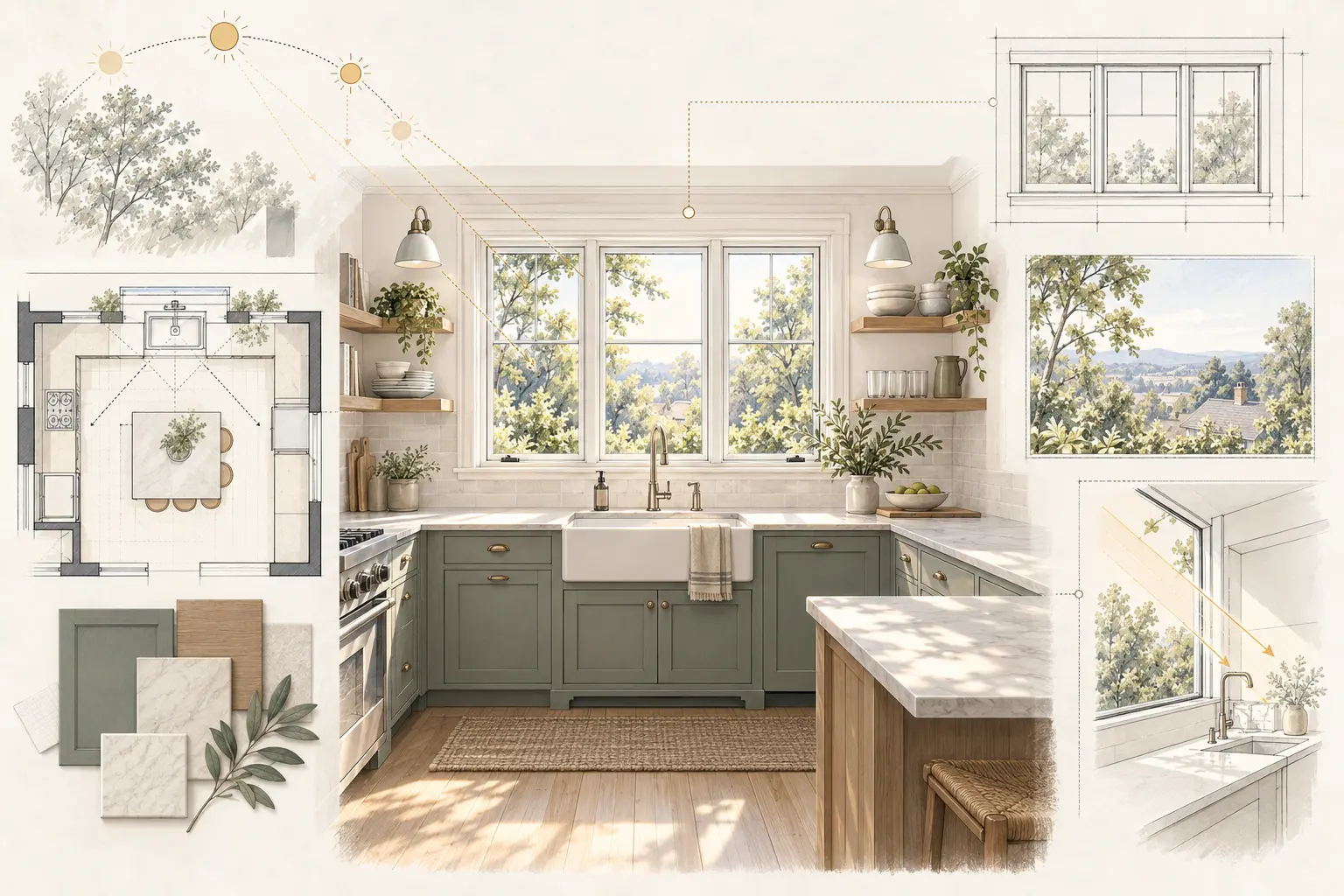
Why Natural Light Matters
Natural light can make a kitchen feel larger, brighter, and more inviting while improving visibility for everyday tasks.
Window placement also affects ventilation, privacy, views, energy efficiency, and the arrangement of cabinets and appliances.
The goal is to balance daylight with the practical needs of the kitchen and the unique characteristics of the home.
Key Factors to Consider
- Orientation: The direction your windows face affects the amount and quality of daylight throughout the day.
- Views and Privacy: Consider what you want to see—and what you want others to see.
- Ventilation: Operable windows can improve airflow and complement mechanical ventilation.
- Cabinet Layout: Window placement influences where cabinets, shelves, and appliances can be located.
- Energy Efficiency: Glass type, shading, and window size all affect indoor comfort and energy use.
- Maintenance: Think about cleaning accessibility and long-term upkeep.
- Budget: Larger openings, structural changes, and premium glazing can increase project costs.
Common Window Options
Window Over the Sink
A classic choice that brings daylight to one of the kitchen's busiest work areas.
Picture Window
Provides expansive views and abundant daylight but does not open for ventilation.
Casement Window
Opens outward to provide excellent ventilation and is often easy to operate.
Sliding Window
Offers a simple operation with a contemporary appearance where exterior clearance is limited.
Clerestory Windows
High-mounted windows that introduce daylight while preserving privacy.
Skylights and Solar Tubes
Bring natural light into kitchens where wall windows are limited.
Questions Your Designer May Ask
- Which areas of the kitchen feel too dark today?
- How important are outdoor views from the kitchen?
- Do you need additional ventilation?
- Are privacy concerns a factor?
- Will changing window locations affect cabinet or appliance placement?
- Would you like to maximize daylight without increasing glare?
Looking Beyond the Windows
Natural light works best when coordinated with artificial lighting, cabinet colors, countertop finishes, and the overall kitchen layout. A well-lit kitchen combines daylight with thoughtfully planned task, ambient, and accent lighting.
Common Misconceptions
More windows always create a better kitchen. Additional windows can reduce wall space for cabinets and may introduce glare, heat, or privacy concerns if not carefully planned.
Bigger windows are always better. Window size should be balanced with storage, structural limitations, and energy performance.
Natural light eliminates the need for good lighting design. Even bright kitchens require task and ambient lighting for evenings and cloudy days.
Every kitchen should have a window over the sink. While common, other layouts may better support the home's structure, views, or overall workflow.
Energy-efficient windows make orientation unimportant. Modern glazing helps, but the direction windows face still has a major impact on daylight and indoor comfort.
Foundation Tip
Visit your kitchen at different times of day before finalizing a design. Understanding how sunlight moves through the space can help you make better decisions about window placement, lighting, and finishes.
Closing Thought
Thoughtfully planned windows do more than brighten a room—they improve comfort, functionality, and the overall experience of using your kitchen. Balancing daylight with storage, privacy, and energy performance creates a space that works well for years to come.