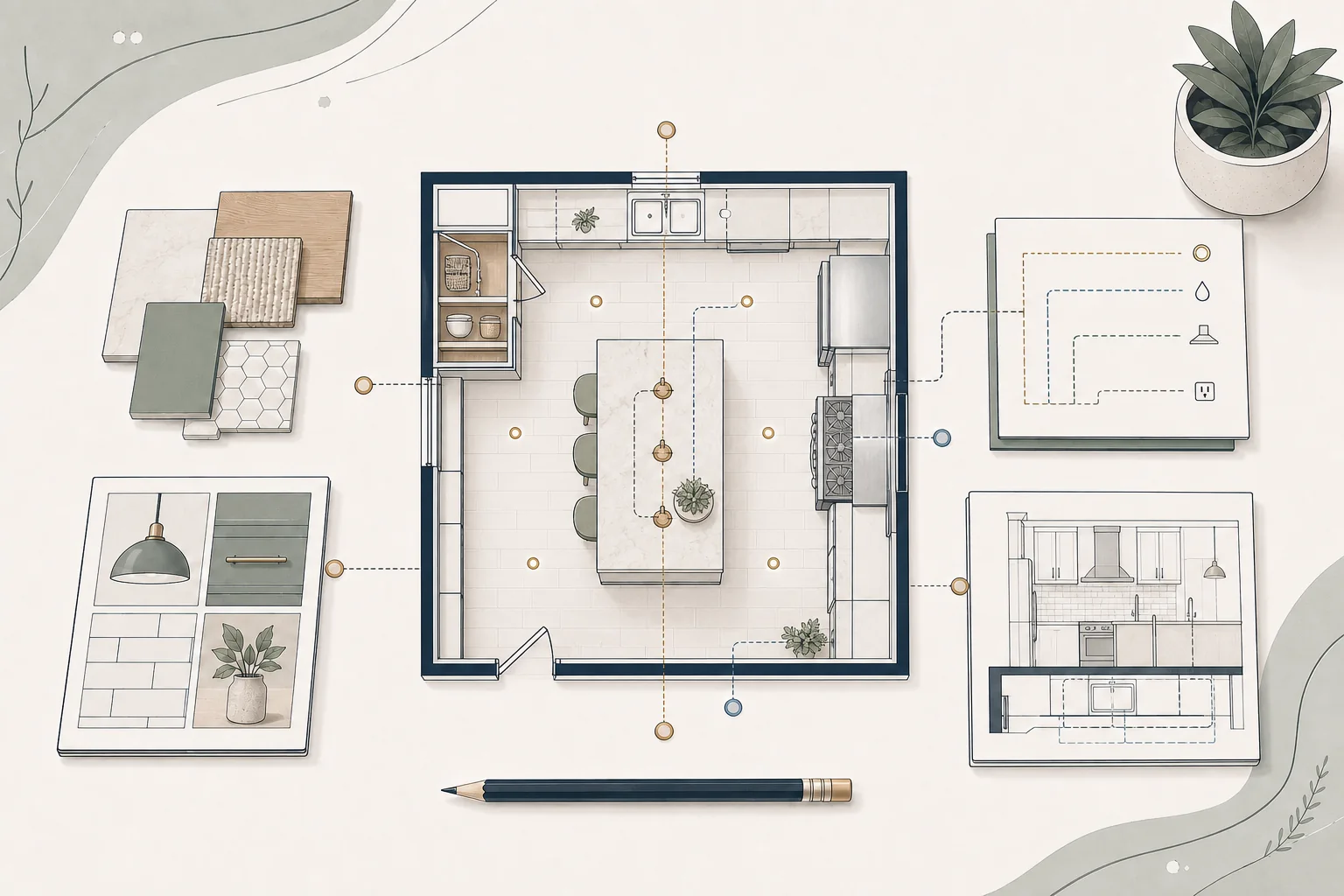
Why Kitchen Lighting Matters
Lighting affects how a kitchen looks, feels, and functions. It influences food preparation, cooking, cleaning, entertaining, and the overall comfort of the space.
Many homeowners begin by selecting decorative light fixtures. While aesthetics are important, a successful lighting plan starts by understanding what each area of the kitchen needs to accomplish.
A well-designed lighting plan combines multiple types of lighting to create a space that is both functional and inviting.
The Three Layers of Kitchen Lighting
- Ambient Lighting: Provides general illumination for the entire room and creates a comfortable overall level of light.
- Task Lighting: Illuminates work areas such as countertops, sinks, cooktops, and islands where detailed activities take place.
- Accent Lighting: Highlights architectural features, display areas, or decorative elements to add visual interest and depth.
Key Factors to Consider
- How will each area of the kitchen be used?
- Where are shadows most likely to occur during food preparation?
- Will natural daylight change how artificial lighting is needed?
- Should lighting levels be adjustable for different activities?
- How will lighting coordinate with cabinetry, appliances, and ceiling design?
- How easy will fixtures be to maintain and replace over time?
Balancing Function and Design
Decorative fixtures often become the visual focal point of a kitchen, but appearance should complement—not replace—good lighting design. A beautiful fixture cannot compensate for poor illumination where work is performed. Planning the lighting layout before selecting fixtures helps ensure both function and aesthetics work together.
Common Misconceptions
- One ceiling light is enough for the entire kitchen. Most kitchens benefit from multiple layers of lighting that serve different purposes.
- Brighter is always better. The goal is appropriate lighting where it is needed, not simply adding more light everywhere.
- Under-cabinet lighting is only decorative. It often improves visibility by reducing shadows on work surfaces.
- Lighting can be figured out after construction begins. Electrical planning is typically most effective before drywall and cabinetry are installed.
- Choosing fixtures is the same as designing a lighting plan. Fixtures are only one part of an effective lighting strategy.
Foundation Tip
Before shopping for light fixtures, think about the activities that take place throughout your kitchen each day. A lighting plan that supports those activities will provide greater long-term value than choosing fixtures based on appearance alone.
Closing Thought
Effective kitchen lighting combines functionality, comfort, and design. By understanding how different types of lighting work together, homeowners can create spaces that are enjoyable to use throughout the day while complementing the overall design of the kitchen.