Why Pantry Design Matters
A well-designed pantry does more than store food. It supports meal preparation, reduces countertop clutter, and makes everyday items easier to find.
The best pantry is one that matches your shopping habits, cooking style, and available space rather than simply maximizing storage.
Whether your kitchen has a walk-in pantry or a single pantry cabinet, thoughtful organization can make the kitchen feel larger and function more efficiently.
Key Factors to Consider
- Available Space: Evaluate how much room is available without compromising the kitchen layout.
- Storage Needs: Consider food, small appliances, serving pieces, and bulk purchases.
- Accessibility: Frequently used items should be easy to reach.
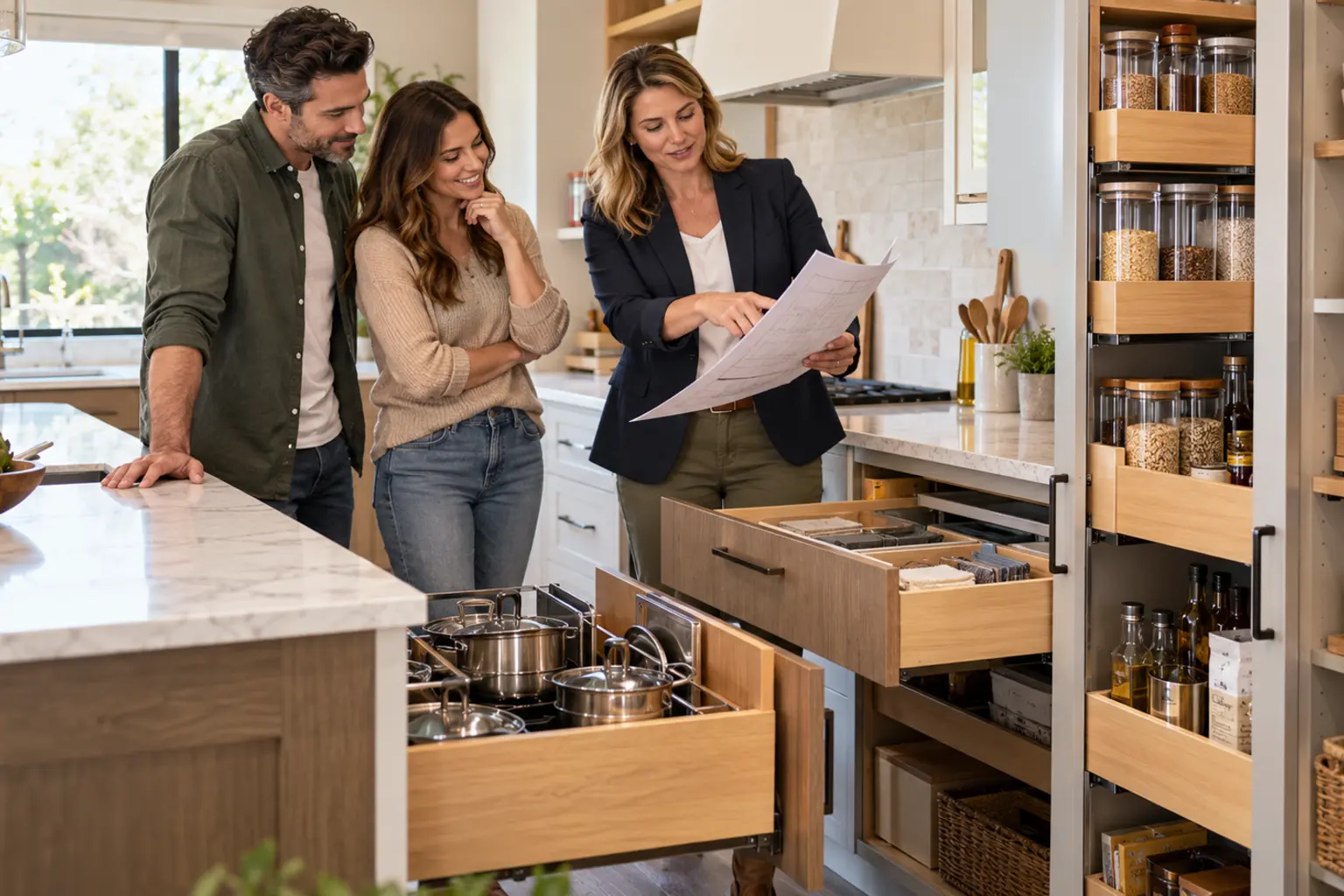
- Organization: Adjustable shelving, drawers, and pull-outs can simplify storage.
- Lighting: Good lighting improves visibility and reduces wasted space.
- Flexibility: Choose storage solutions that can adapt as your family's needs change.
- Budget: Pantry costs vary based on size, cabinetry, accessories, and finishes.
Common Pantry Options
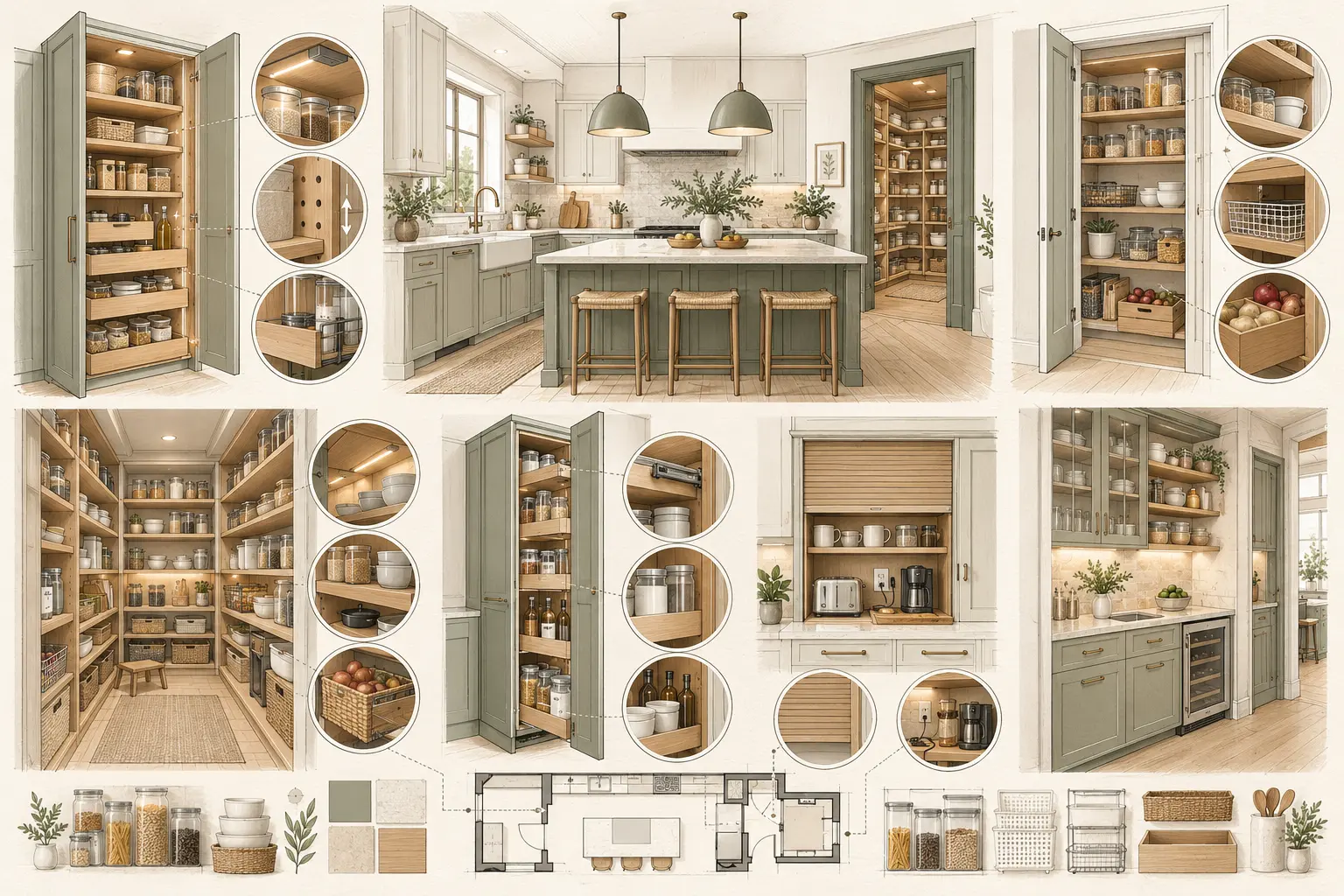
Tall Pantry Cabinet
A full-height cabinet integrated into the kitchen layout for food and household storage.
Walk-In Pantry
A separate room that offers extensive shelving and flexible storage.
Reach-In Pantry
A closet-style pantry with shelves accessed from a single doorway.
Butler's Pantry
A transitional space that may include additional cabinets, countertops, or appliance storage.
Appliance Garage
Keeps frequently used countertop appliances accessible while reducing visual clutter.
Pull-Out Pantry
Narrow pull-out shelves that maximize storage in compact kitchens.
Questions Your Designer May Ask
- How often do you cook at home?
- Do you buy groceries weekly or in bulk?
- Which small appliances do you use most often?
- Would you like to keep food and appliances in the same pantry?
- How important is keeping countertops free of clutter?
- Do you expect your storage needs to change over time?
Looking Beyond Storage Capacity
A larger pantry does not automatically create a better kitchen. Shelf depth, visibility, accessibility, lighting, and organization often have a greater impact on everyday usability than total storage volume.
Common Misconceptions
Bigger pantries are always better. An oversized pantry can waste space if it is difficult to organize or requires long walks during meal preparation.
Deep shelves provide the most efficient storage. Items stored at the back of deep shelves are often forgotten, leading to wasted food and clutter.
A walk-in pantry is necessary for every kitchen. Many homes function extremely well with thoughtfully designed pantry cabinets or reach-in pantries.
Pantries are only for food. Many homeowners also use pantry space for small appliances, serving dishes, pet supplies, or cleaning items.
Organization can wait until after the remodel. Planning shelves, drawers, and storage zones during design usually creates a much more functional pantry.
Foundation Tip
Before designing your pantry, make a list of everything you expect to store there. Planning around your actual belongings often leads to a more useful design than simply adding more shelves.
Closing Thought
A pantry should make your kitchen easier to use every day. By designing storage around your family's habits instead of trends, you can create a space that remains organized, efficient, and adaptable for years to come.