
Designing Storage Around Your Lifestyle
One of the biggest differences between an average kitchen and a highly functional kitchen is not its size—it's how well storage supports everyday routines.
Many homeowners begin choosing cabinets before considering what they actually need to store. Taking inventory of cookware, dishes, pantry items, small appliances, and specialty items before finalizing cabinet layouts often leads to better design decisions.
The goal is not to maximize the number of cabinets. The goal is to make frequently used items easy to access while keeping the kitchen organized and efficient.
Key Factors to Consider
- Daily Use: Keep frequently used items close to where they are used.
- Accessibility: Reduce bending, reaching, and climbing whenever possible.
- Countertop Space: Balance storage with adequate work surfaces.
- Flexibility: Choose solutions that can adapt as your needs change.
- Organization: Consider dividers, pull-outs, and inserts where they add value.
- Future Needs: Think about aging in place and changing household needs.
- Budget: Invest in storage features that will be used regularly.
Common Kitchen Storage Solutions
### Drawers vs. Shelves
Advantages
- Drawers make items easier to access without kneeling or reaching.
- Deep drawers work well for pots, pans, and dishes.
Tradeoffs
- Drawers typically cost more than shelves.
- Very deep drawers may require organizers to stay tidy.
### Pantry Storage
Advantages
- Keeps food organized in one location.
- Can reduce clutter on countertops.
Tradeoffs
- Requires adequate floor space.
- Poor organization can reduce its effectiveness.
### Corner Cabinet Solutions
Advantages
- Pull-out and rotating accessories improve access.
- Makes better use of difficult spaces.
Tradeoffs
- Accessories increase cost.
- Some storage is still less accessible than standard cabinets.
### Pull-Out Waste and Recycling
Advantages
- Keeps trash concealed.
- Improves workflow during cooking and cleanup.
Tradeoffs
- Requires dedicated cabinet space.
### Small Appliance Storage
Advantages
- Reduces countertop clutter.
- Keeps appliances protected when not in use.
Tradeoffs
- Requires planning for cabinet dimensions and electrical access if appliance garages are used.
Looking Beyond Storage Accessories
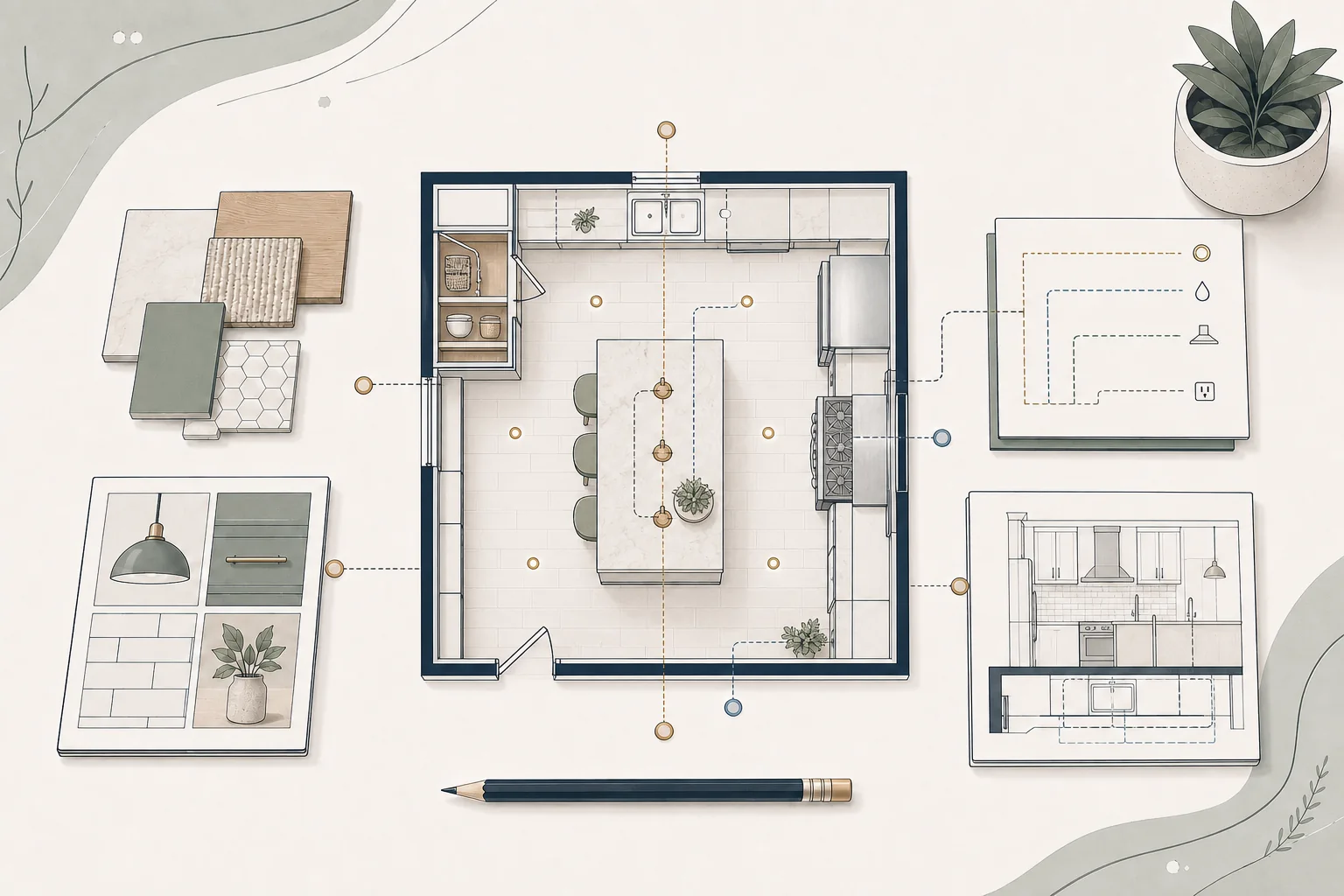
Accessories can improve convenience, but they cannot compensate for a poorly planned layout. The location of cabinets, appliances, work zones, and countertop space should be established first. Storage accessories should then support those decisions rather than drive them.
Common Misconceptions
- More cabinets always create a better kitchen. Good organization is often more valuable than simply adding cabinets.
- Every cabinet needs an accessory. Accessories should solve a specific storage problem, not add unnecessary cost.
- Open shelving provides more storage. It changes accessibility and appearance but often stores less than enclosed cabinetry.
- Large pantries solve every storage issue. Organization and layout are just as important as size.
- Storage should be planned after the cabinets are selected. Storage needs should help determine the cabinet layout.
Foundation Tip
Before selecting cabinet accessories, spend time thinking about how you use your kitchen every day. Design storage around your routines rather than trying to adapt your routines to the storage.
Closing Thought
Well-designed kitchen storage makes cooking, cleaning, and entertaining easier without increasing the size of the room. By understanding your household's needs before making design decisions, you can create a kitchen that remains organized and functional for years to come.