Why a Backsplash Matters
A backsplash protects the wall behind countertops from water, grease, food splatter, and everyday wear. While it is often viewed as a decorative feature, it also plays an important role in the durability and maintenance of a kitchen.
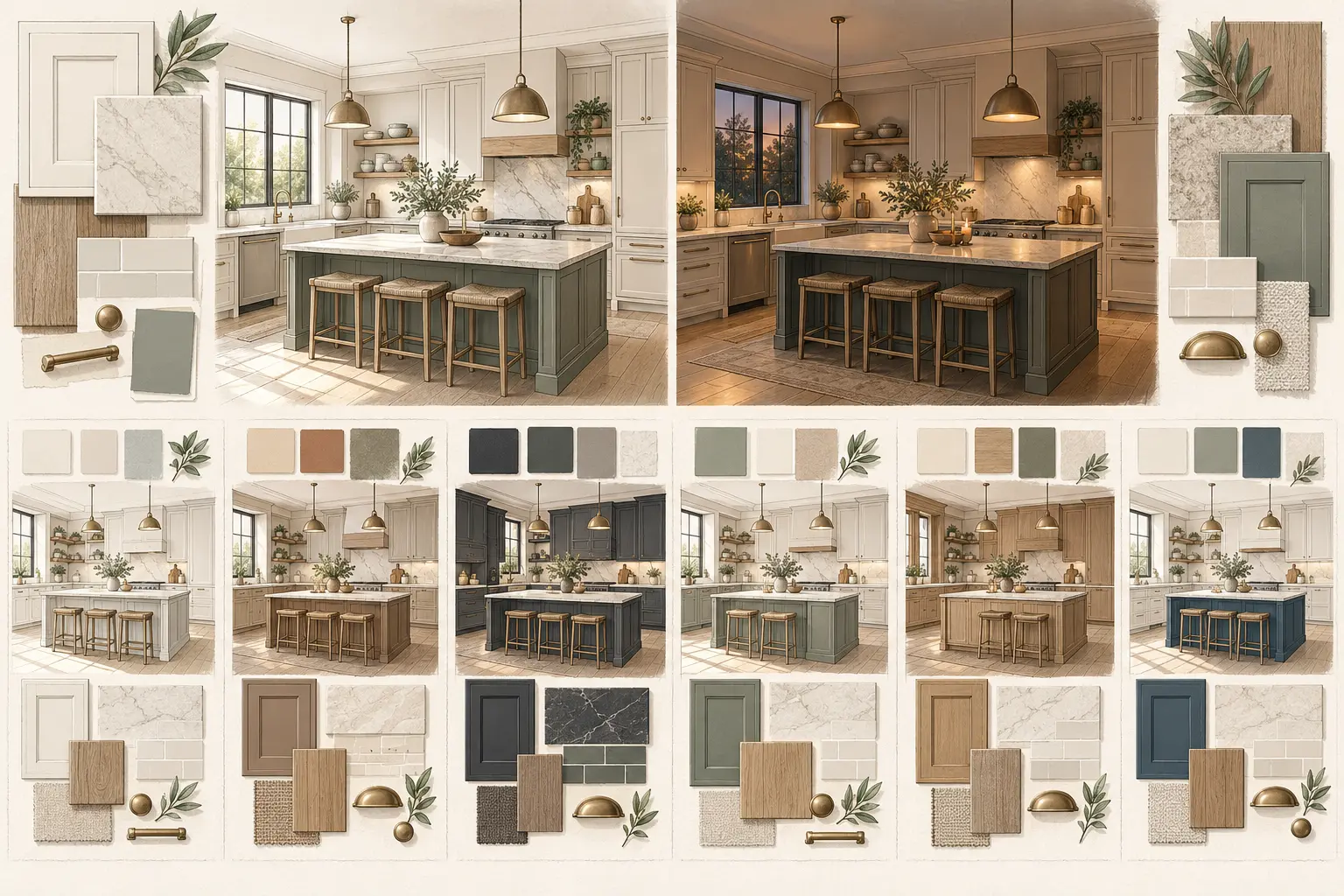
Backsplashes can also help tie together cabinets, countertops, flooring, and paint colors, making them one of the most visually influential design elements in the room.
The best backsplash is one that complements the overall kitchen while supporting the way you use the space.
Key Factors to Consider
- Function: Consider how much cooking you do and where wall protection is most important.
- Material: Different materials vary in durability, maintenance, and appearance.
- Height: Determine whether a standard backsplash or a full-height installation better fits your goals.
- Maintenance: Think about grout lines, cleaning requirements, and stain resistance.
- Design Coordination: Coordinate the backsplash with countertops, cabinetry, and lighting.
- Budget: Material choice, installation complexity, and specialty patterns all influence cost.
Common Backsplash Options
Ceramic and Porcelain Tile
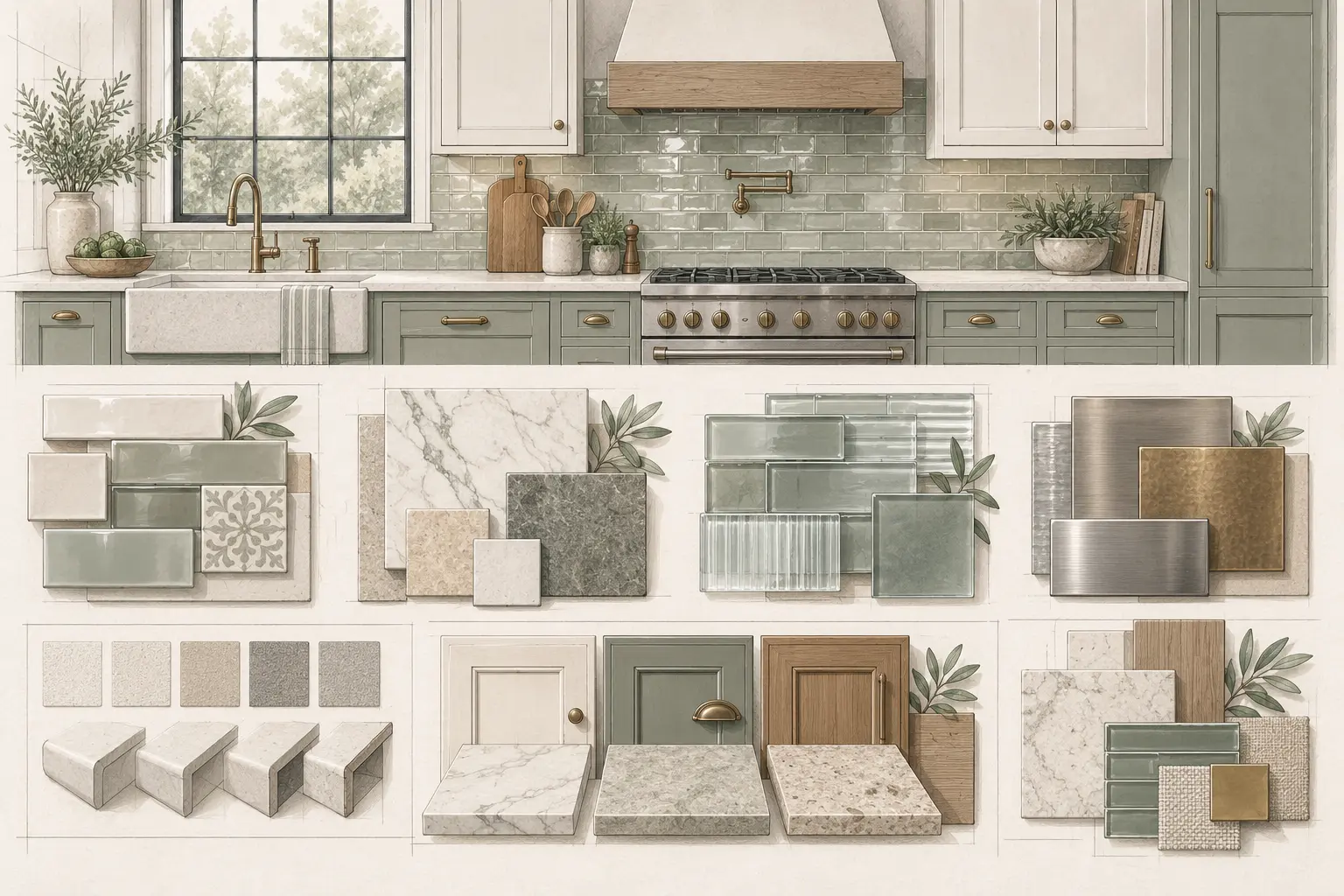
A versatile option available in many colors, sizes, and patterns. Often chosen for its durability and ease of maintenance.
Natural Stone
Provides a unique, organic appearance but may require sealing and additional maintenance depending on the material.
Glass Tile
Reflects light and creates a clean, contemporary appearance. Installation can require additional precision.
Slab Backsplash
Uses the same material as the countertop for a seamless appearance with minimal grout lines.
Metal Backsplashes
Often used in contemporary or industrial-inspired kitchens and valued for their durability.
Painted Wall
Suitable in limited locations with minimal exposure to moisture or grease but provides less protection than dedicated backsplash materials.
Questions Your Designer May Ask
- Is the backsplash primarily for protection, appearance, or both?
- Do you prefer a subtle design or a focal point?
- How much maintenance are you comfortable with?
- Would you like the backsplash to match or contrast with the countertop?
- Do you prefer a standard-height backsplash or a full-height installation?
- Are there outlets, windows, or shelves that will affect the layout?
Looking Beyond the Tile
A successful backsplash installation depends on more than selecting a material. Tile size, grout color, edge details, transitions, outlet placement, under-cabinet lighting, and installation quality all contribute to the finished appearance.
Common Misconceptions
A backsplash is only decorative. Its primary purpose is to protect the wall from moisture, grease, and daily wear while enhancing the kitchen's appearance.
More expensive materials always create a better kitchen. The best material is the one that fits your maintenance preferences, budget, and overall design.
Every kitchen needs a bold backsplash. Some kitchens benefit from a statement feature, while others are better served by a simple, timeless design.
Small tile is always more difficult to maintain. Maintenance depends on the material, grout selection, and installation quality—not just tile size.
The backsplash should be chosen last. Because it coordinates with countertops, cabinets, lighting, and outlet locations, it is often helpful to consider it early in the design process.
Foundation Tip
Before choosing a backsplash, collect samples of your cabinet finish, countertop material, flooring, and paint colors. Viewing them together in your home's lighting can help you make a more confident decision.
Closing Thought
A kitchen backsplash is more than a finishing touch. When selected thoughtfully, it protects your investment, simplifies maintenance, and helps unify the entire kitchen design.