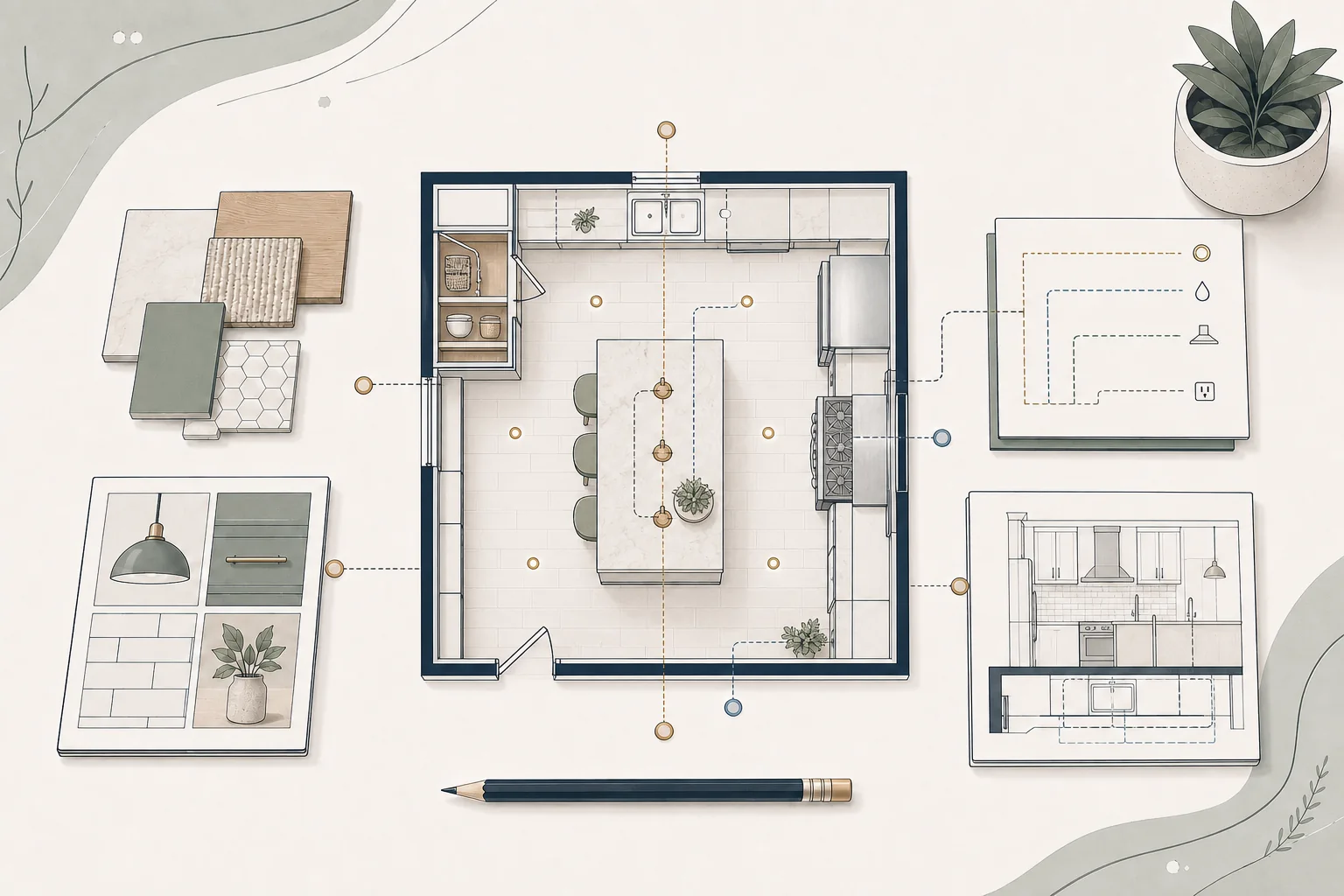

Choosing the Right Countertop
Kitchen countertops are one of the most visible and frequently used surfaces in a home. They influence how the kitchen looks, performs, and ages over time.
With so many materials available, it is easy to focus on trends or appearance alone. However, the best countertop is not necessarily the most expensive or the most popular—it is the one that best fits your lifestyle, cooking habits, maintenance preferences, and budget.
Understanding how different materials perform helps homeowners make decisions with confidence rather than relying solely on showroom displays or online photos.
Key Factors to Consider
- Durability: How well will the material resist scratches, chips, impacts, and everyday wear?
- Heat Resistance: Will hot cookware damage the surface or should trivets always be used?
- Stain Resistance: How susceptible is the material to staining from common kitchen products?
- Maintenance: Does the material require sealing, special cleaners, or regular upkeep?
- Repairability: Can chips, scratches, or other damage be repaired if they occur?
- Appearance: Does the material complement the overall design while fitting your personal style?
- Budget: Does the countertop provide the value and performance that align with your overall renovation goals?
Balancing Tradeoffs
Every countertop material involves tradeoffs. Some excel in durability but offer fewer design options. Others provide a distinctive appearance but require more maintenance. Rather than searching for a perfect material, evaluate which characteristics matter most for the way your household uses the kitchen.
Common Countertop Materials
Laminate
Advantages
- Affordable
- Many styles
Tradeoffs
- Less heat resistant
- Hard to repair
Quartz
Advantages
- Low maintenance
- Consistent appearance
Tradeoffs
- Can be damaged by excessive heat
- Higher cost
Granite
Advantages
- Natural beauty
- Heat resistant
Tradeoffs
- Requires periodic sealing
- Pattern variation
Marble
Advantages
- Elegant appearance
- Cool surface
Tradeoffs
- Scratches and stains more easily
- Requires maintenance
Quartzite
Advantages
- Very durable
- Natural stone look
Tradeoffs
- Higher cost
- May require sealing
Solid Surface
Advantages
- Seamless appearance
- Repairable
Tradeoffs
- Less heat resistant
- Can scratch
Butcher Block
Advantages
- Warm appearance
- Repairable
Tradeoffs
- Requires maintenance
- Sensitive to moisture
Common Misconceptions
- Quartz is indestructible. Quartz is durable, but it can still be damaged under certain conditions and should be used according to the manufacturer's recommendations.
- Natural stone is always better than engineered materials. Each material offers different strengths and limitations depending on the homeowner's priorities.
- The most expensive countertop is the best choice. Higher cost does not automatically mean greater value for every project.
- Maintenance-free means no care is required. All countertop materials benefit from proper cleaning and routine care.
- Appearance should be the only deciding factor. Performance, durability, maintenance, and long-term value are equally important considerations.
Foundation Tip
When comparing countertop materials, think about how you actually use your kitchen. A surface that fits your cooking habits, maintenance preferences, and budget will often provide greater long-term satisfaction than simply choosing the latest trend.
Closing Thought
Countertops are an investment in both the appearance and functionality of your kitchen. By understanding the factors that influence performance and long-term value, homeowners can select a material that supports their lifestyle and renovation goals with confidence.