Why Energy Efficiency Matters
Energy-efficient homes are typically more comfortable, less expensive to operate, and often easier to maintain. During a major renovation, many of the home's walls, ceilings, and systems are already being modified, making it an ideal time to invest in improvements that may be difficult or costly to complete later.
Think About the Home as a System
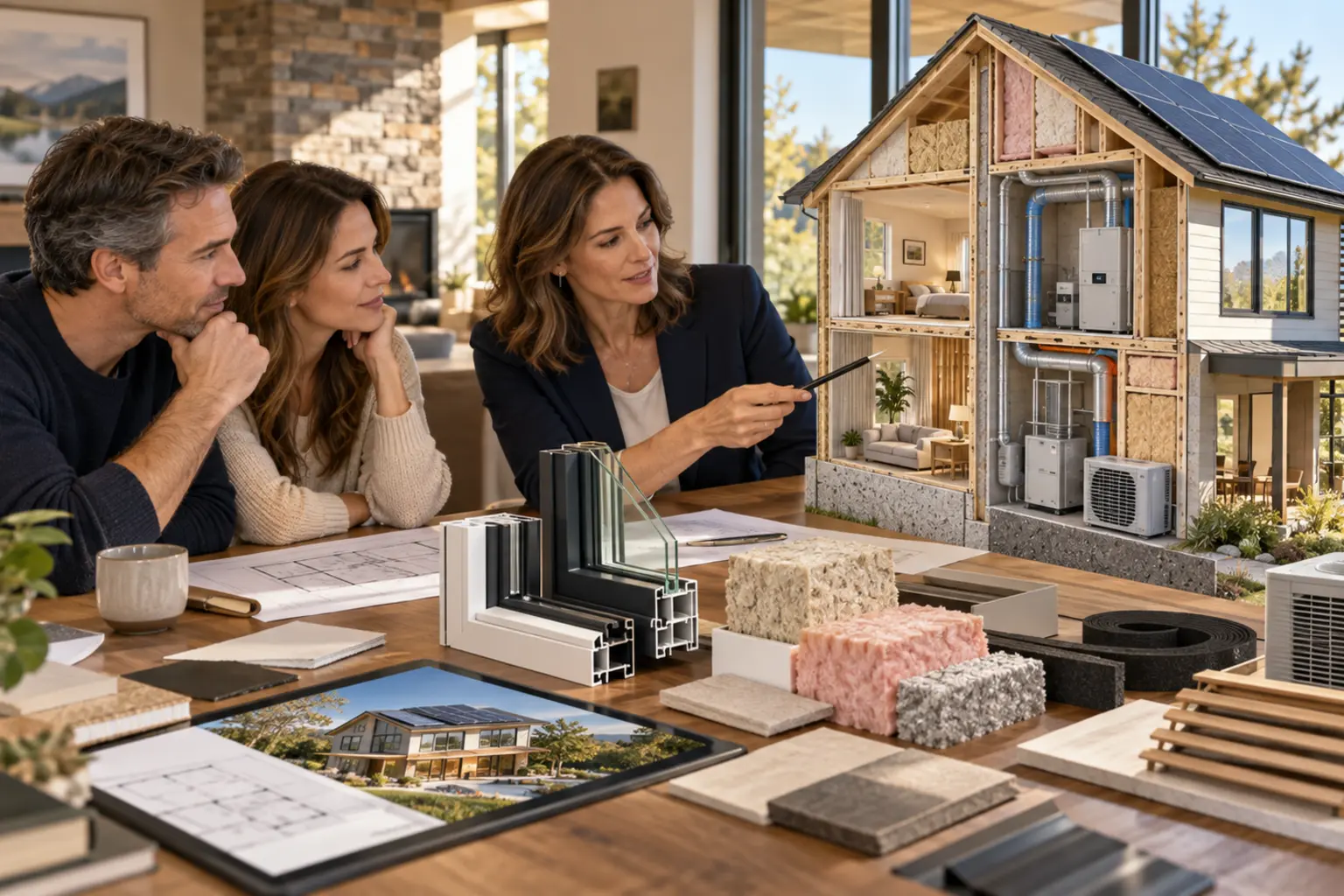
Energy efficiency isn't achieved through one product or one upgrade. The best-performing homes are designed so that insulation, windows, HVAC equipment, ventilation, and air sealing all work together.
- Building insulation
- Air sealing
- High-performance windows and doors
- Efficient heating and cooling systems
- Proper ventilation
- Energy-efficient lighting
- Smart controls and thermostats
Common Energy-Efficiency Improvements
- Improve Insulation: Upgrade wall, ceiling, and floor insulation while assemblies are accessible.
- Reduce Air Leaks: Seal gaps around framing, penetrations, windows, and doors.
- Upgrade Windows: Replace older windows when appropriate to improve thermal performance.
- Modernize HVAC Equipment: Select properly sized, high-efficiency equipment.
- Switch to LED Lighting: Reduce energy consumption while improving lighting quality.
- Plan for Future Technologies: Consider solar readiness, battery storage, EV charging, or heat pumps.
California Title 24 Considerations
If your home is in California, many renovation projects must comply with California's Building Energy Efficiency Standards, commonly referred to as Title 24. Depending on the scope of work, these requirements may apply to items such as insulation, windows, lighting, HVAC equipment, water heating systems, and other energy-related improvements.
Title 24 requirements vary based on the type and extent of the renovation, so homeowners should not assume that existing conditions can simply remain unchanged. Some projects may require energy calculations, documentation, inspections, or testing before final approval.
Rather than viewing Title 24 as an obstacle, consider it an opportunity to improve your home's comfort, efficiency, and long-term performance. Understanding these requirements early can help avoid redesigns, permit delays, and unexpected costs during construction.
Comfort Is Just as Important as Efficiency
Many homeowners focus on lowering utility bills, but energy-efficient renovations also improve indoor comfort. Better insulation, improved air sealing, balanced HVAC systems, and quality windows can reduce drafts, improve temperature consistency, and create a quieter living environment.
Coach's Perspective
One of the biggest misconceptions I see is that energy efficiency is only about saving money on utility bills. In reality, it's about improving how your home performs every day. Not every efficiency upgrade makes financial sense for every homeowner. The goal isn't to maximize efficiency at any cost—it's to identify the improvements that provide the greatest value based on your home's condition, your renovation scope, and how long you expect to live there.
Questions to Ask Yourself
- Which improvements are easiest while the walls are open?
- Will my HVAC system still be appropriately sized after the renovation?
- What Title 24 requirements will apply to my project?
- Should I prepare my home for future technologies even if I don't install them today?
- How can this renovation improve both comfort and efficiency?
Common Misconceptions
Energy efficiency is only about utility bills. Comfort, indoor air quality, durability, and long-term performance are equally important.
New windows solve every efficiency problem. Windows are only one part of a complete building system.
Bigger HVAC equipment performs better. Proper sizing is essential for comfort and efficiency.
Energy-efficient renovations require every available upgrade. Choose improvements that provide the best value for your home and goals.
Foundation Tip
Rather than asking, 'What's the most energy-efficient product?' ask, 'How can my home perform better as a complete system?' Coordinating improvements during a renovation—and understanding Title 24 requirements early—usually provides the greatest long-term value.
Closing Thought
Designing for energy efficiency is about more than reducing utility costs. It's an opportunity to create a home that is more comfortable, more resilient, and better prepared for the future while making thoughtful investments that continue paying dividends long after construction is complete.