Why the Vanity Matters
The vanity is typically the focal point of a bathroom and one of its hardest-working features. It combines storage, plumbing, countertop space, and daily functionality into a single element. Choosing the right vanity can improve organization and comfort while helping the bathroom feel larger and more cohesive.
Consider the Type of Bathroom
- Primary Bathroom: Often benefits from larger vanities, double sinks, generous storage, and ample countertop space.
- Hall or Shared Family Bathroom: Durability, storage, and easy maintenance are usually the highest priorities.
- Guest Bathroom: A smaller vanity may provide all the functionality needed while allowing more open floor space.
- Powder Room: A compact vanity or pedestal sink may work well, depending on available storage elsewhere.
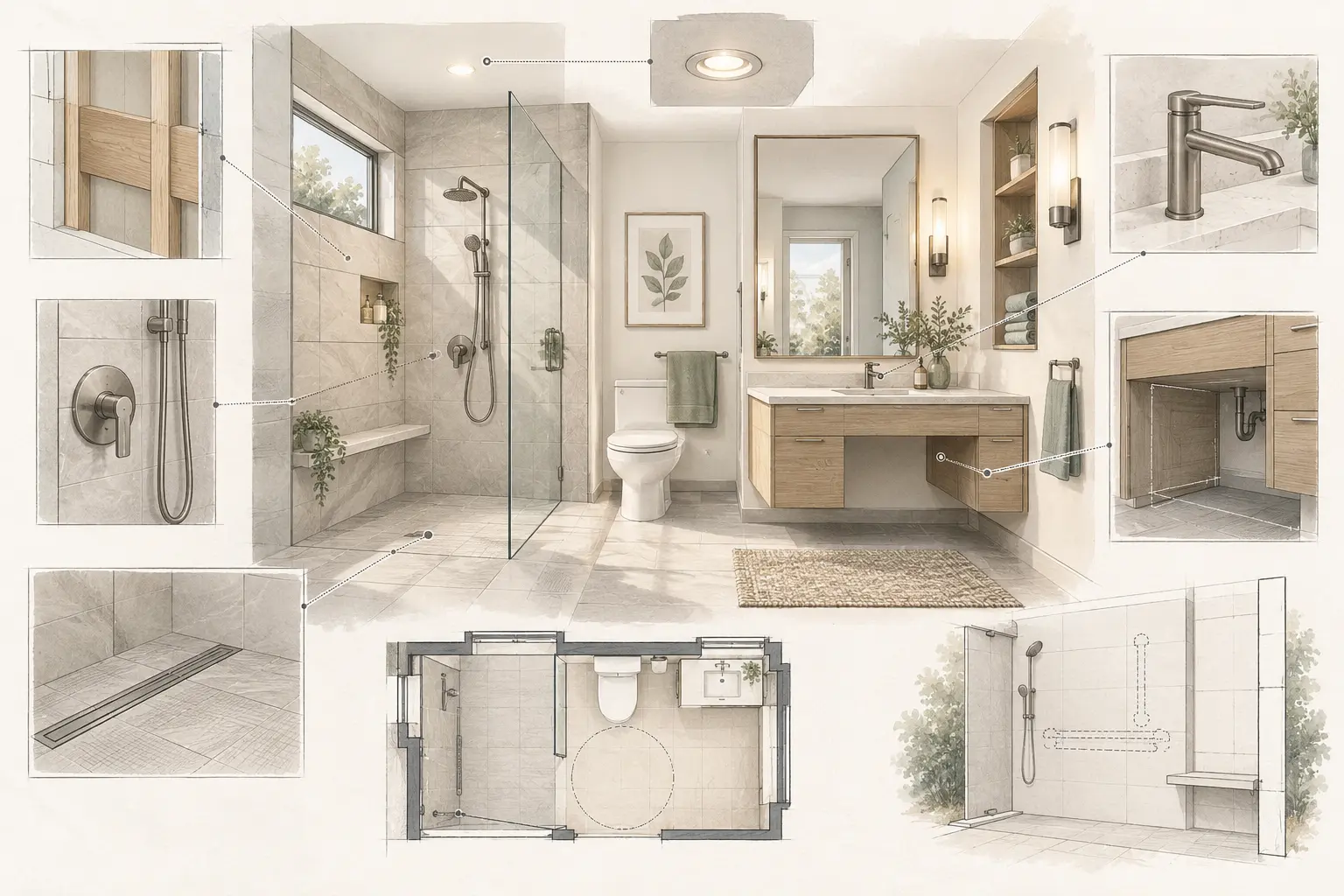
- Accessible or Aging-in-Place Bathroom: May benefit from open knee space, appropriate mounting heights, and easy-to-reach storage.
Key Factors to Consider
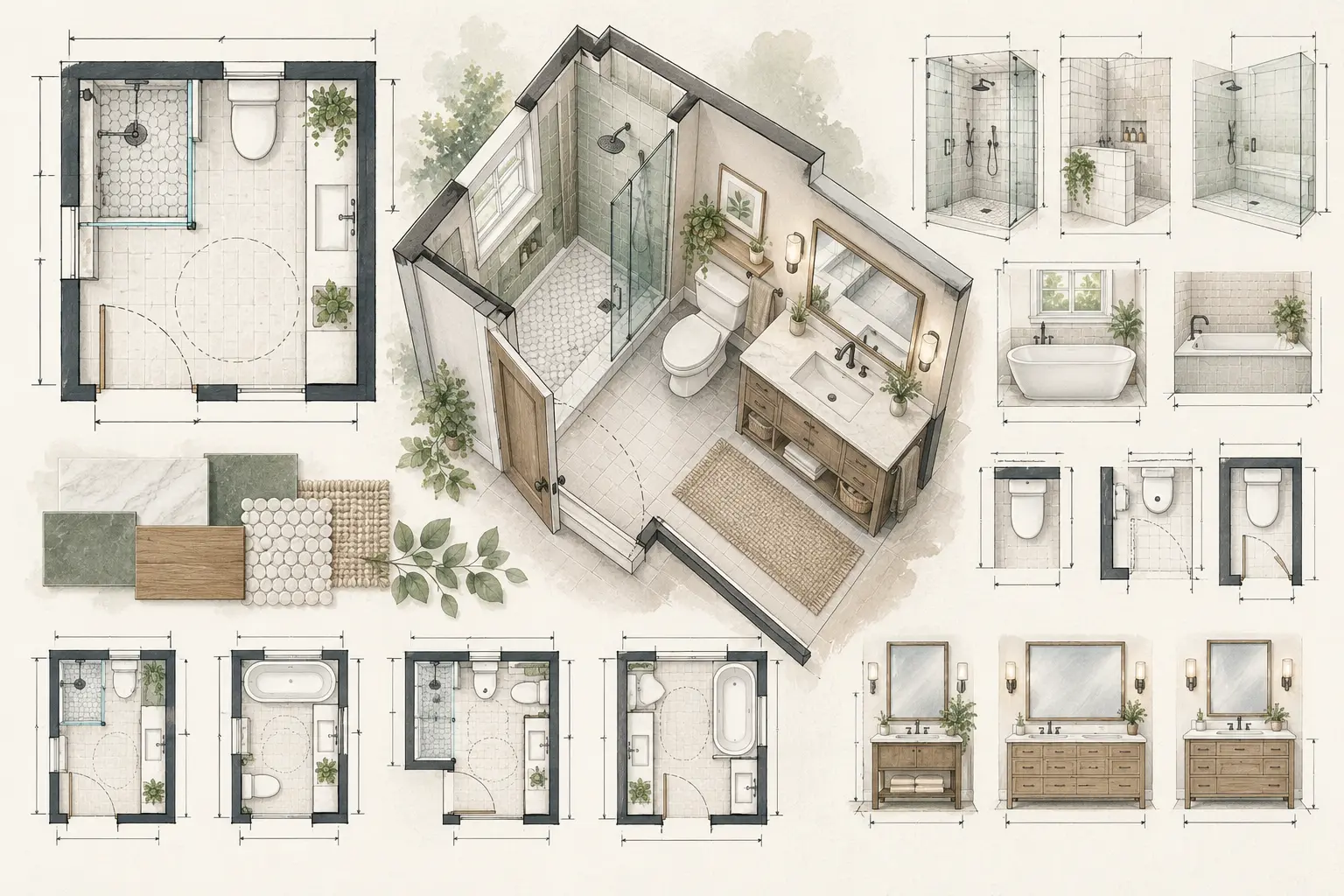
- Size: Select a vanity that fits the room without restricting movement.
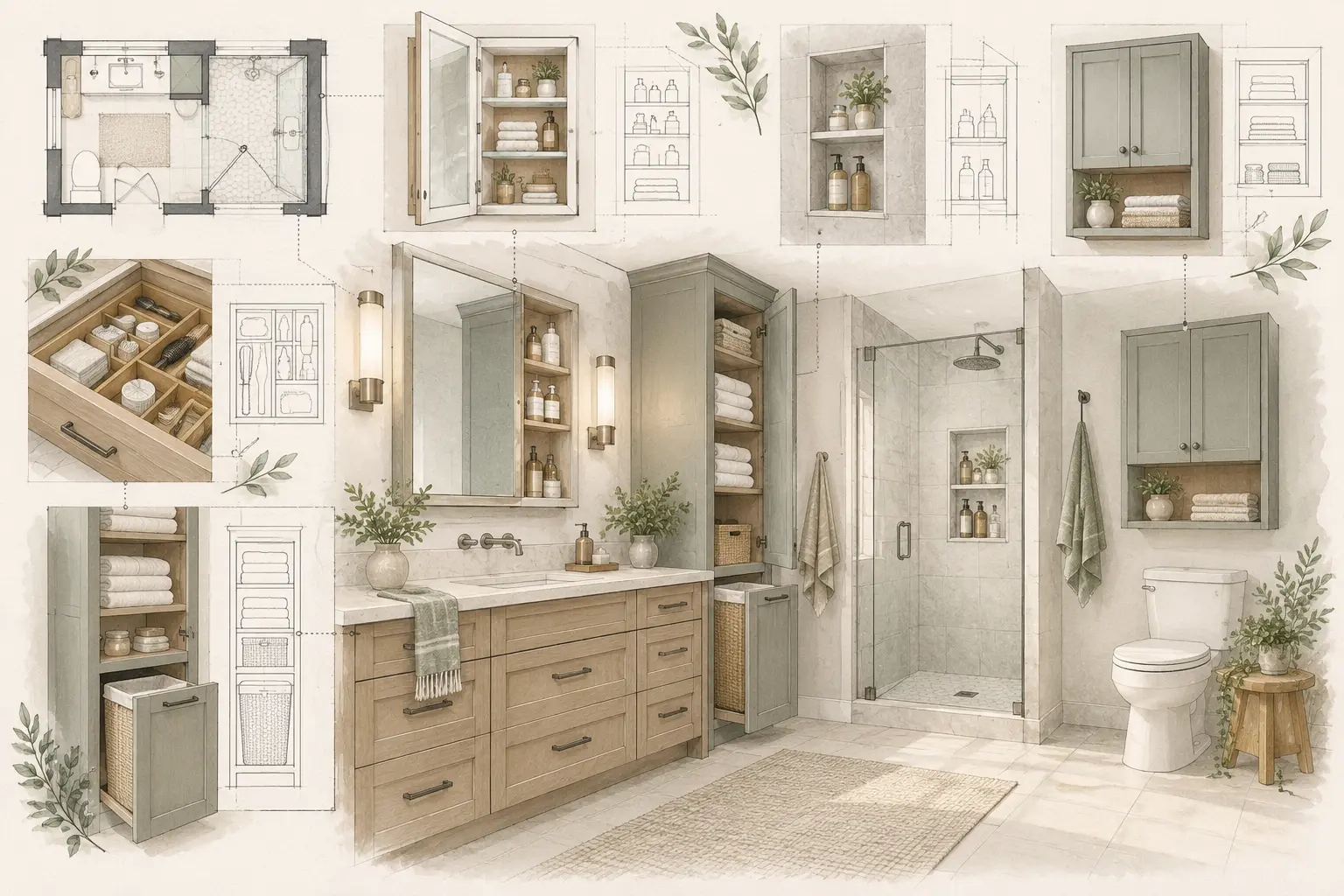
- Storage: Think about drawers, shelves, and cabinet organization rather than overall cabinet size.
- Single vs. Double Sinks: Consider how many people use the bathroom at the same time.
- Countertop Space: Ensure enough room for everyday items while avoiding unnecessary clutter.
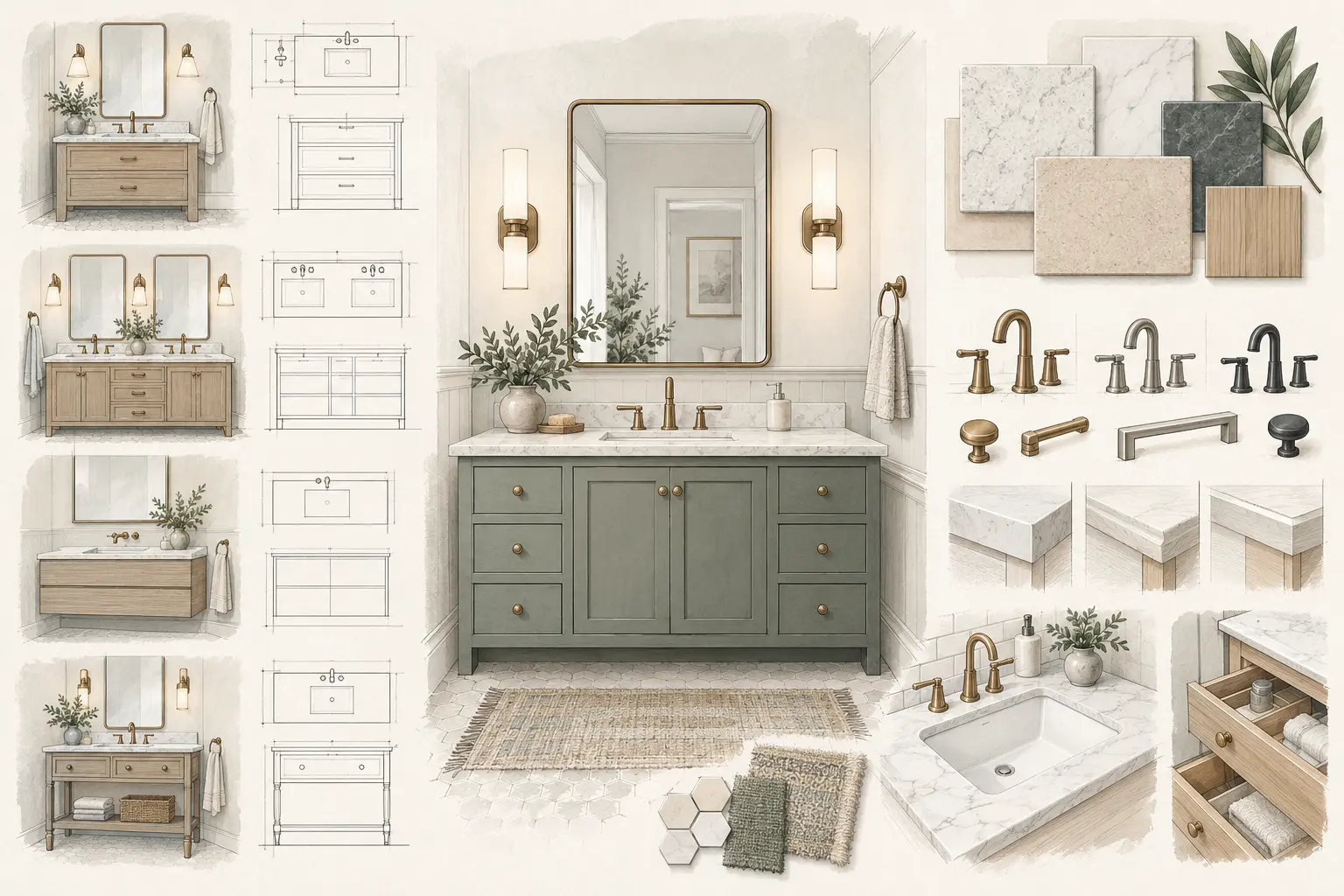
- Freestanding vs. Floating: Floating vanities create a more open appearance and simplify floor cleaning, while freestanding models often provide more storage.
- Plumbing Constraints: Existing plumbing locations may influence vanity size and configuration.
- Accessibility: Mounting height, clear floor space, and reach ranges should support the users of the bathroom.
Common Vanity Types
Freestanding Vanity
The most common option, offering a wide range of sizes and storage configurations.
Floating Vanity
Wall-mounted to create an open, contemporary appearance and easier floor cleaning.
Furniture-Style Vanity
Designed to resemble a piece of furniture while providing concealed storage.
Custom Vanity
Built specifically for the space, maximizing storage and design flexibility.
Open Vanity
Uses shelves instead of enclosed cabinets, creating an airy look but requiring more organization.
Questions Your Designer or Contractor May Ask
- How many people use this vanity each day?
- Do you need one sink or two?
- What items need to be stored in the vanity?
- Would you prefer more countertop space or additional storage?
- Do you have accessibility considerations now or in the future?
- Are you planning to keep the existing plumbing locations?
Looking Beyond Appearance
The best vanity is the one that supports your daily routine. While style is important, storage, organization, durability, and ease of use often have a greater impact on long-term satisfaction.
Common Misconceptions
Bigger is always better. An oversized vanity can make a bathroom feel cramped and reduce usable floor space.
Every primary bathroom needs double sinks. Double sinks are valuable only if they support your daily routine and available space.
Floating vanities provide less value. While they may offer less enclosed storage, they can improve accessibility, cleaning, and the perception of space.
More drawers automatically mean better organization. Thoughtful drawer sizes and internal organizers are often more important than quantity.
Choose the vanity last. The vanity affects plumbing, lighting, mirrors, and storage, making it an early planning decision.
Foundation Tip
Before selecting a vanity, make a list of everything you expect to store in it. Designing around your actual storage needs will lead to a better long-term solution than choosing a vanity based solely on appearance.
Closing Thought
A bathroom vanity should balance style, storage, functionality, and comfort. By choosing a vanity that reflects how the bathroom is used, you create a space that works as well as it looks.