Why the Toilet Matters
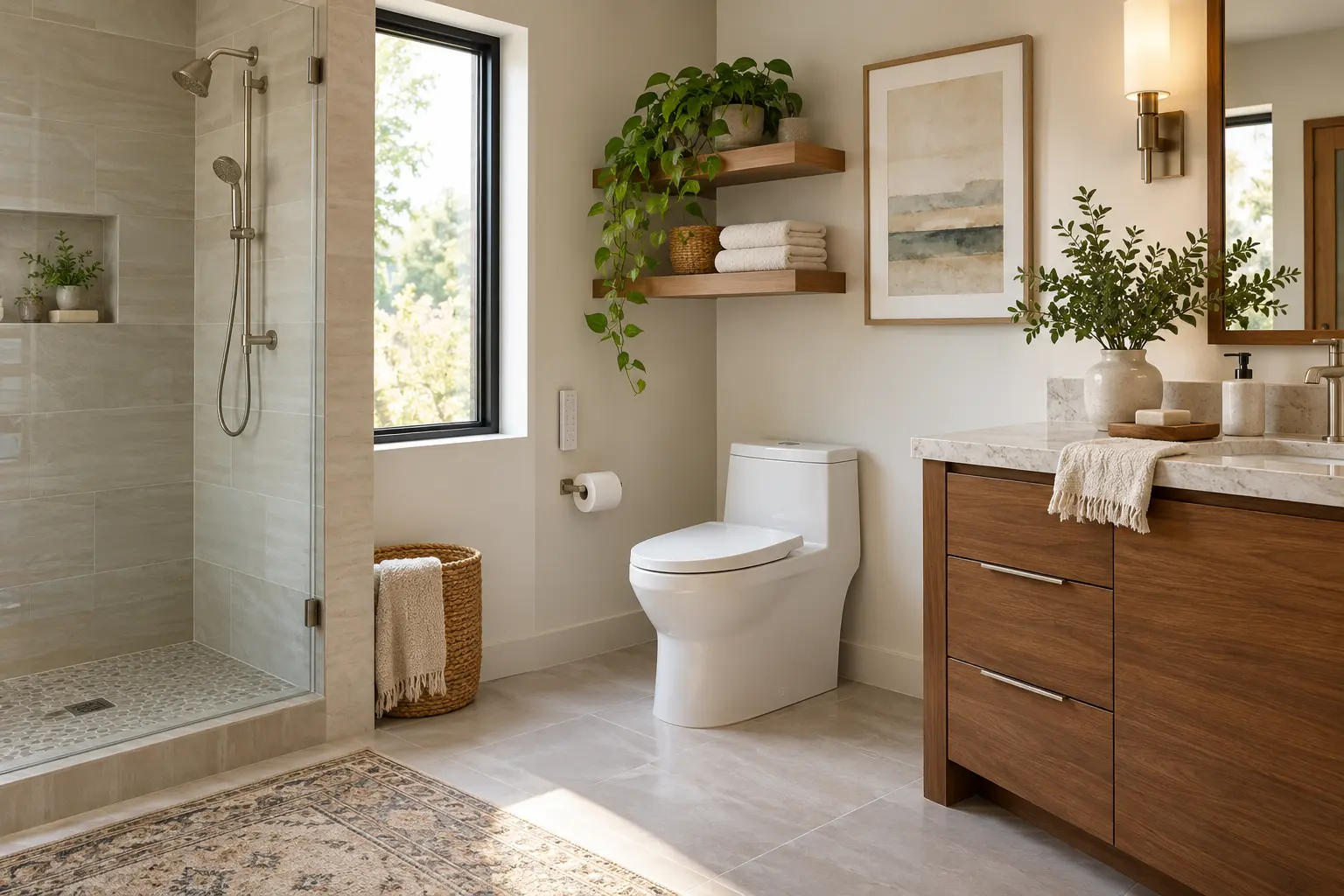
A toilet is one of the most frequently used fixtures in the home. The right model should provide reliable performance, be comfortable for the users of the bathroom, and complement the overall design without sacrificing ease of maintenance.
Consider the Type of Bathroom
- Primary Bathroom: Comfort and optional features such as heated bidet seats or washlets are often worthwhile investments.
- Hall or Shared Family Bathroom: Prioritize durability, easy cleaning, and reliable flushing performance.
- Guest Bathroom: A quality, water-efficient toilet is usually sufficient without extensive premium features.
- Powder Room: Appearance and compact size may be important where space is limited.
- Accessible or Aging-in-Place Bathroom: Comfort-height models, adequate clearances, and ease of operation should be primary considerations.
Key Factors to Consider
- Comfort Height vs. Standard Height: Choose a height that best fits the users of the home.
- Water Efficiency: Modern high-efficiency toilets can reduce water consumption while maintaining strong flushing performance.
- Flushing Performance: Look beyond gallons per flush and consider overall performance and reliability.
- Ease of Cleaning: Skirted designs and fewer exposed surfaces can simplify maintenance.
- One-Piece vs. Two-Piece: Each offers different advantages in appearance, installation, and maintenance.
- Rough-In Dimension: Verify the existing plumbing rough-in before purchasing a replacement toilet.
Bidets and Washlets
Bidet seats and integrated washlets have become increasingly popular because they improve hygiene, comfort, and accessibility. Features may include warm-water cleansing, heated seats, warm-air drying, adjustable spray settings, automatic lids, and night lights.
If you are considering an electric bidet seat or washlet, plan for it early in the renovation. Electrical supply, receptacle location, GFCI protection and any dedicated-circuit requirement depend on the selected model and locally adopted codes; confirm them with the manufacturer and a licensed electrician. Adding this outlet during a remodel is typically simple and inexpensive, while installing one after the bathroom is finished may require opening walls or running exposed wiring.
Not every homeowner wants or needs these features, but they are worth discussing during the planning stage since providing power during construction offers flexibility for future upgrades.
Common Toilet Types
Two-Piece
Traditional design with separate tank and bowl.
One-Piece
Cleaner appearance with fewer joints and easier maintenance.
Wall-Hung
Creates an open floor appearance but requires an in-wall carrier system.
Smart Toilet
Integrated electronic features including bidet functions, heated seats, and automatic flushing.
Questions Your Designer or Contractor May Ask
- Who uses this bathroom most often?
- Would comfort-height seating be beneficial?
- Are you interested in a bidet seat or integrated washlet?
- Should an electrical outlet be added near the toilet for future flexibility?
- Is water efficiency a priority?
- Will the existing plumbing location remain unchanged?
Looking Beyond the Flush
The best toilet balances comfort, reliability, efficiency, maintenance, and the needs of the people using the bathroom. Small planning decisions today can significantly improve everyday comfort for years to come.
Common Misconceptions
All toilets perform about the same. Flush design, bowl shape, and engineering can significantly affect performance.
Lower water use means weaker flushing. Many modern high-efficiency toilets outperform older models while using less water.
Bidets and washlets are luxury items only. Many homeowners find they improve comfort, hygiene, and accessibility.
Electrical planning can wait until later. Adding power during a renovation is much easier than retrofitting after the bathroom is complete.
Replacing a toilet is always straightforward. Rough-in dimensions, flange condition, flooring height, and plumbing condition should all be verified.
Foundation Tip
Even if you are not ready to install a washlet today, consider adding a GFCI receptacle near the toilet during your renovation. The cost is usually minimal during construction and gives you the flexibility to upgrade in the future.
Closing Thought
Choosing a toilet involves more than selecting a style. Considering comfort, performance, efficiency, and future features like bidets or washlets can help create a bathroom that is more enjoyable to use every day.