Why Shower Design Matters
For many homeowners, the shower is the most frequently used feature in the bathroom. Decisions about size, layout, fixtures, glass, seating, storage, and accessibility all influence the overall experience.
Unlike many bathroom finishes, shower decisions also affect waterproofing, plumbing, electrical work, ventilation, and long-term maintenance.
Consider the Type of Bathroom
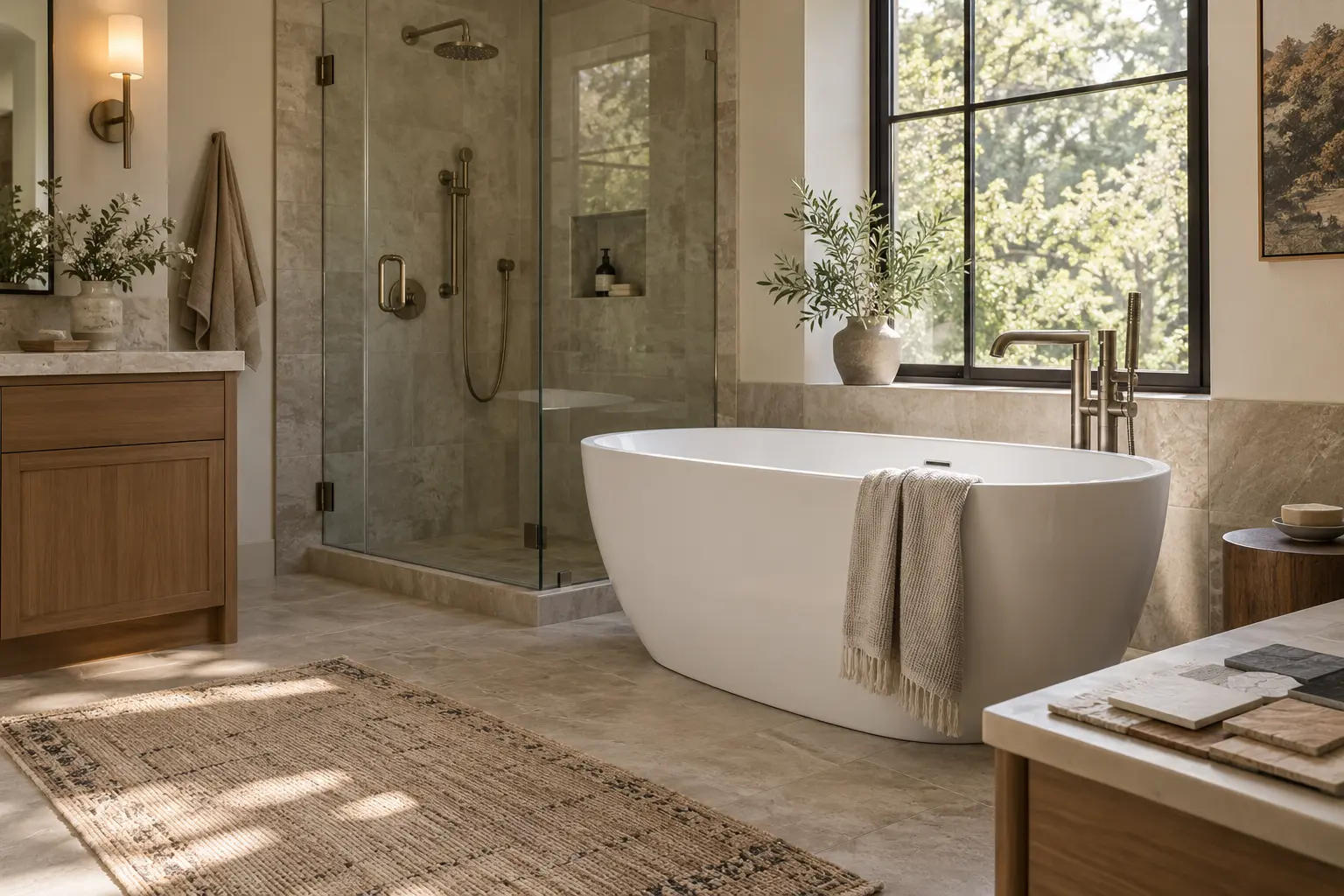
- Primary Bathroom: Often the best place to invest in comfort features such as larger layouts, multiple showerheads, benches, or steam capabilities.
- Hall or Shared Family Bathroom: Focus on durability, ease of cleaning, and flexibility for users of different ages.
- Guest Bathroom: A straightforward, attractive shower often provides the best value.
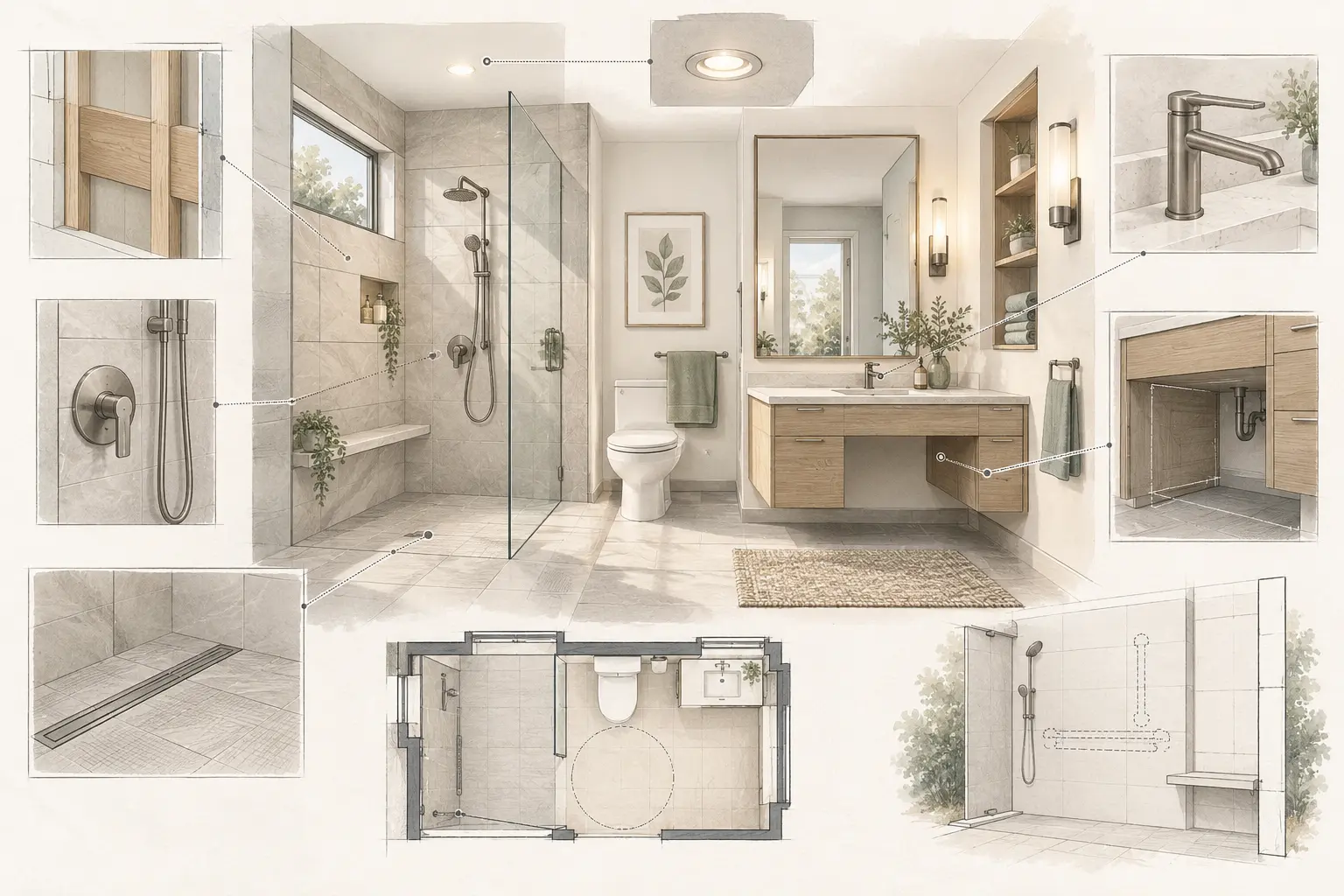
- Accessible or Aging-in-Place Bathroom: Curbless entries, handheld showerheads, benches, and grab bar blocking should be considered early in the design.
- Tub/Shower Combination: May be the best solution when the bathroom needs to serve both bathing and showering functions.
Key Factors to Consider
- Size and Layout: A comfortable shower should allow enough room to move naturally without feeling cramped.
- Accessibility: Consider curbless entries, wider openings, seating, and future adaptability.
- Storage: Recessed niches, corner shelves, and benches can improve everyday convenience.
- Shower Fixtures: Single showerheads, rain heads, handheld wands, and body sprays all offer different experiences.
- Glass Enclosures: Frameless, framed, or partial glass each influence maintenance, appearance, and cost.
- Ventilation: Proper ventilation helps control moisture and protect finishes.
- Budget: Custom showers typically involve additional labor, glass, waterproofing, and plumbing costs.
Common Shower Types
Standard Enclosed Shower
A practical solution for many bathrooms that balances function and cost.
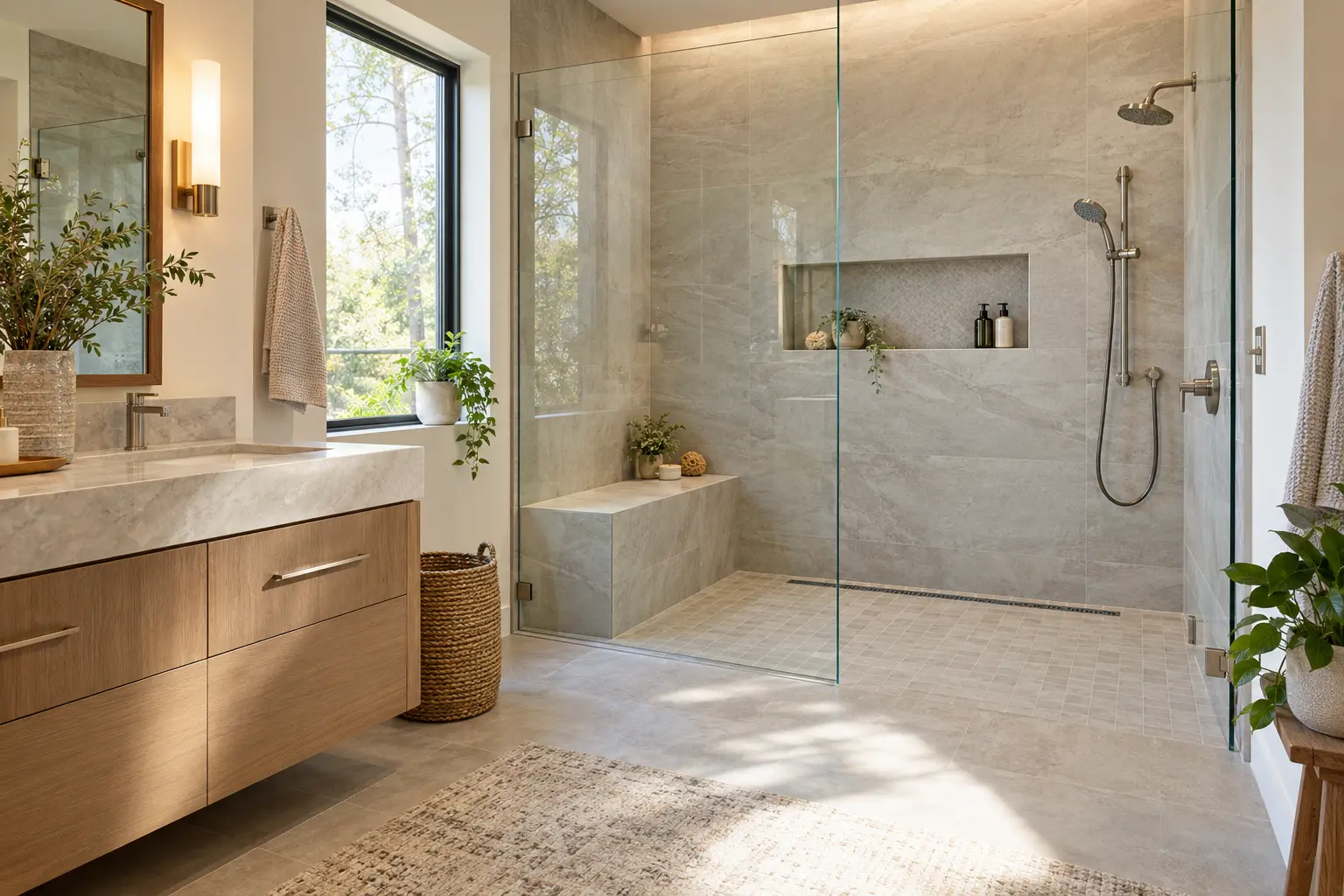
Walk-In Shower
Offers a spacious feel and can improve accessibility.
Curbless Shower
Creates a seamless transition into the shower while supporting aging-in-place goals.
Steam Shower
Provides a spa-like experience but requires specialized waterproofing, insulation, ventilation, and electrical planning.
Tub/Shower Combination
Combines two functions within a single footprint and remains a popular choice for family bathrooms.
Shower Features to Consider
Built-In Benches
Provide comfort and improve accessibility.
Recessed Niches
Keep soaps and shampoo organized without protruding shelves.
Linear Drains
Allow greater design flexibility and are commonly used with curbless showers.
Handheld Showerheads
Increase flexibility for bathing, cleaning, and accessibility.
Multiple Showerheads and Body Sprays
Can create a luxury experience but increase plumbing complexity and water demand.
Questions Your Designer or Contractor May Ask
- How do you use your shower every day?
- Would you rather have a larger shower than a bathtub?
- Are accessibility or aging-in-place features important?
- Would you like a bench or built-in niche?
- Are multiple showerheads or body sprays important to you?
- Is a steam shower something you've considered?
Looking Beyond Appearance
A beautiful shower is only successful if it performs well. Comfort, accessibility, waterproofing, ventilation, maintenance, and thoughtful planning are just as important as tile and glass.
Common Misconceptions
Bigger showers are always better. The best shower fits both the room and the way it will be used.
Frameless glass is always the right choice. While visually appealing, it is typically more expensive and may require additional cleaning.
Every luxury bathroom needs multiple showerheads. Many homeowners are perfectly satisfied with a well-designed single showerhead and handheld wand.
Curbless showers are only for accessibility. They also create a clean, modern appearance and can make a bathroom feel larger.
The tile is the most important part of a shower. The waterproofing system behind the tile is what protects the home.
Foundation Tip
Spend as much time planning how your shower will function as you do choosing the tile. Decisions about size, fixtures, storage, seating, and accessibility have a greater impact on daily satisfaction than the finish materials alone.
Closing Thought
The best shower is one that fits your lifestyle, not simply the latest design trend. Thoughtful planning today will create a shower that remains comfortable, functional, and enjoyable for many years.