Why Color Matters
Color affects nearly every design decision in a bathroom, including cabinetry, countertops, tile, paint, flooring, fixtures, and lighting. Selecting a coordinated palette early helps create a balanced design and prevents finishes from competing with one another.
Factors to Consider
- Bathroom Size: Lighter colors generally make smaller spaces feel more open, while darker colors can add depth and drama in larger rooms.
- Natural Light: The amount and direction of natural light influence how colors appear throughout the day.
- Artificial Lighting: Warm and cool light sources can dramatically change the appearance of paint, tile, and countertops.
- Existing Home Design: Choose colors that complement the rest of the home for a more cohesive feel.
- Long-Term Appeal: Neutral palettes tend to remain timeless, while bold colors are often best reserved for easily updated elements.
Building a Color Palette
- Primary Color: Usually the dominant color found in cabinetry, tile, or walls.
- Secondary Color: Supports the primary color and provides contrast or depth.
- Accent Color: Adds personality through accessories, artwork, textiles, or decorative tile.
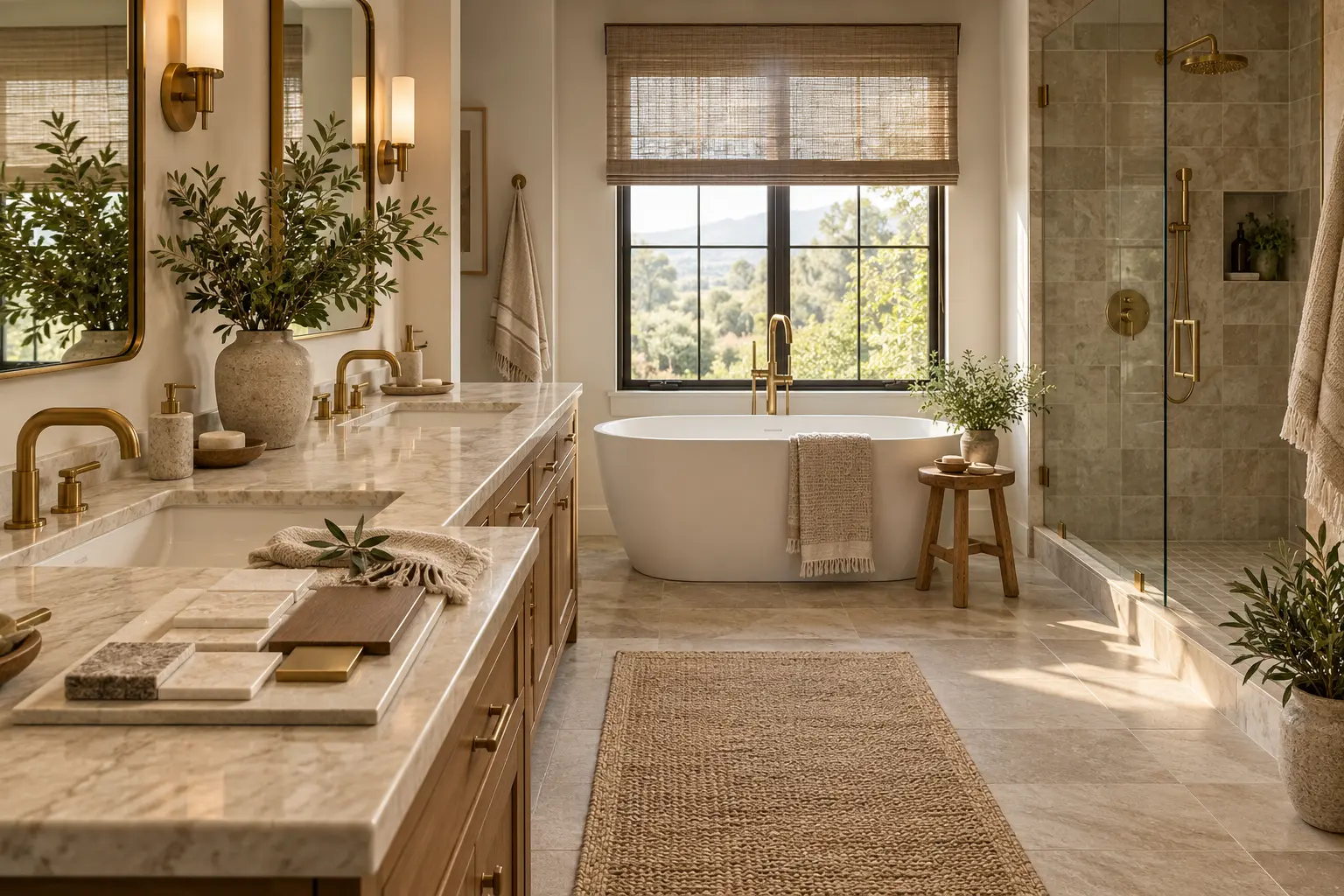
- Natural Materials: Wood, stone, and other natural finishes introduce warmth and texture without overwhelming the design.
Popular Bathroom Color Approaches
Light and Airy
Whites, soft grays, and warm neutrals maximize brightness and create an open feeling.
Warm Neutrals
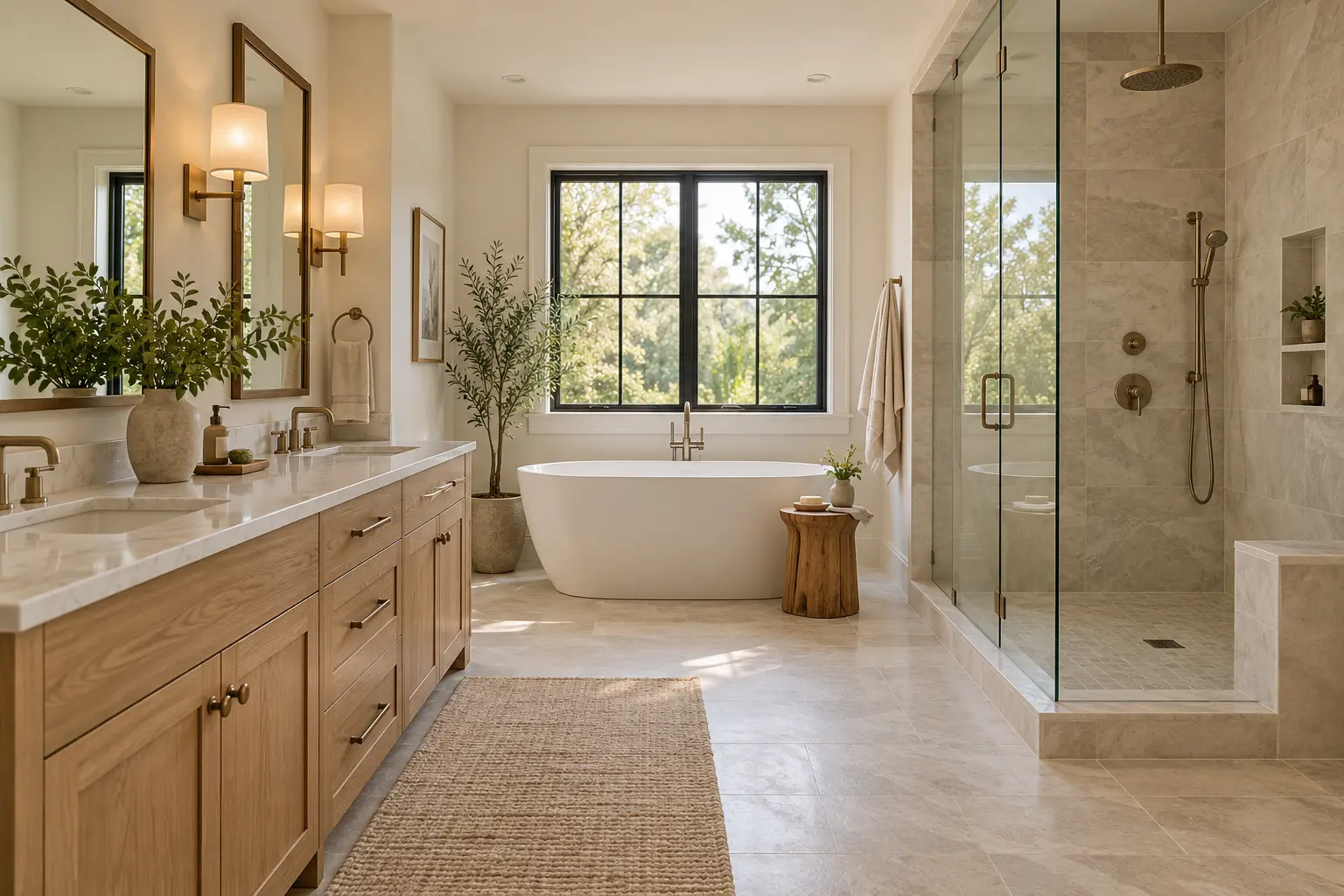
Creams, taupes, and beige tones create an inviting atmosphere.
Cool Palettes
Soft blues, greens, and cool grays often create a calming, spa-like environment.
Bold Accents
Deep blues, greens, or black can add drama when balanced with lighter finishes.
Coordinating Finishes
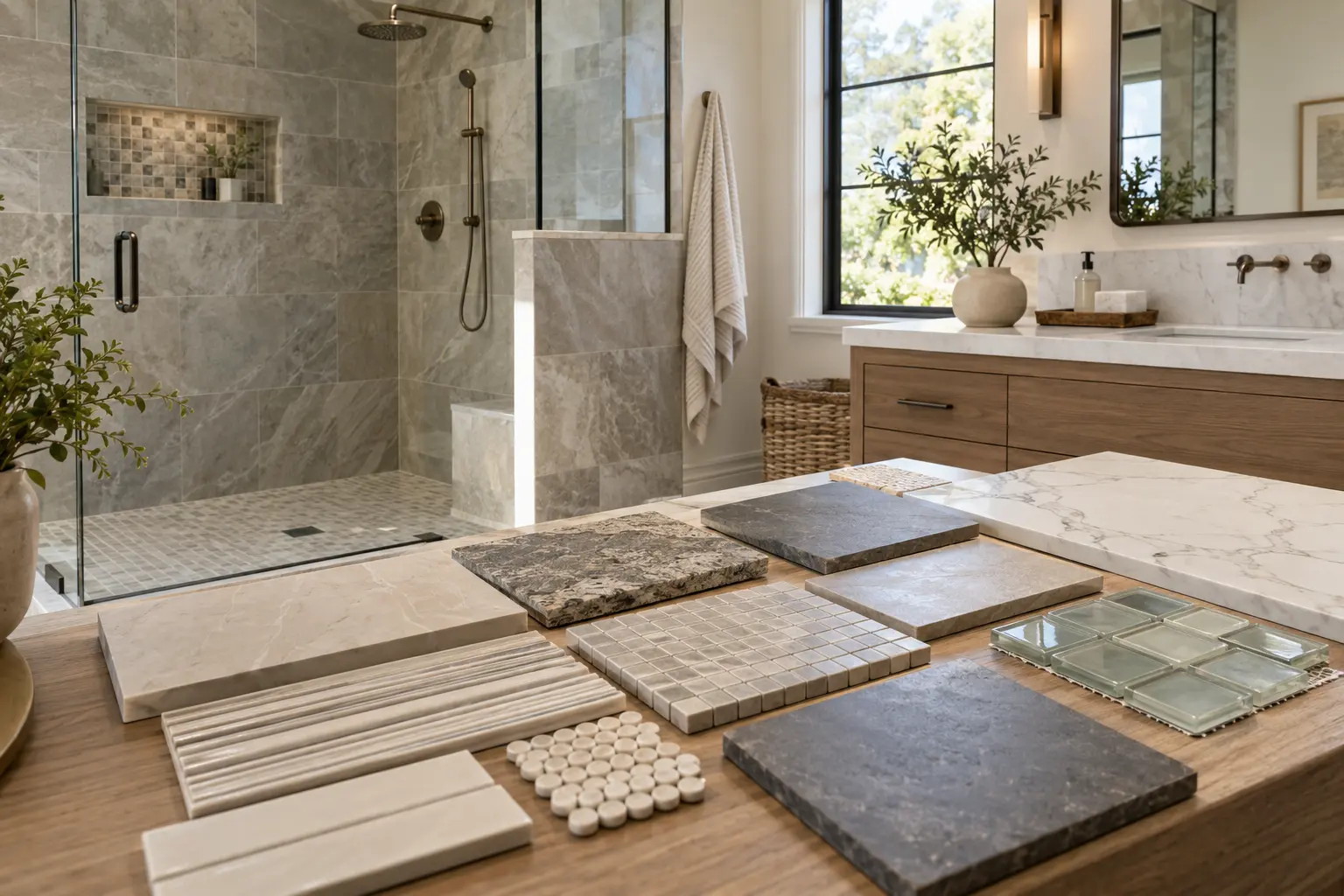
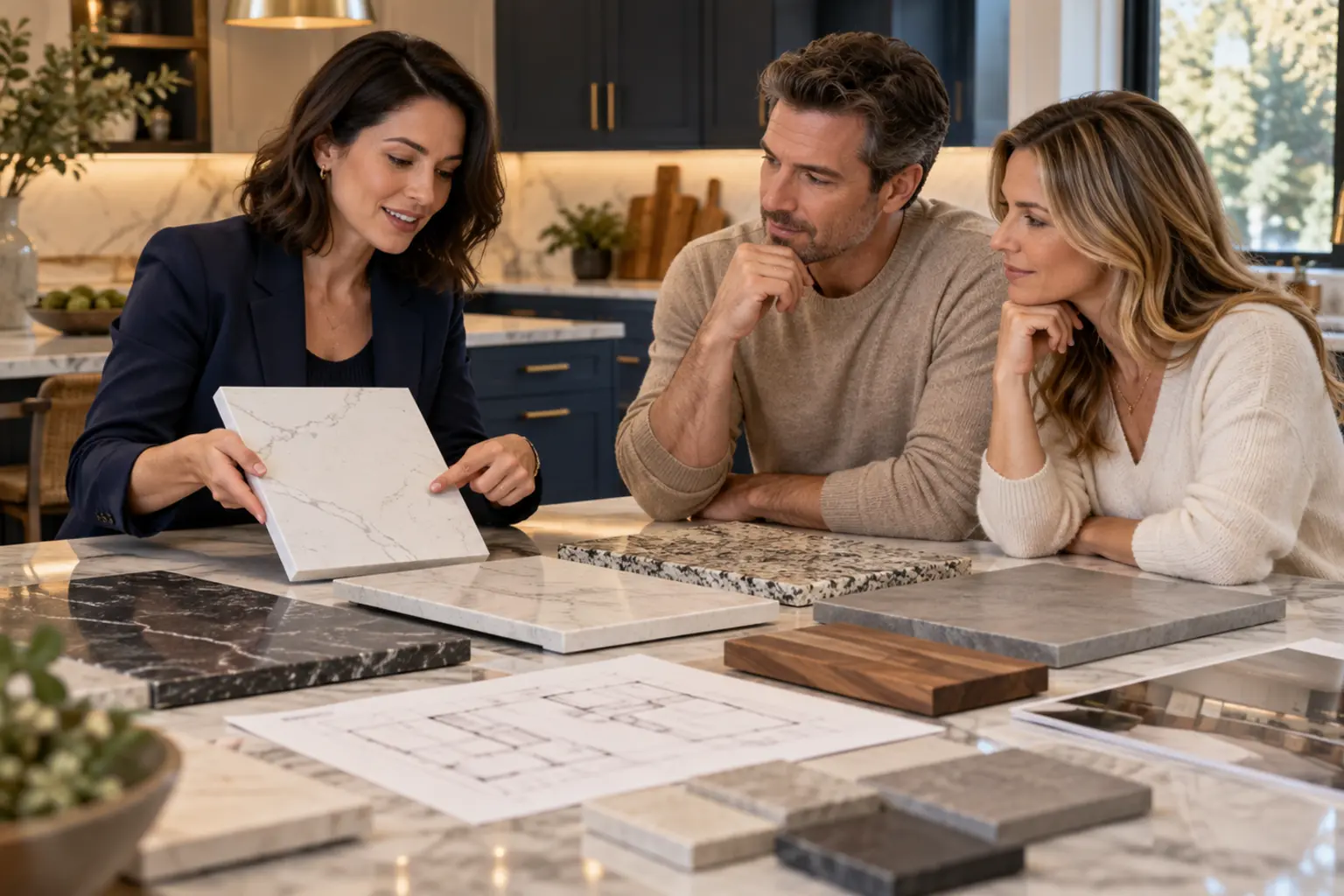
Rather than selecting each finish independently, evaluate paint, cabinetry, countertops, flooring, tile, plumbing fixtures, and lighting together. Viewing material samples side by side under the room's actual lighting helps avoid unexpected color conflicts.
Timeless vs. Trendy
Highly saturated colors and bold patterns can make a memorable statement, but they may also date more quickly. Many homeowners choose timeless finishes for permanent elements and introduce current trends through paint, towels, artwork, mirrors, and accessories that are easier to update.
California Consideration
Many California homes emphasize natural light and indoor-outdoor living. Neutral color palettes paired with natural materials often complement these architectural features while providing flexibility for future design updates.
Questions Your Designer or Contractor May Ask
- What overall feeling do you want the bathroom to have?
- Do you prefer warm or cool colors?
- How much natural light does the room receive?
- Are there existing finishes that should remain?
- Do you want a timeless palette or a more dramatic design?
Looking Beyond Paint
Paint is only one part of a bathroom's color palette. Tile, countertops, cabinetry, flooring, fixtures, and lighting all contribute to how the finished space feels. A successful design considers every surface together.
Common Misconceptions
White is the only way to make a bathroom feel larger. Many soft neutrals and light colors create the same sense of openness while adding warmth.
Dark colors always make a bathroom feel small. When balanced with good lighting and thoughtful design, darker colors can create depth and sophistication.
Color choices should follow current trends. Choose colors that reflect your lifestyle and that you will enjoy for many years.
Paint should be selected first. Major finish materials are typically chosen before selecting the paint color.
Foundation Tip
Begin by selecting the materials that are the most difficult or expensive to change—such as tile, cabinetry, and countertops. Then choose paint and accessories that complement those permanent finishes. This approach creates a more cohesive design and makes future updates much easier.
Closing Thought
Color has the power to transform a bathroom from simply functional to welcoming and relaxing. By developing a coordinated palette that balances your personal style with long-term appeal, you can create a space that looks beautiful today and continues to feel timeless for years to come.