Why Design Style Matters
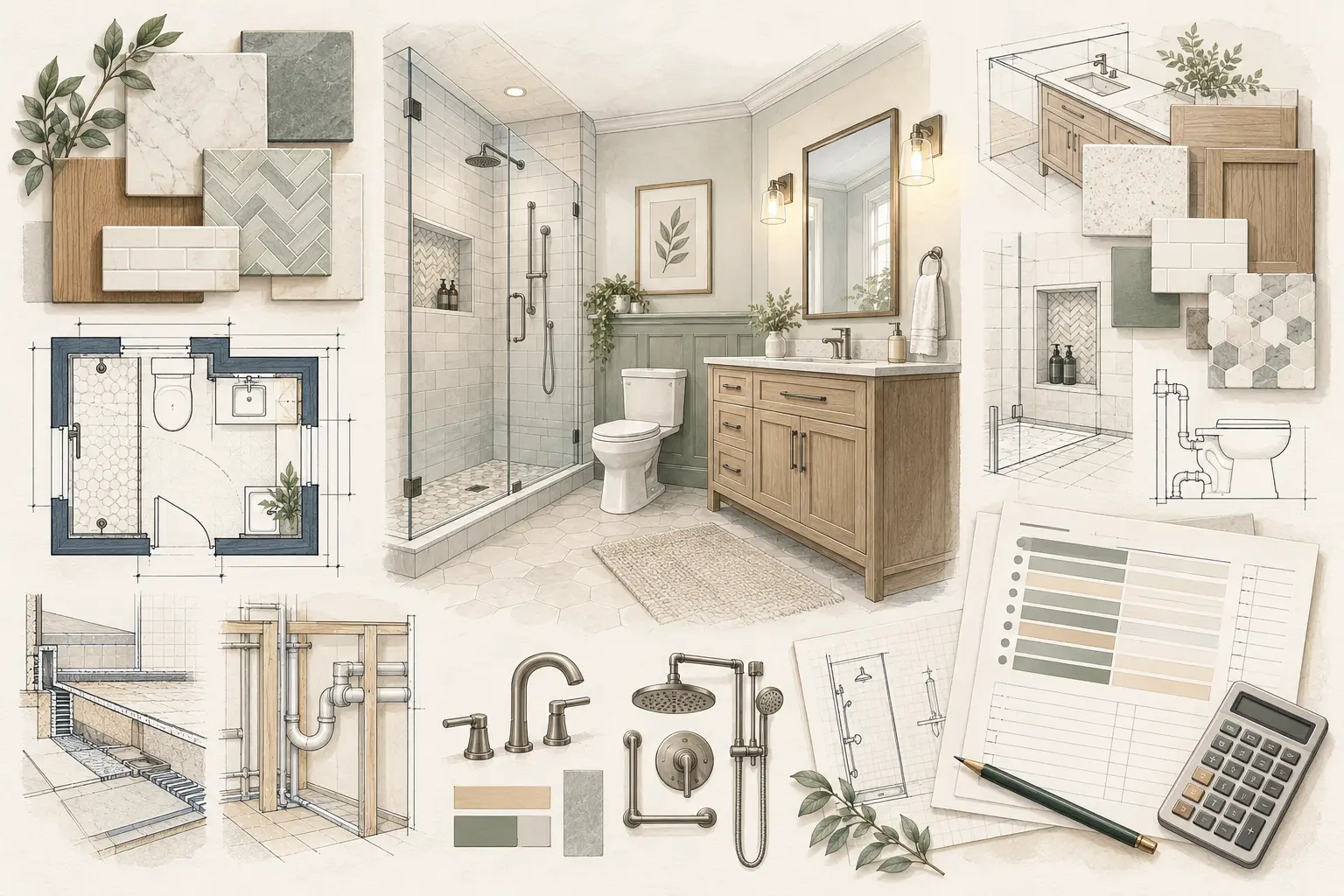
A bathroom renovation involves hundreds of individual decisions—from tile and cabinetry to lighting and plumbing fixtures. Establishing an overall design direction early helps those decisions work together rather than competing with one another.
A well-designed bathroom should feel like a natural extension of the home rather than a completely different space.
Factors to Consider Before Choosing a Style
- Your Home's Architecture: Choose a style that complements the character of your home.
- Your Personal Preferences: Select a style you'll enjoy living with every day, not just one that's currently popular.
- Long-Term Appeal: Consider whether the design will still feel current years from now.
- Maintenance: Some materials and styles require more upkeep than others.
- Resale Considerations: Timeless designs often appeal to a broader range of future buyers.
Common Bathroom Design Styles
Transitional
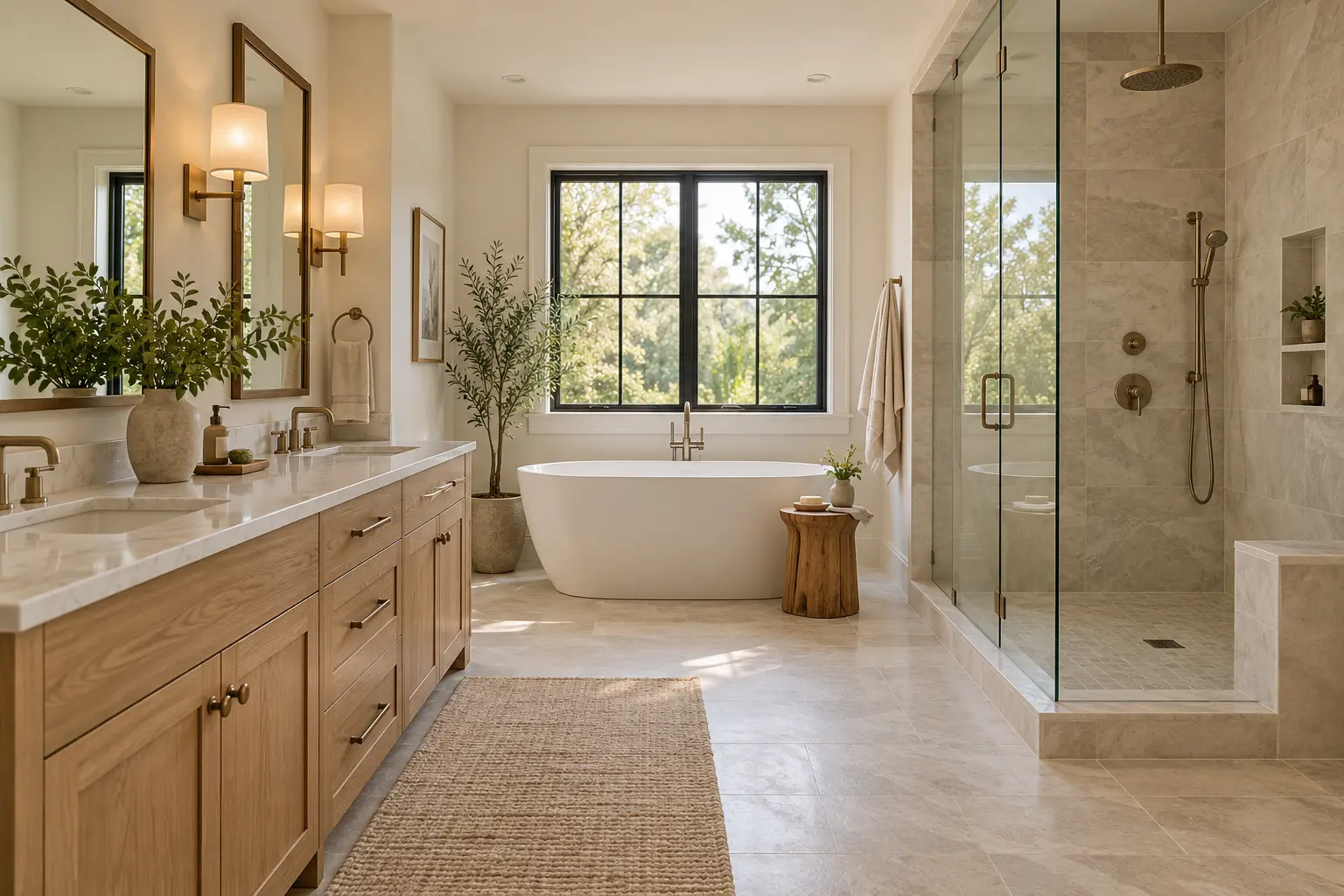
Blends traditional warmth with modern simplicity using neutral colors, Shaker cabinetry, quartz countertops, simple hardware, and clean tile patterns.
Modern
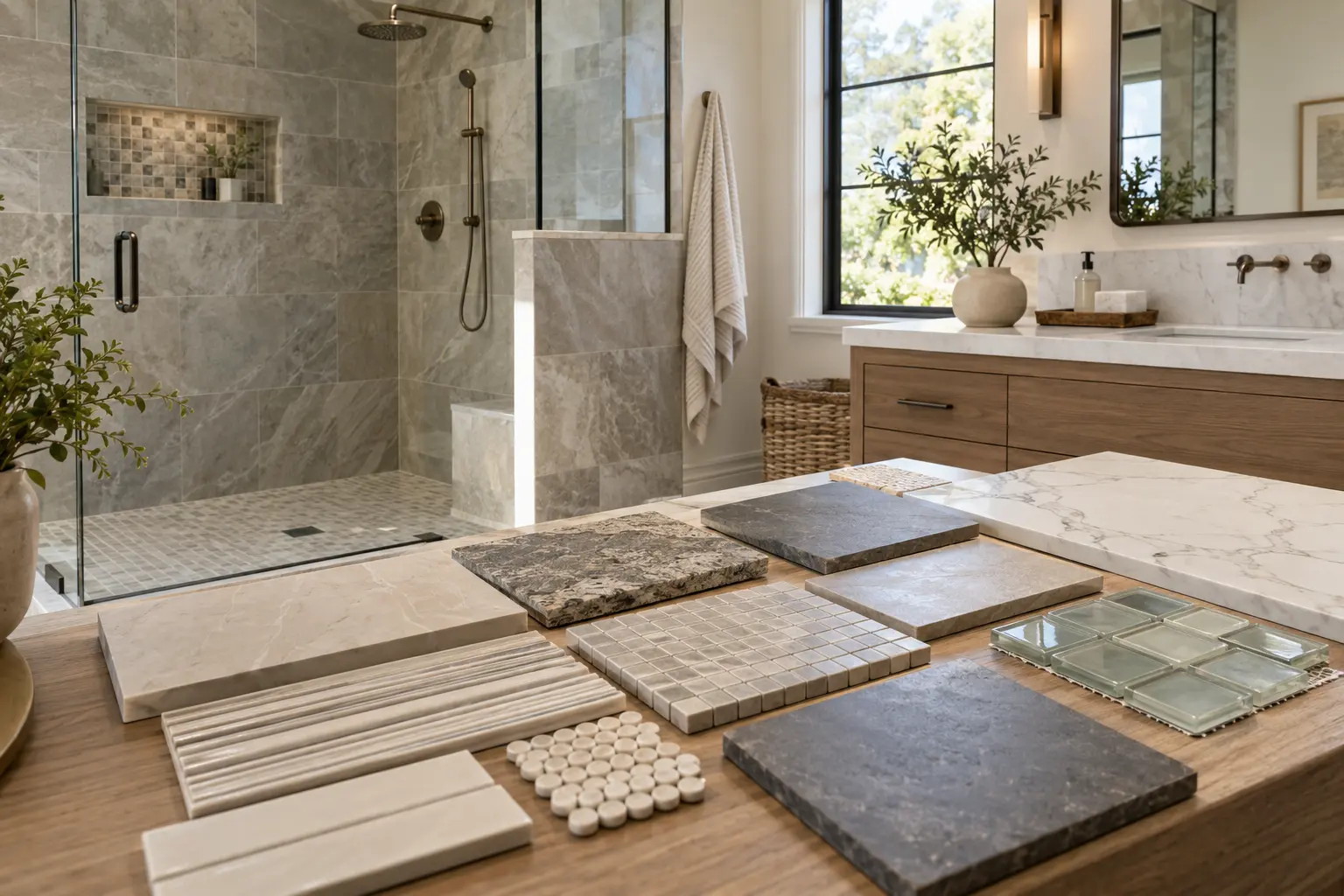
Features clean lines, minimal ornamentation, floating vanities, large-format tile, frameless glass, and simple color palettes.
Contemporary
Reflects current design trends through bold lighting, unique materials, statement fixtures, and mixed textures.
Traditional
Uses detailed cabinetry, decorative molding, natural stone, classic fixtures, and rich finishes.
Farmhouse
Combines painted cabinetry, warm wood accents, matte black hardware, and rustic details with modern convenience.
Scandinavian
Emphasizes bright spaces, natural wood, minimalism, soft textures, and light color palettes.
Coastal
Often includes light colors, natural textures, white cabinetry, soft blues, and an open, airy feeling.
Spa-Inspired
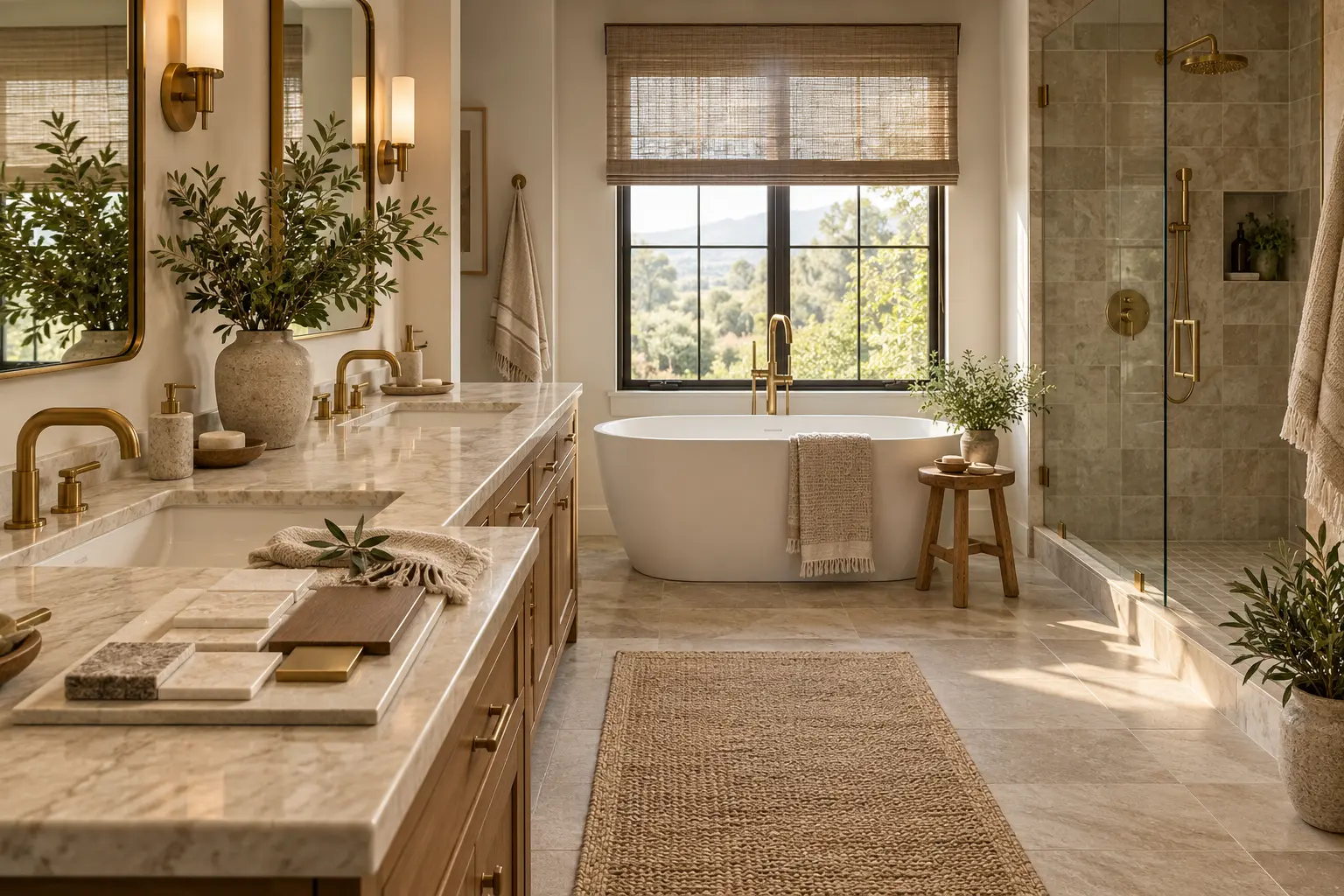
Focuses on relaxation through natural materials, large showers, freestanding tubs, warm lighting, and minimal clutter.
Mixing Design Styles
Many successful bathrooms combine elements from multiple styles. The goal is consistency rather than strict adherence to a single design category.
Timeless vs. Trendy
Design trends come and go. Consider expressing bold trends through mirrors, paint, artwork, and accessories rather than permanent finishes such as cabinetry or tile.
California Consideration
Southern California homes often emphasize natural light, indoor-outdoor living, neutral color palettes, durable materials, and water-efficient fixtures. Choosing a style that complements both the home's architecture and regional lifestyle often creates a more cohesive renovation.
Questions Your Designer or Contractor May Ask
- What styles are you naturally drawn to?
- Are there bathrooms you've saved for inspiration?
- Do you prefer timeless or trend-forward designs?
- How long do you expect to stay in your home?
- Is resale an important consideration?
- Which materials or finishes do you dislike?
Looking Beyond the Pictures
Online inspiration is helpful, but photographs rarely show how a bathroom functions. A successful design balances appearance with maintenance, durability, comfort, budget, and everyday usability.
Common Misconceptions
You have to choose one style. Many beautiful bathrooms successfully blend multiple design influences.
Current trends are always the best choice. Timeless designs often provide greater long-term satisfaction.
Luxury means more decoration. Many high-end bathrooms emphasize restraint, quality materials, and thoughtful details.
Copying an online photo guarantees a successful bathroom. Every home, budget, and family has different needs. Inspiration should guide your decisions, not dictate them.
Foundation Tip
Instead of asking, 'What style do I want?', ask, 'How do I want my bathroom to feel?' Whether your goal is relaxing, bright, luxurious, simple, or highly functional, that answer will naturally guide your design decisions and help create a bathroom that reflects your lifestyle.
Closing Thought
The best bathroom designs are not defined by a single style—they are defined by thoughtful planning, consistent design decisions, and spaces that support the way people live every day. By choosing a style that complements both your home and your lifestyle, you can create a bathroom that remains enjoyable for years to come.