Why Tile Selection Matters
Bathroom tile must perform in a wet environment while standing up to daily use. The right tile contributes to the overall style of the space, but it also affects cleaning, slip resistance, installation complexity, and long-term durability.
Because tile is one of the last finishes installed, it often receives the most attention. However, it should always be selected with the overall bathroom design, waterproofing system, and maintenance expectations in mind.
Consider the Type of Bathroom
- Primary Bathroom: Many homeowners prioritize appearance while balancing comfort and ease of maintenance.
- Hall or Shared Family Bathroom: Durability, slip resistance, and easy cleaning are often top priorities.
- Guest Bathroom: Decorative choices can take a larger role since the room typically receives less daily use.
- Powder Room: Without a shower or tub, tile selections can focus more on design than moisture exposure.
- Accessible Bathroom: Choose flooring with appropriate slip resistance and minimize abrupt height changes.
Key Factors to Consider
- Location: Wall tile, shower tile, and floor tile often have different performance requirements.
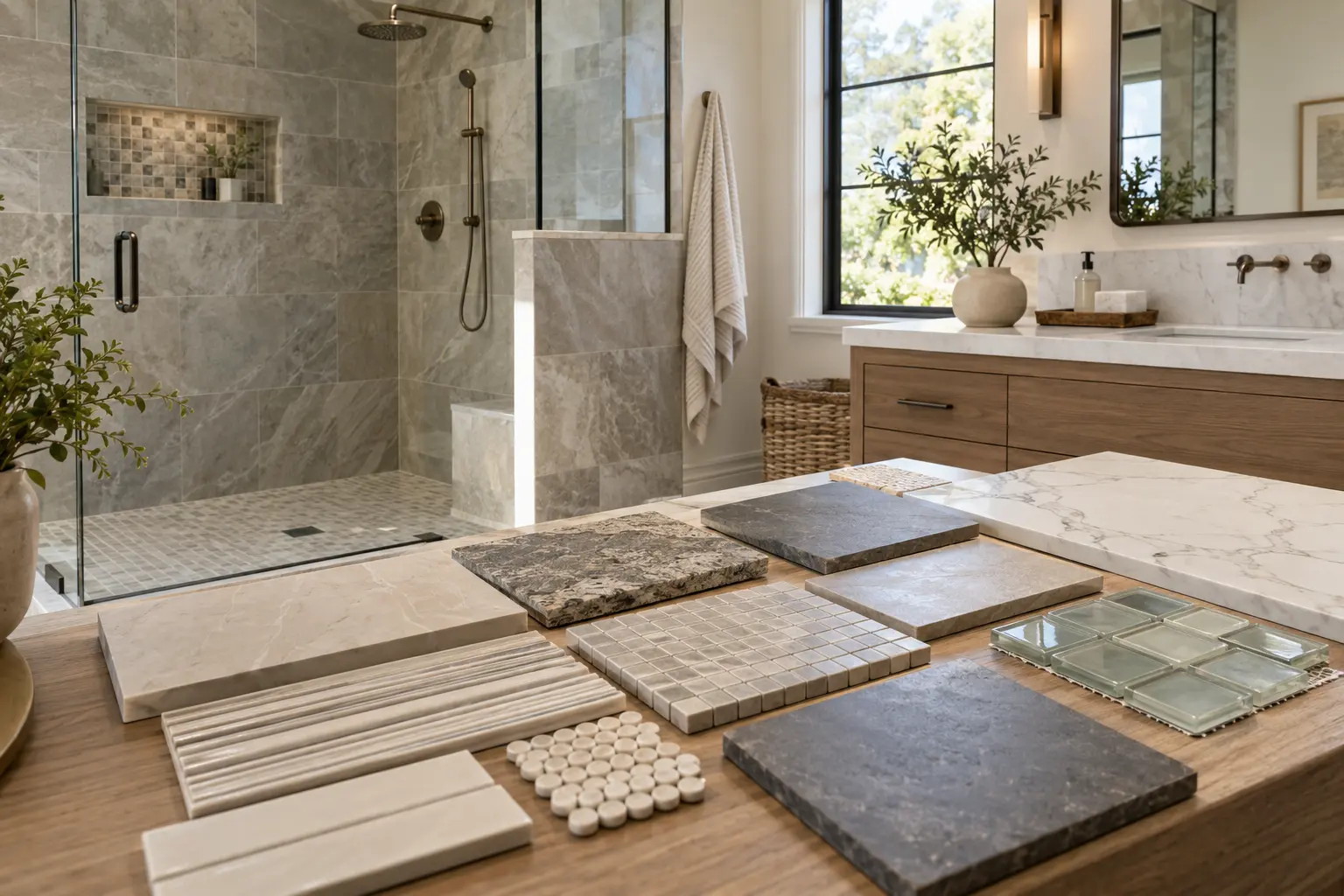
- Material: Porcelain, ceramic, natural stone, glass, and mosaic tile each have unique characteristics.
- Tile Size: Larger tiles reduce grout joints, while smaller tiles can better follow slopes and curves.
- Maintenance: Some materials require sealing or specialized cleaning products.
- Slip Resistance: Floor tile should provide adequate traction, particularly in wet areas.
- Budget: Material cost is only part of the investment. Tile size, layout, and patterns all influence installation labor.
Common Tile Materials
Porcelain
Dense, durable, water-resistant, and one of the most popular choices for bathroom floors and showers.
Ceramic
A versatile and economical option that works well in many bathroom applications.
Natural Stone
Provides a distinctive appearance but may require sealing and additional maintenance.
Glass
Often used as an accent or backsplash because of its reflective qualities.
Mosaic Tile
Commonly used on shower floors because the smaller pieces conform well to slopes and provide additional grout lines for traction.
Design Considerations
Large-Format Tile
Can create a clean, modern appearance with fewer grout joints but may require flatter substrates.
Tile Patterns
Running bond, stacked, herringbone, and other layouts influence both appearance and installation cost.
Grout Color
Matching grout creates a seamless appearance, while contrasting grout emphasizes the tile pattern.
Accent Tile
Feature walls, niches, and decorative bands can add visual interest without overwhelming the room.
Questions Your Designer or Contractor May Ask
- Where will the tile be installed?
- How important is low maintenance?
- Do you prefer a contemporary or traditional appearance?
- Will the shower include large-format tile, mosaics, or both?
- Have you selected grout color and joint width?
- Is slip resistance important for any members of the household?
Looking Beyond Appearance
Beautiful tile can transform a bathroom, but performance should always come first. The best tile selection balances aesthetics with durability, safety, maintenance, and proper installation.
Common Misconceptions
More expensive tile is always better. The best tile is the one that fits the application and your maintenance expectations.
Any tile can be used on the floor. Some wall tiles are not rated for floor use or may be too slippery.
Large tiles are always easier to install. They often require flatter surfaces and more precise installation.
Natural stone is maintenance-free. Many stone products require periodic sealing and specialized care.
Grout doesn't matter. Grout selection affects appearance, maintenance, and long-term performance.
Foundation Tip
Choose tile as part of the overall bathroom design rather than in isolation. Consider where it will be installed, how it will be maintained, and how it complements the other finishes in the room. A well-planned combination of tile, grout, and layout often has a greater impact than selecting the most expensive material.
Closing Thought
Tile is one of the defining features of a bathroom, but its long-term success depends on thoughtful planning as much as good design. By balancing appearance, function, maintenance, and proper installation, you can create a bathroom that looks beautiful and performs well for years to come.