Why Waterproofing Matters
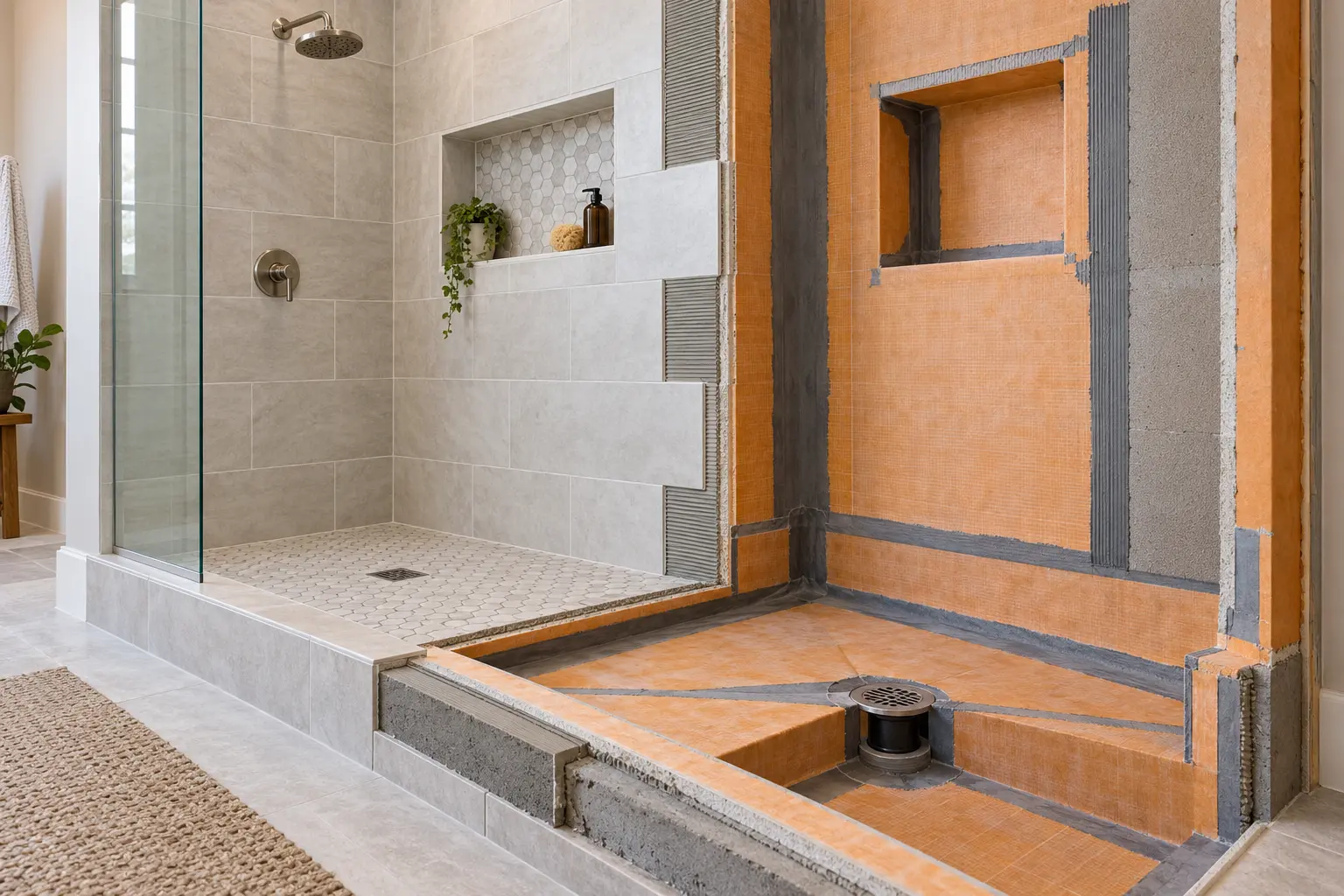
One of the most common misconceptions is that tile and grout make a shower waterproof. They do not. Tile, grout, and natural stone are finish materials that allow moisture to pass through over time. The waterproofing system installed behind the finished surface is what protects the framing, subfloor, and surrounding structure.
When waterproofing fails, damage often remains hidden until it has caused rot, mold, or costly structural repairs.
Consider the Type of Bathroom
- Primary Bathroom: Daily use makes long-term durability especially important.
- Hall or Shared Family Bathroom: Heavy use requires a proven waterproofing system installed correctly.
- Guest Bathroom: Less frequent use doesn't reduce the need for proper waterproofing.
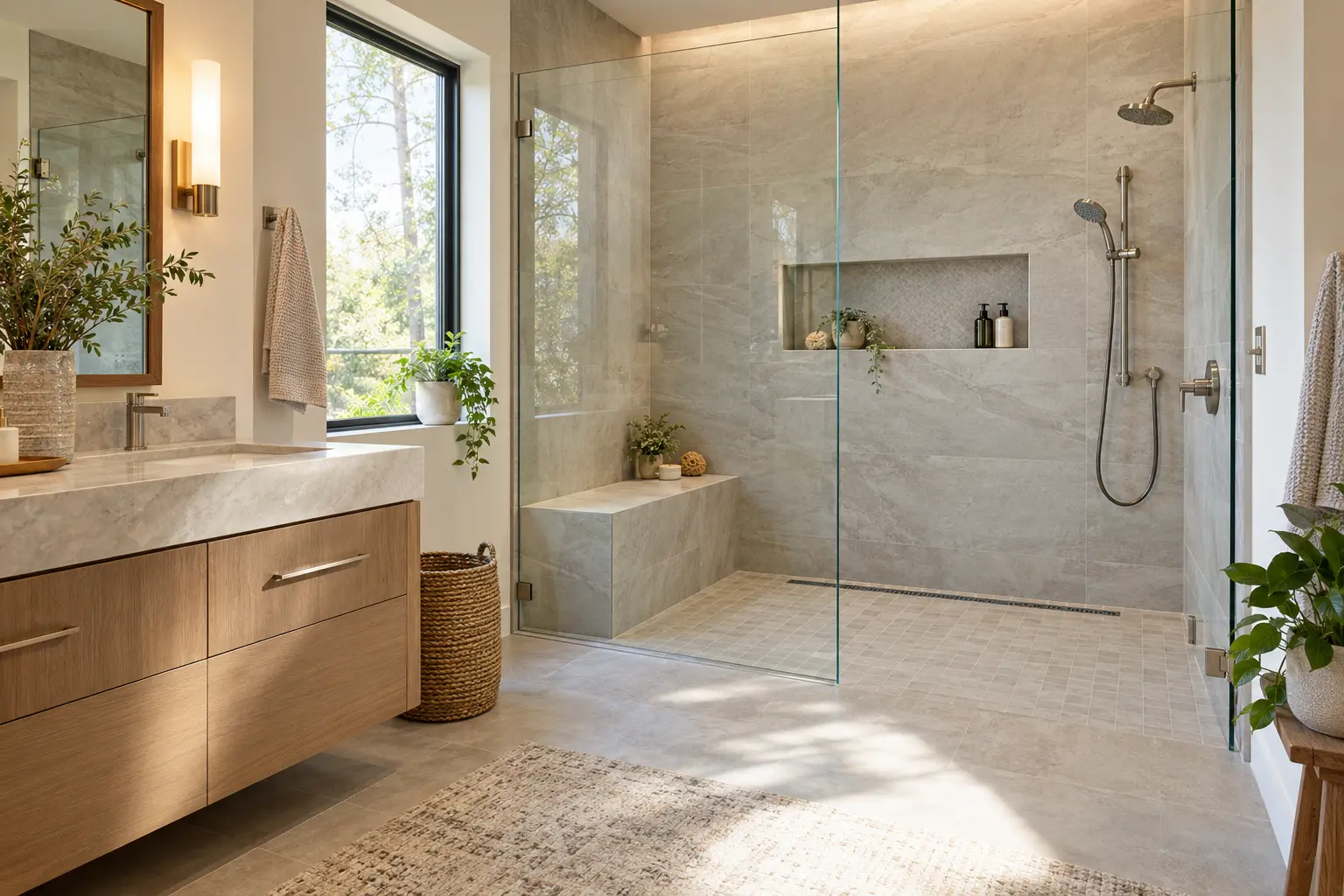
- Accessible or Curbless Shower: Requires careful planning to properly manage water without a traditional curb.
- Second-Floor Bathroom or Raised Foundation: Often benefits from modern integrated waterproofing systems that simplify curbless designs.
How Shower Waterproofing Is Commonly Done in Southern California
Traditional Float Walls with Hot Mop Pans
This remains one of the most common methods used by experienced tile setters throughout Southern California. The shower pan is waterproofed using a hot-mopped asphalt membrane while the walls are floated with mortar to create a flat, durable surface for tile. When installed correctly, this system has decades of proven performance and remains a trusted approach in the region.
Liquid-Applied Waterproofing Membranes
Products such as RedGard, AquaDefense, and Hydro Ban are applied by roller, brush, or trowel to create a waterproof membrane behind the tile. These systems can perform very well when installed exactly according to the manufacturer's specifications, including proper thickness and curing times. In Southern California they are often found on more budget-conscious remodels or projects that do not use floated walls.
Integrated Waterproofing Systems
Systems such as Schluter Kerdi, Hydro-Blok, and Wedi combine waterproof panels, drains, and accessories into a complete waterproofing system. These products are commonly selected for curbless showers, second-floor bathrooms, raised foundations, and projects where controlling floor height is important.
Choosing the Right System
There is no single waterproofing method that is best for every project. The right choice depends on the home's construction, the shower design, the installer's experience, the project budget, and long-term performance goals.
Critical Waterproofing Details
- Inside and outside corners
- Shower curbs and curbless transitions
- Built-in benches
- Recessed niches
- Plumbing penetrations and valve openings
- Drain integration
- Wall-to-floor transitions
Flood Testing
Before tile is installed, many jurisdictions require the completed shower pan to be filled with water and left for approximately 24 hours to verify that it does not leak. Flood testing confirms that the waterproofing system is performing correctly before it is covered by tile and is an important quality-control step.
Questions Your Designer or Contractor May Ask
- Which waterproofing system do you recommend for this project and why?
- Will the shower include a curb or be curbless?
- Do you perform a flood test before tile installation?
- Who installs the waterproofing system?
- Do you follow the manufacturer's installation requirements?
- How will niches, benches, and plumbing penetrations be waterproofed?
Looking Beyond the Tile
Beautiful tile attracts attention, but the waterproofing behind it determines whether the shower performs for decades. Investing in quality waterproofing and experienced installation is one of the best decisions a homeowner can make.
Common Misconceptions
Tile and grout make a shower waterproof. The waterproofing system behind the tile protects the home.
Every waterproofing system performs the same. Proper installation is just as important as the product selected.
Waterproofing isn't important because you can't see it. It is one of the most critical parts of the entire shower.
Curbless showers are more likely to leak. When properly designed and waterproofed, curbless showers can perform as well as traditional showers.
Foundation Tip
Ask as many questions about what goes behind the tile as you do about the tile itself. The waterproofing system is what protects your home long after the renovation is complete, and a qualified installer following a proven system is more important than choosing a particular brand.
Closing Thought
The most important part of your shower is the part you'll never see. By understanding how waterproofing works and choosing an experienced contractor who follows proven installation methods, you can enjoy a beautiful shower that performs reliably for many years.