Why Storage Matters
Even a beautifully designed bathroom can become cluttered if everyday items do not have a designated place. Planning storage early allows cabinetry, plumbing, electrical, and wall framing to work together while maximizing usable space.
Consider the Type of Bathroom
- Primary Bathroom: Often benefits from larger vanities, linen storage, drawer organization, and dedicated storage for personal care items.
- Hall or Shared Family Bathroom: Storage should accommodate multiple users while keeping frequently used items accessible.
- Guest Bathroom: Simple storage for towels and toiletries is often sufficient.
- Powder Room: Storage needs are minimal but may include concealed space for extra toilet paper and cleaning supplies.
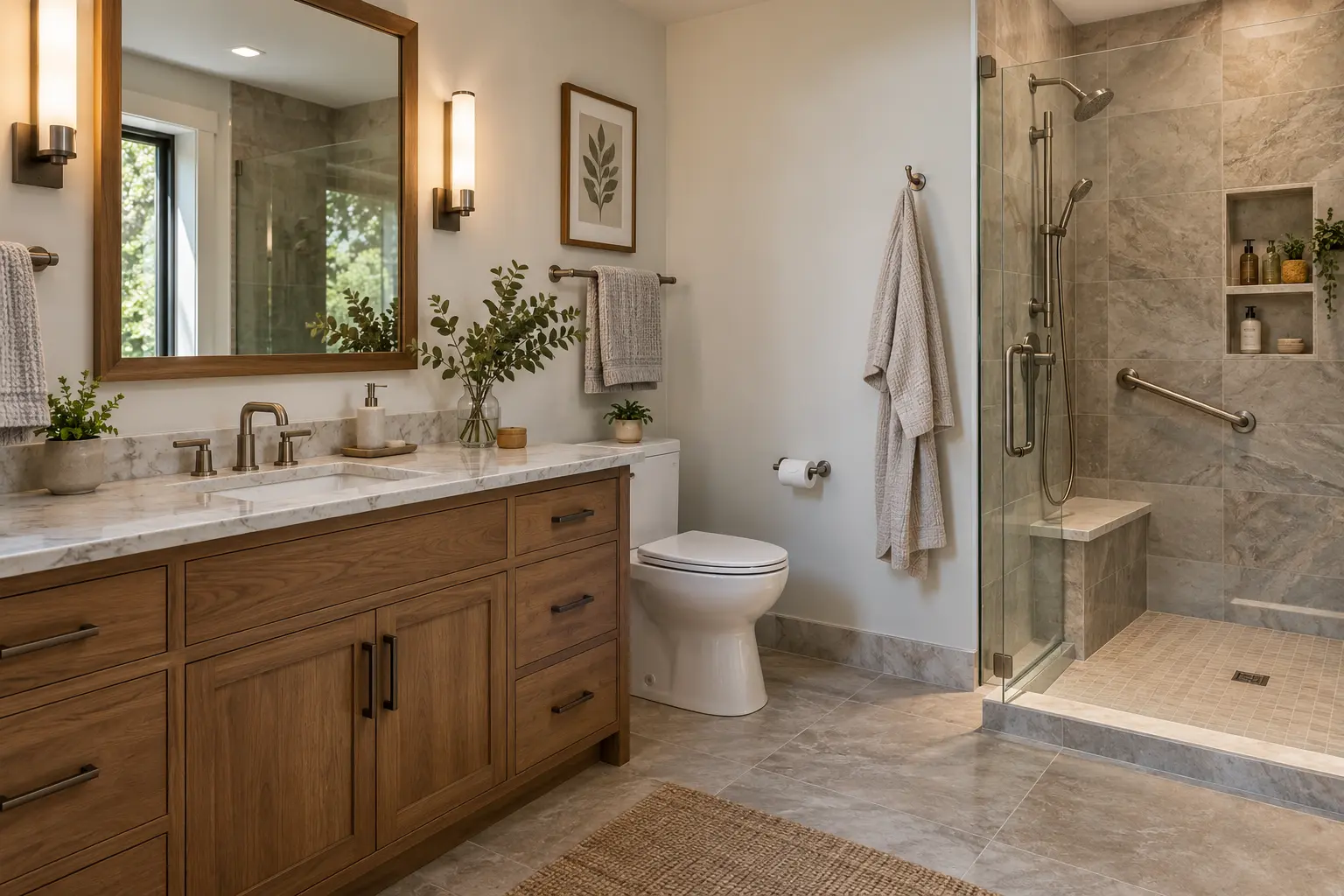
- Accessible Bathroom: Storage should be easy to reach without excessive bending, stretching, or lifting.
Key Factors to Consider
- Daily Routine: Plan storage around how you actually use the bathroom.
- Accessibility: Keep frequently used items within comfortable reach.
- Organization: Drawers, dividers, pull-outs, and trays can improve organization.
- Moisture Resistance: Select materials and hardware designed for humid environments.
- Future Needs: Consider how storage needs may change over time.
Common Storage Solutions
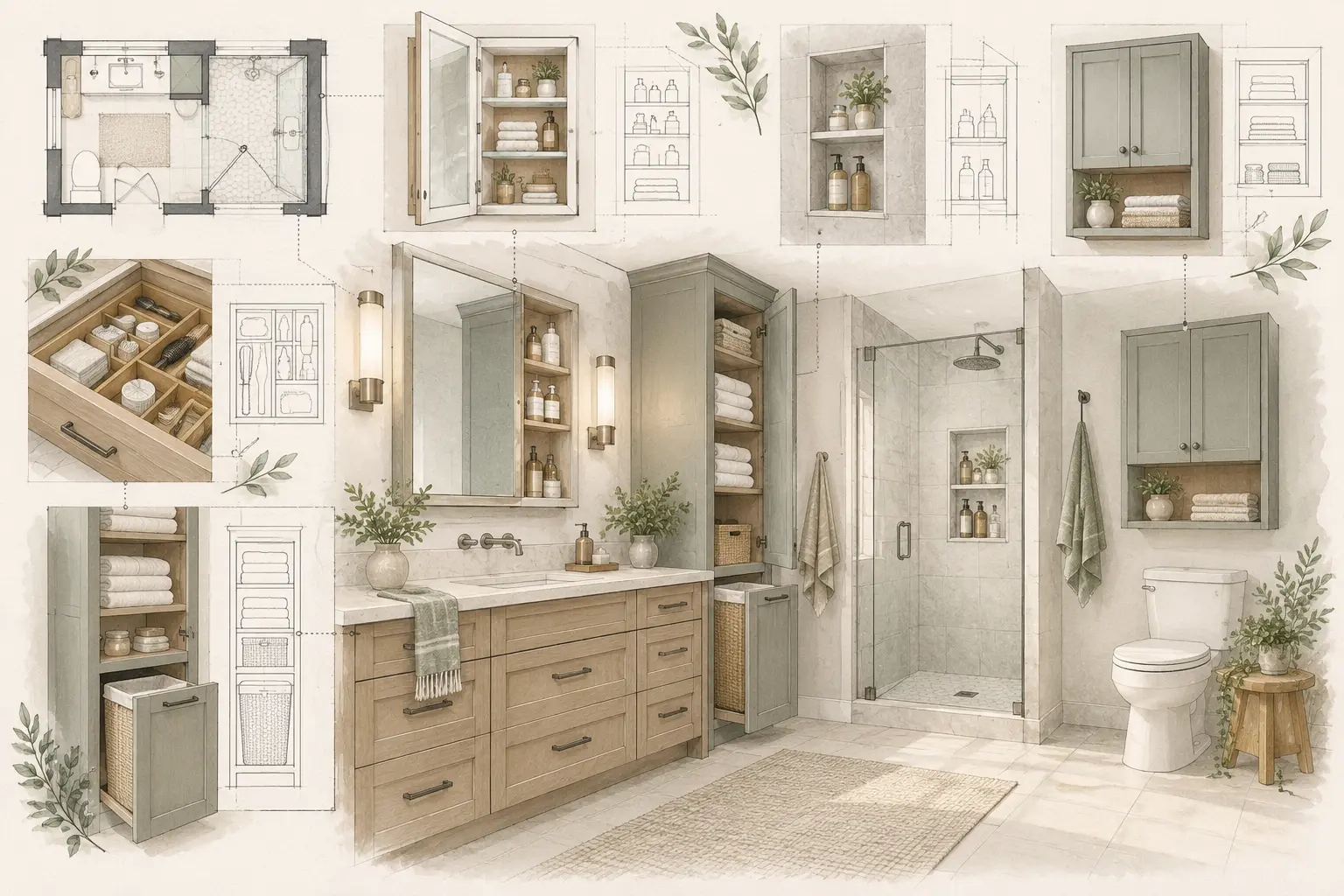
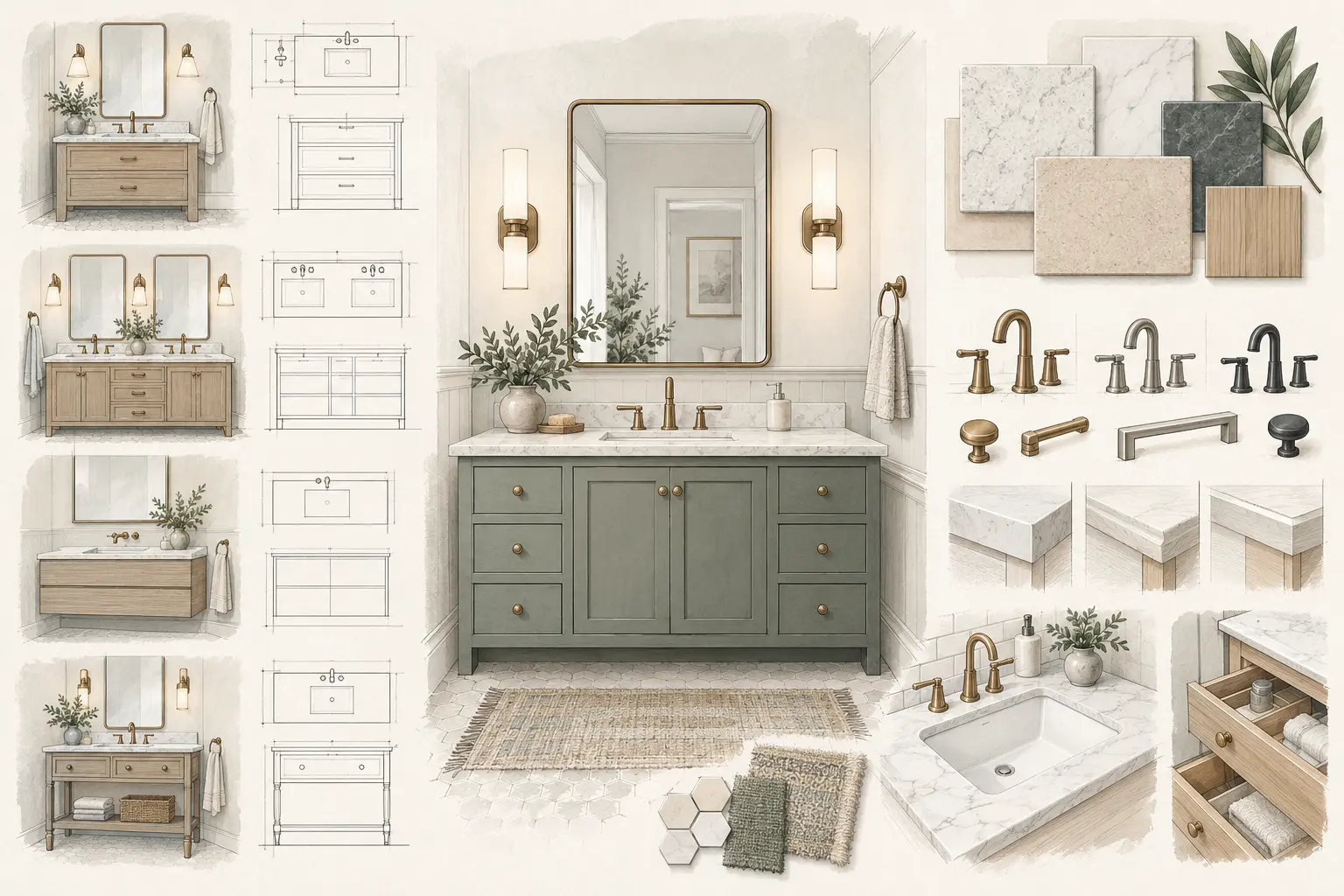
Vanity Storage
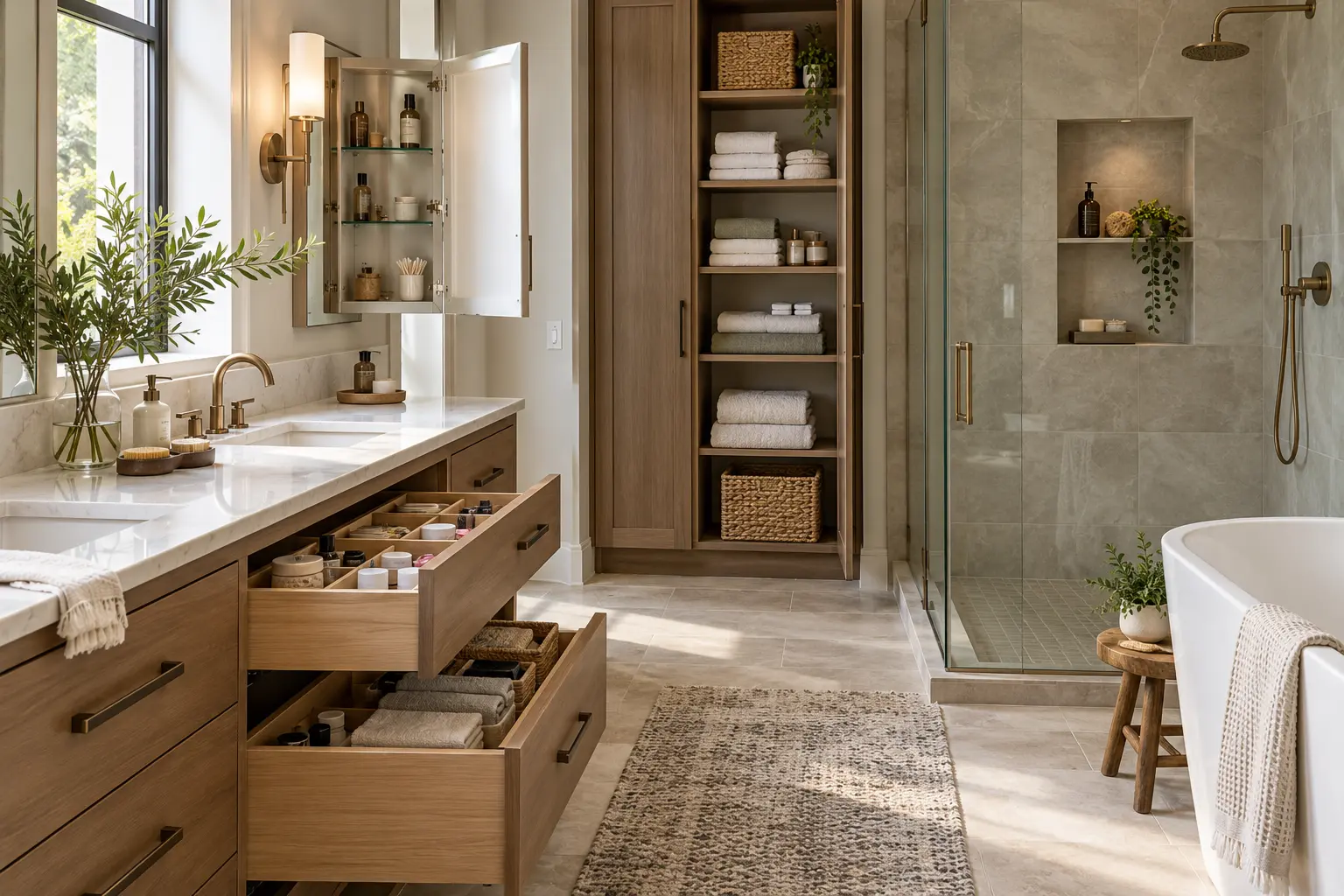
Combination of drawers and cabinets for toiletries, grooming supplies, and cleaning products.
Medicine Cabinets
Provide concealed storage while doubling as a mirror. Illuminated models may require electrical planning.
Linen Cabinets
Ideal for towels, extra toiletries, and bulk supplies.
Open Shelving
Adds decorative display space but requires more frequent cleaning.
Shower Niches
Built-in niches keep shampoo and soap off the floor and should be coordinated with the tile layout.
Drawer Organizers
Help maximize usable space and reduce clutter.
Hidden Storage
Toe-kick drawers, recessed cabinets, and other creative solutions can increase storage without increasing the room size.
Planning Ahead
Many storage decisions affect framing, plumbing, electrical, and tile layouts. Planning features such as recessed medicine cabinets, shower niches, linen cabinets, and illuminated storage before construction begins helps avoid costly changes later.
California Consideration
When designing storage, remember that accessibility and clear floor space requirements may influence cabinet sizes and locations, particularly in projects subject to California accessibility standards. Even in single-family homes, applying universal design principles can improve long-term usability.
Questions Your Designer or Contractor May Ask
- What items do you use every day?
- Do you prefer drawers, shelves, or cabinets?
- Would you like a recessed or surface-mounted medicine cabinet?
- Should a linen cabinet be included?
- Would you like built-in shower niches?
- Are there future accessibility needs you would like to plan for?
Looking Beyond Cabinet Size
Good storage is measured by how easily you can access and organize your belongings, not simply by the number of cabinets. Well-planned storage often makes a bathroom feel larger because countertops remain clear and clutter is minimized.
Common Misconceptions
More cabinets always mean better storage. Organization and thoughtful layout are often more important than cabinet quantity.
Open shelving is maintenance-free. Displayed items collect dust and require regular cleaning.
Storage can be figured out after construction. Many built-in storage features require planning before framing, plumbing, and tile work are complete.
Every family has the same storage needs. The best storage plan reflects the household's daily routines and priorities.
Foundation Tip
Before finalizing your design, make a list of everything that will be stored in the bathroom—from towels and toiletries to hair dryers and cleaning supplies. Designing storage around your actual belongings often produces a bathroom that feels far more functional than simply adding more cabinets.
Closing Thought
Thoughtful storage is one of the most valuable investments in a bathroom renovation. By planning storage around your daily routine and coordinating it with the overall design, you can create a bathroom that stays organized, functions efficiently, and remains enjoyable to use for years to come.