Why Accessories and Hardware Matter
Accessories are the finishing touches that homeowners interact with every day. Proper placement and coordination improve convenience while helping the bathroom feel complete.
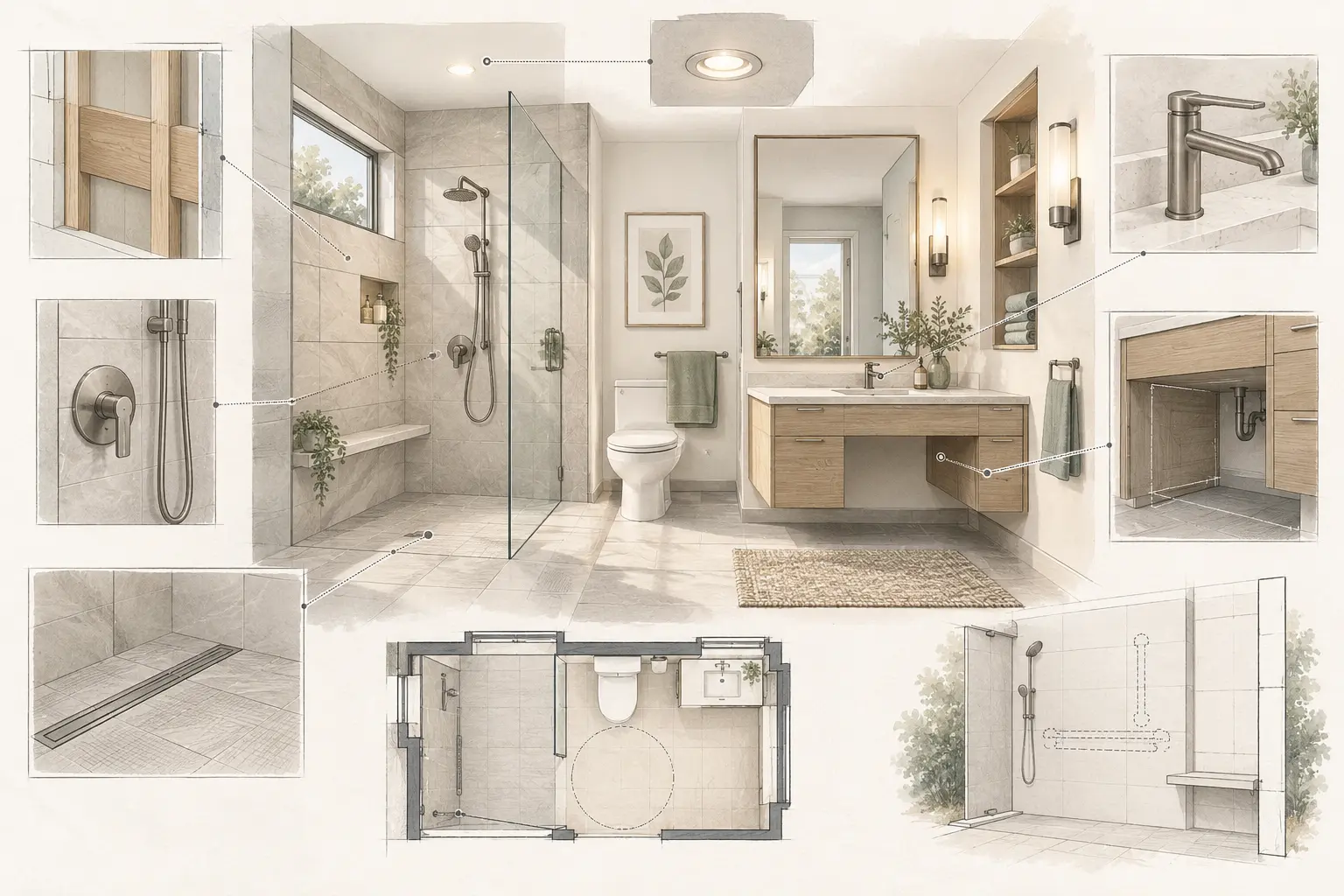
Many accessories require blocking, concealed fasteners, or coordination with tile layouts before walls are closed.
Consider the Type of Bathroom
- Primary Bathroom: Often includes multiple towel bars, robe hooks, makeup mirrors, shower accessories, and upgraded hardware.
- Hall or Shared Family Bathroom: Focus on durability, easy cleaning, and enough storage for multiple users.
- Guest Bathroom: Simple, coordinated accessories usually provide the best value.
- Powder Room: Decorative hardware and mirrors can become design focal points.
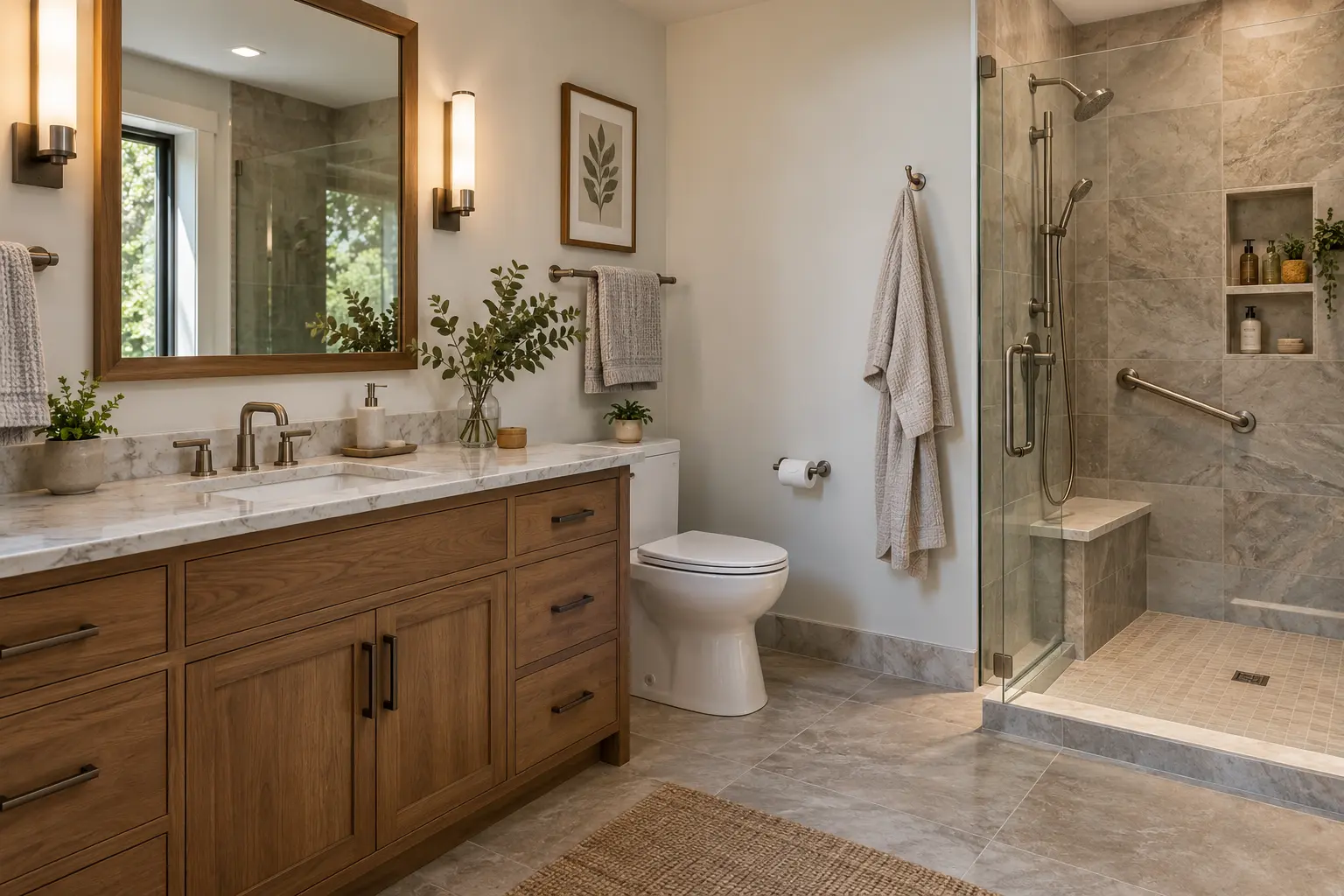
- Accessible Bathroom: Grab bars, reachable accessories, and thoughtful placement improve safety and usability.
Key Factors to Consider
- Function First: Place accessories where they are convenient to use rather than simply where they fit.
- Durability: Choose products that can withstand daily use and humid environments.
- Finish Coordination: Coordinate finishes throughout the room for a cohesive appearance.
- Cleaning and Maintenance: Simpler designs are often easier to keep clean.
- Future Needs: Consider reinforcing walls for future grab bars even if they are not being installed today.
Common Bathroom Accessories and Hardware
Towel Bars and Rings
Locate near sinks and showers where towels are used most frequently.
Robe Hooks
Hooks often provide flexible storage and require less wall space than towel bars.
Toilet Paper Holders
Position within comfortable reach without interfering with movement around the toilet.
Grab Bars
Modern grab bars are available in attractive styles and can blend into the bathroom design while improving safety. Grab bars intended to support body weight should be safety-rated and installed into adequate structure in accordance with the manufacturer’s instructions and any applicable accessibility requirements. Towel bars and other convenience hardware are not substitutes for grab bars.
Shelves
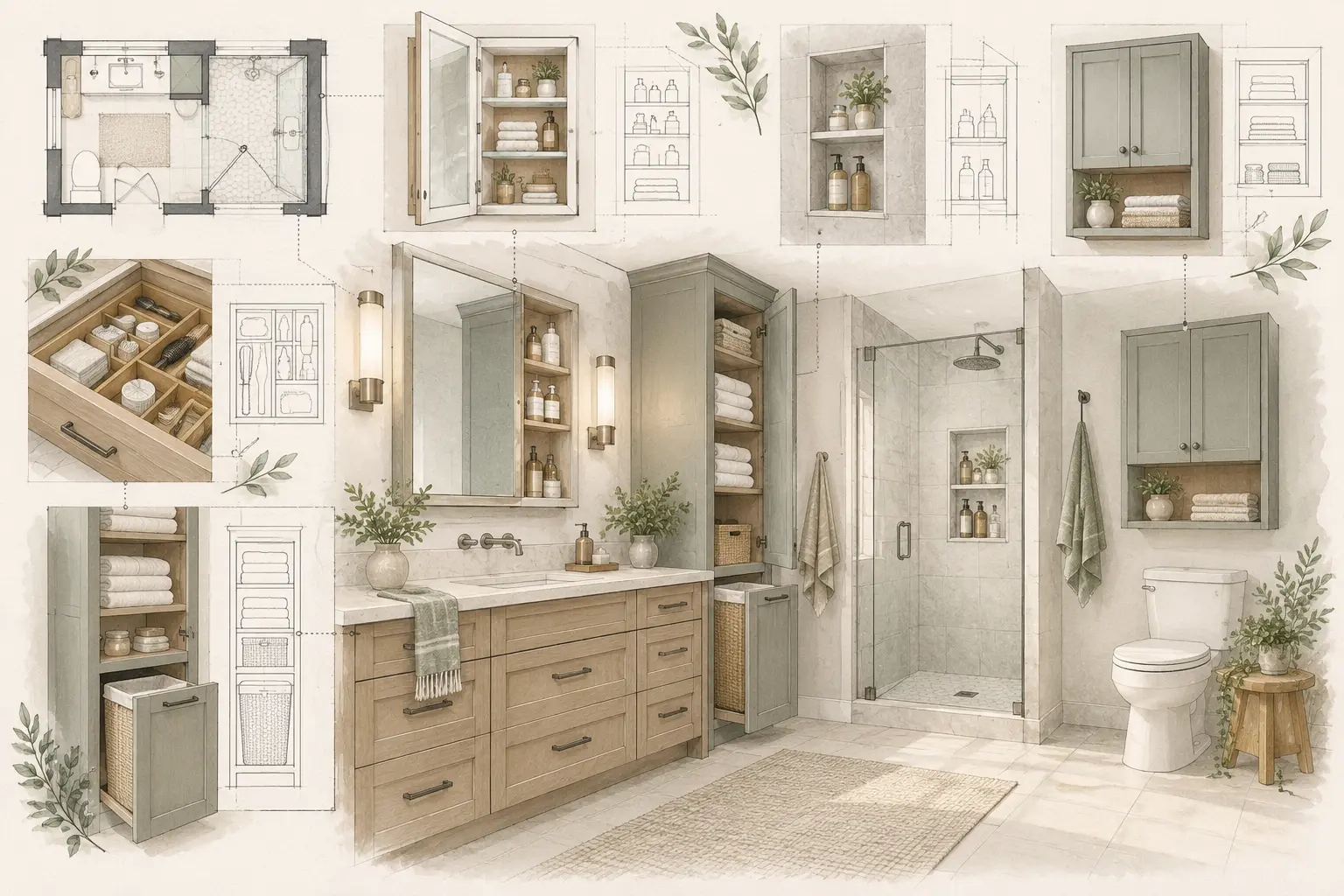
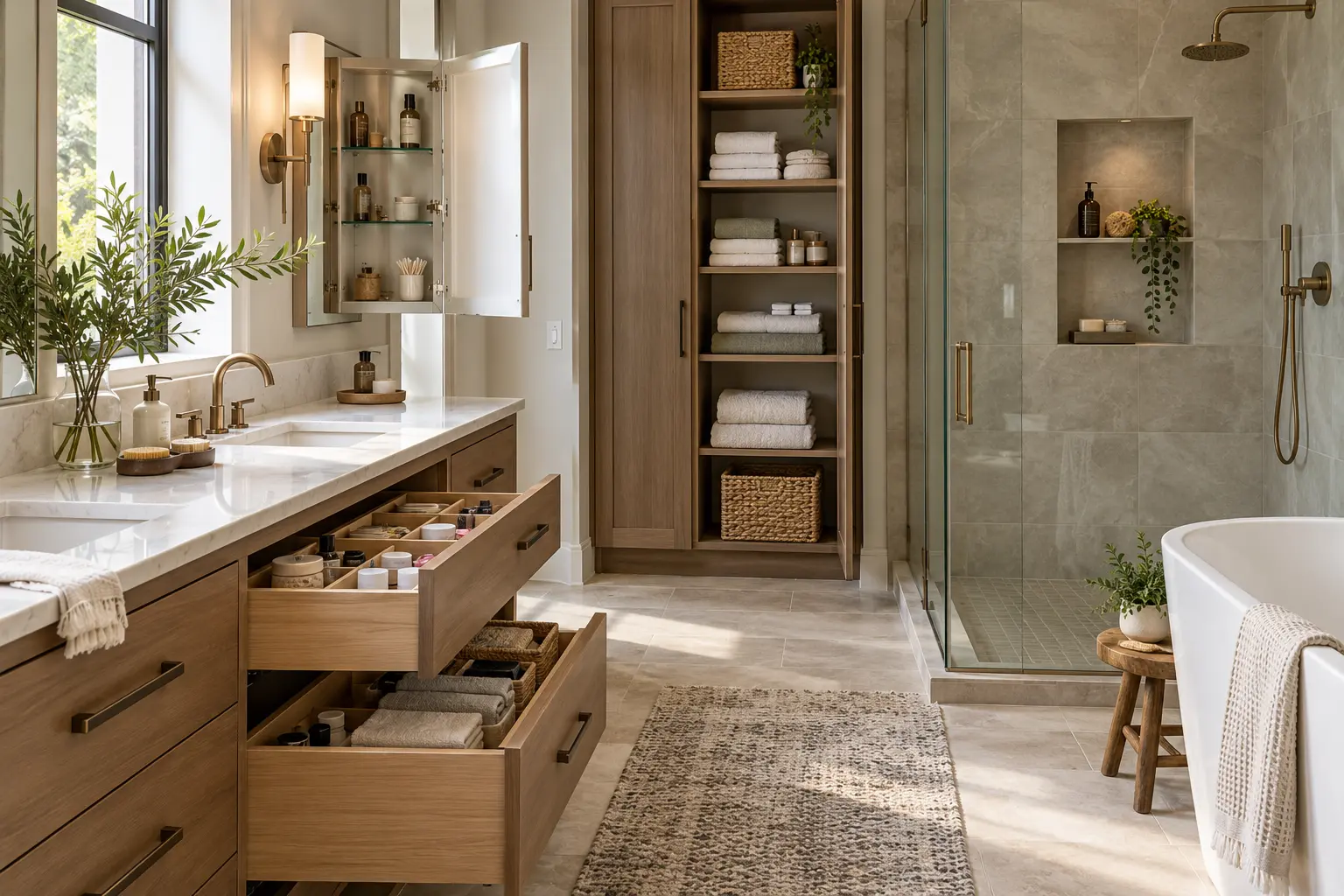
Floating shelves and corner shelves provide additional storage without taking up floor space.
Mirrors
Framed, frameless, illuminated, and magnifying mirrors each serve different purposes.
Shower Accessories
Soap niches, corner shelves, shaving ledges, and hooks should be coordinated with the tile layout before installation.
Planning Ahead
Many accessories are easiest to install when backing or blocking is installed inside the walls before drywall or tile. Even if grab bars or additional accessories are not part of the current project, adding blocking during construction can make future installation much easier and help avoid damaging finished walls.
One of the most valuable upgrades during a bathroom remodel is installing wood blocking inside the walls around the toilet, shower, and bathtub. Even if grab bars are not part of the current design, concealed blocking provides secure mounting locations for future grab bars, towel bars, or other accessories without relying solely on drywall anchors.
California Consideration
California has increasingly emphasized aging-in-place and future accessibility in its building standards. Depending on the type of project, applicable code, and local jurisdiction, reinforced wall backing for future grab bars may be required around toilets, tubs, and showers.
Even when it is not required by code, many contractors recommend installing blocking while the walls are open. The additional material cost is relatively small and makes it much easier to add grab bars later without opening finished drywall or tile.
Questions Your Designer or Contractor May Ask
- Where would you like towel bars and robe hooks located?
- Would you like blocking installed for future grab bars?
- Do you prefer towel bars, hooks, or a combination of both?
- Will shower niches or shelves be integrated into the tile layout?
- Have you selected the finish for your accessories and hardware?
- Would you like illuminated or magnifying mirrors?
Looking Beyond Appearance
Well-planned accessories make a bathroom easier to use every day. Their placement often has a greater impact on convenience than the style of the hardware itself.
Common Misconceptions
Accessories can wait until the end of the project. Many locations should be planned before tile and drywall are complete.
Grab bars are only for seniors. They improve safety for people of all ages and can be incorporated into attractive bathroom designs.
Every accessory has a standard location. The best locations depend on the bathroom layout and how the space will be used.
All hardware finishes match perfectly. Finishes can vary between manufacturers, making coordination easier when products come from the same collection or manufacturer.
Foundation Tip
Think beyond today's needs. Installing concealed wall blocking for future grab bars while the walls are open is one of the least expensive upgrades you can make during a bathroom remodel, yet it can significantly improve safety, accessibility, and long-term flexibility. Also walk through your bathroom on paper before construction begins to ensure accessory locations fit your daily routine.
Closing Thought
Accessories and hardware may seem like small details, but they have a significant impact on how a bathroom functions every day. Planning their locations early—and preparing the walls for future needs—helps create a space that is comfortable, organized, and built around the way you live.