Why Bathroom Lighting Matters
Lighting influences nearly every activity in a bathroom, from getting ready in the morning to relaxing at the end of the day. Poor lighting can create shadows, reduce visibility, and make even a well-designed bathroom feel uninviting.
Planning lighting early allows electrical wiring, switch locations, mirrors, cabinetry, medicine cabinets, and ventilation controls to work together as a complete design.
Consider the Type of Bathroom
- Primary Bathroom: Often benefits from layered lighting, dimmers, and high-quality vanity lighting for daily routines.
- Hall or Shared Family Bathroom: Focus on even illumination and durable fixtures that perform well with frequent use.
- Guest Bathroom: A simple combination of vanity and ceiling lighting often provides excellent function.
- Powder Room: Decorative fixtures can make a strong design statement while still providing adequate light.
- Accessible Bathroom: Good lighting helps improve visibility and safety for users of all ages.
Key Factors to Consider
- Task Lighting: Provides clear illumination for grooming, shaving, makeup, and other daily activities.
- Ambient Lighting: General room lighting that creates overall brightness.
- Accent Lighting: Highlights architectural details, niches, artwork, or decorative features.
- Color Temperature: Warm light (2700K–3000K) creates a relaxing atmosphere, while neutral light (3500K–4000K) provides a crisper appearance for grooming tasks.
- Color Rendering (CRI): Choose fixtures with a CRI of 90 or higher when possible so skin tones and finishes appear more natural.
- Energy Efficiency: LED fixtures offer long life, low energy use, and minimal maintenance.
- Controls: Separate switching, dimmers, occupancy or vacancy sensors, and timers improve flexibility, comfort, and energy efficiency.
Common Bathroom Lighting Fixtures
Vanity Lights
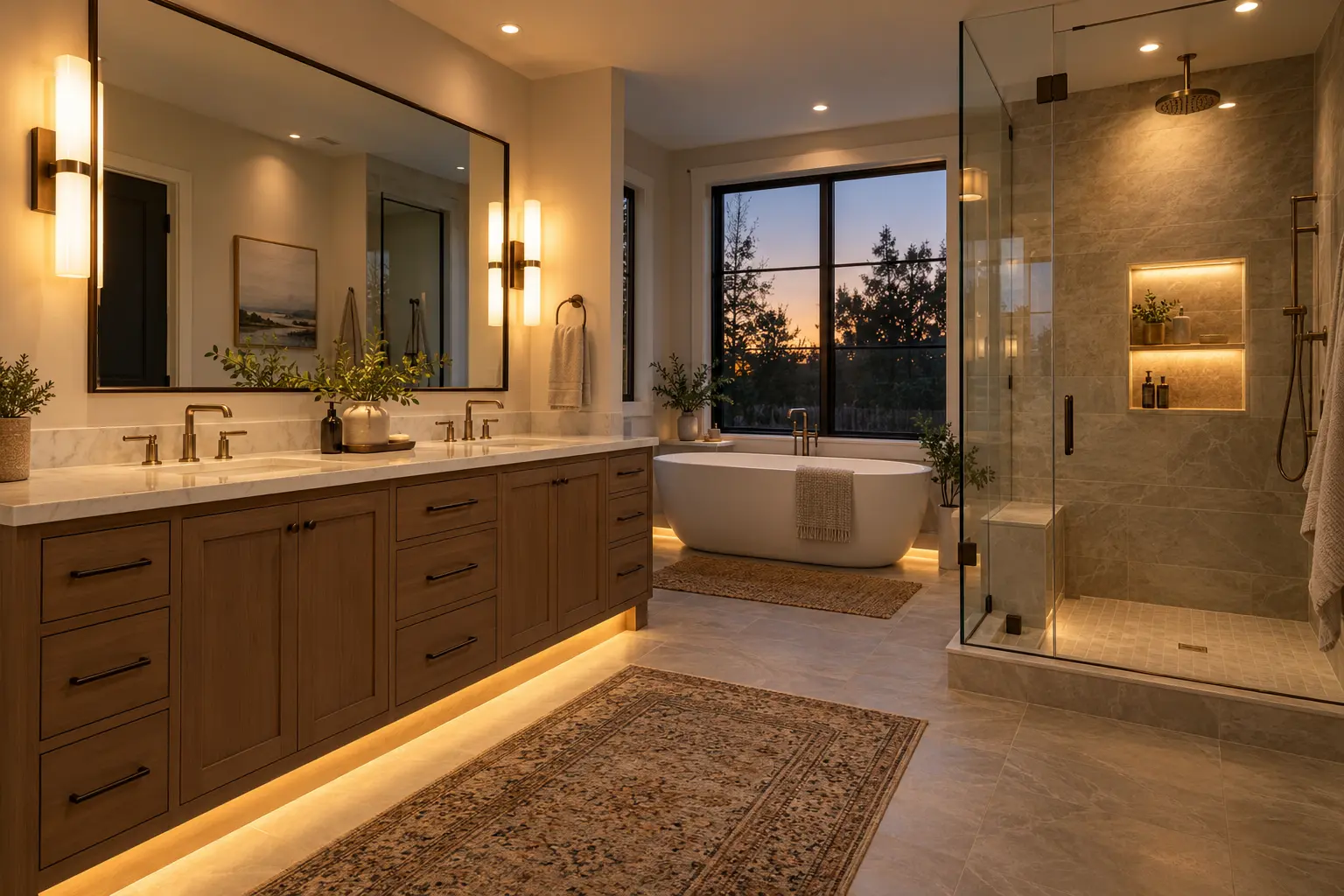
Mounted beside or above the mirror to reduce shadows on the face.
Lighted Mirrors and Medicine Cabinets
Integrated LED mirrors and medicine cabinets have become increasingly popular because they combine task lighting with a clean, modern appearance. Many models include built-in defoggers, adjustable color temperature, dimming, touch or motion controls, night lighting, integrated outlets or USB charging, and magnifying mirrors. Most require power to be roughed into the wall before drywall and tile are installed.
Recessed Lighting
Provides clean, even ambient lighting throughout the room.
Decorative Fixtures
Pendant lights or chandeliers can add character when installed in appropriate locations.
Shower Lighting
Wet-rated recessed fixtures improve visibility inside the shower.
Toe-Kick or Night Lighting
Low-level lighting improves nighttime navigation without turning on bright overhead lights.
Design Considerations
Layer Your Lighting
Combine task, ambient, and accent lighting instead of relying on a single fixture.
Separate Switching
Control vanity, shower, and ambient lighting independently to better match different activities and times of day.
Dimmers
Adding dimmers during a remodel is relatively inexpensive and provides greater flexibility and comfort.
Integrated Technology
Lighted mirrors, smart medicine cabinets, Bluetooth speakers, and other integrated features should be planned early so wiring can remain concealed.
Mirror Placement
Coordinate lighting with mirror size and location to minimize shadows.
Natural Light
Windows and skylights can reduce daytime lighting needs while enhancing the overall feel of the room.
Fixture Ratings
Fixtures installed near tubs and showers must be listed for damp or wet locations as required.
Planning Ahead
Even if you are not installing a lighted mirror or medicine cabinet today, consider having power roughed into the wall behind the mirror location during the renovation. Preparing for a future upgrade during construction is usually far easier and less expensive than opening finished drywall or tile later.
California Code Consideration
California’s 2025 Energy Code requires at least one installed luminaire in a bathroom to be controlled by an occupancy or vacancy sensor that provides automatic-off functionality. The project team and local building department should confirm the control, manual-on or automatic-on behavior, dimmer compatibility, and other requirements that apply to the project.
Questions Your Designer or Contractor May Ask
- How do you typically use the bathroom throughout the day?
- Do you want separate switches for vanity, shower, and ambient lighting?
- Would you like a lighted mirror or illuminated medicine cabinet?
- Would you like integrated defogging, dimming, or adjustable color temperature?
- Would you like dimmers for evening use?
- Which bathroom luminaire will use the required automatic-off control, and how should that occupancy or vacancy sensor coordinate with the rest of the lighting plan?
- Is natural light available?
Looking Beyond Brightness
A brighter bathroom is not always a better bathroom. The goal is balanced, comfortable lighting that supports everyday tasks while creating an inviting atmosphere.
Common Misconceptions
One ceiling light is enough. Layered lighting provides better function and reduces shadows.
All LED lights look the same. LED fixtures vary significantly in color temperature, CRI, and overall light quality.
Lighting is the final design decision. Lighting should be planned early so wiring, switches, mirrors, cabinetry, and technology all work together.
Automatic lighting controls are only for commercial buildings. California’s 2025 Energy Code requires at least one installed bathroom luminaire to use an occupancy or vacancy sensor with automatic-off functionality.
Lighted mirrors are only decorative. Many provide excellent task lighting while adding features such as defogging, dimming, and adjustable color temperature.
Foundation Tip
Think about how you'll use the bathroom throughout the day, not just how bright you want it to be. A combination of layered lighting, separate switches, quality LED fixtures, and thoughtfully selected features—such as illuminated mirrors or medicine cabinets—creates a bathroom that is both functional and comfortable.
Closing Thought
Good lighting quietly improves every moment spent in a bathroom. By planning lighting early and considering both design and California code requirements, you can create a space that is beautiful, comfortable, and functional for years to come.