
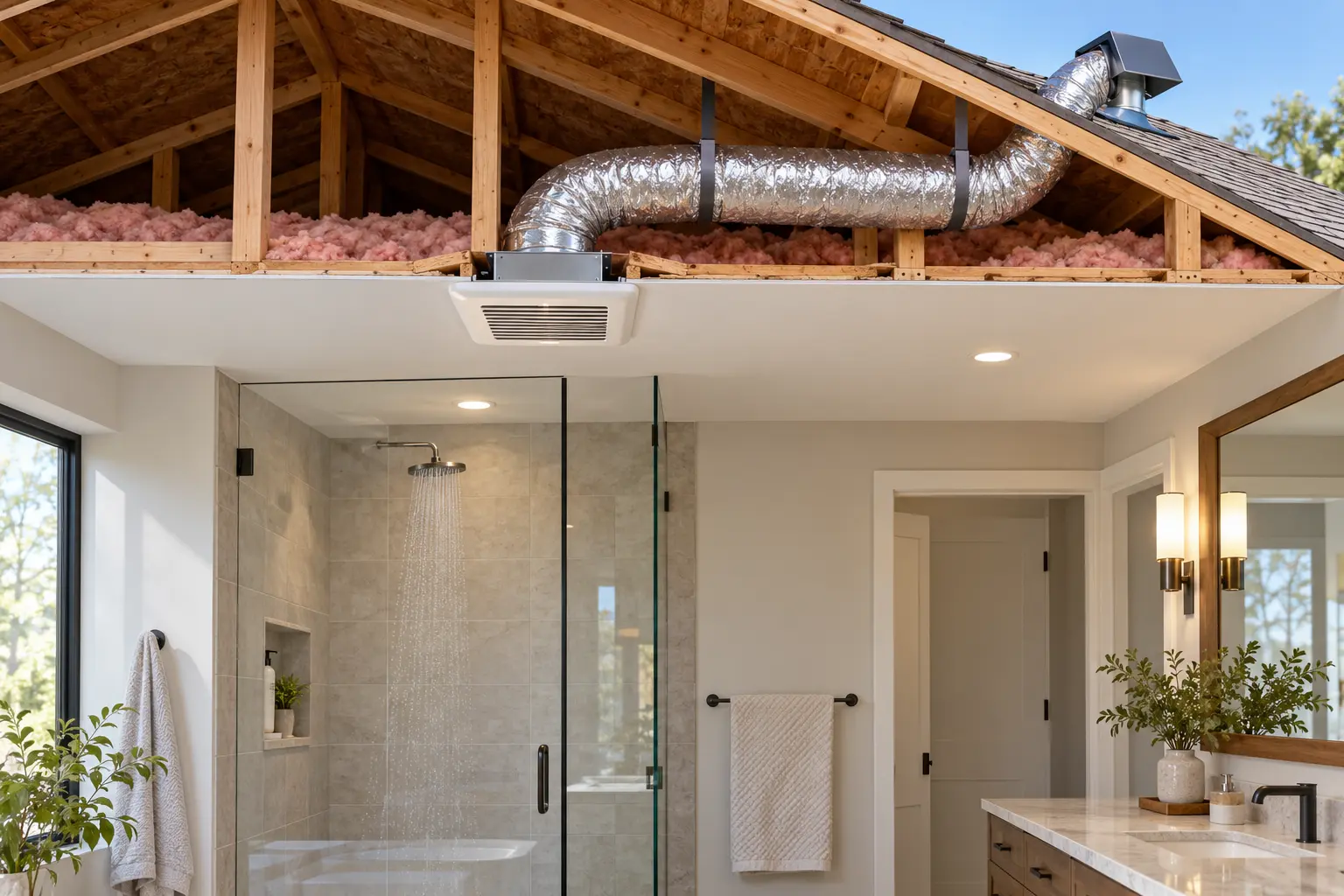
Why Bathroom Ventilation Matters
Every shower introduces a significant amount of moisture into the air. Without proper ventilation, that moisture can condense on walls, ceilings, mirrors, windows, and inside wall cavities. Over time, excess humidity can damage finishes and shorten the life of the bathroom.
Ventilation is one of the least visible parts of a remodel, but it plays a major role in the long-term performance of the space.
Consider the Type of Bathroom
- Primary Bathroom: Frequent daily use often benefits from a larger-capacity fan and timer or humidity-sensing controls.
- Hall or Shared Family Bathroom: Multiple users create higher humidity levels, making proper ventilation especially important.
- Guest Bathroom: A smaller fan may be sufficient depending on room size and usage.
- Powder Room: If no shower or tub is present, ventilation needs may be different, though local code may still require mechanical ventilation if there is no operable window.
- Accessible Bathroom: Select quiet, easy-to-operate controls such as timers or humidity sensors.
Key Factors to Consider
- Fan Capacity: Ventilation fans should be sized appropriately for the room and its expected use.
- Noise Level: Fans are rated in sones. Lower sone ratings generally provide quieter operation.
- Ducting: Fans should discharge outdoors through properly sized ductwork, never into an attic or crawlspace.
- Controls: Humidistats, timers, and other automatic controls help ensure the fan runs long enough after a shower.
- Energy Efficiency: Modern ENERGY STAR® fans can provide quieter operation with lower energy use.
- Maintenance: Cleaning the fan grille periodically helps maintain airflow and performance.
Common Ventilation Options
Ceiling Exhaust Fans
The most common solution for removing moisture from bathrooms.
Humidity-Sensing Fans
Automatically operate when humidity rises above a preset level.
Timer Switches
Allow the fan to continue running after the room is vacated.
Combination Fan/Light Units
Combine ventilation and lighting in a single fixture.
Heat Lamp or Heater/Fan Combinations
Provide additional comfort while also offering ventilation when properly selected.
California Code Consideration
Under California’s CALGreen provisions, a bathroom containing a bathtub, shower, spa, or similar moisture source is generally required to be mechanically ventilated with an ENERGY STAR exhaust fan ducted to terminate outside the building. Unless the fan functions as part of the whole-house ventilation system, it must be controlled by a qualifying humidity control.
These requirements are separate from the California Energy Code’s ventilation provisions. The project team and local building department should confirm the requirements that apply to the bathroom, project scope, and locally adopted code.
Design Considerations
Vent to the Exterior
Bathroom exhaust should terminate outside the home, never into an attic or crawlspace.
Existing Venting Conditions
If an existing fan does not currently exhaust outdoors, the renovation may require new ductwork along with a roof penetration or an exterior wall termination (often called an eyebrow vent or wall cap). While this can add cost, it is an important improvement that helps remove moisture from the home instead of trapping it inside the building envelope.
Keep Duct Runs Short
Short, straight duct runs generally improve airflow and fan performance.
Plan for Moisture
Steam showers, larger bathrooms, and multiple showerheads may require additional ventilation.
Coordinate with Lighting
Many homeowners choose combination fan/light units or coordinate fan controls with the lighting plan.
Questions Your Designer or Contractor May Ask
- How often is this bathroom used?
- Will the bathroom include a steam shower?
- Would you like a humidistat or timer control?
- Is a quiet fan important to you?
- Does the existing exhaust fan already vent to the exterior, or will new ductwork be required?
- Where will the exhaust duct terminate?
- Will the fan be integrated with the lighting design?
Looking Beyond the Fan
Choosing a quality fan is only part of the solution. Proper sizing, duct installation, exterior termination, and controls all contribute to effective moisture removal and long-term bathroom performance.
Common Misconceptions
A louder fan works better. Noise level does not necessarily indicate airflow or performance.
Opening a window replaces the need for ventilation. Mechanical ventilation is often more reliable and may be required by code.
The fan only needs to run during the shower. Automatic controls help ensure it continues running long enough to remove excess humidity.
Any exhaust location is acceptable. Bathroom fans should discharge outdoors, not into attics or crawlspaces.
My existing fan works, so it probably meets today's standards. Older homes may have undersized fans, outdated controls, or ductwork that never vented outdoors. A remodel is an excellent opportunity to correct these issues.
Foundation Tip
Don't choose a bathroom fan based only on price. A properly sized, quiet fan with a humidistat or other automatic control, installed with correctly routed ductwork to the exterior, is one of the best ways to protect your bathroom for years to come.
Closing Thought
A bathroom renovation is more than beautiful finishes. Effective ventilation quietly protects everything behind the scenes by controlling moisture and preserving the life of your bathroom. Planning for the right ventilation system is one of the smartest investments you can make during a remodel.