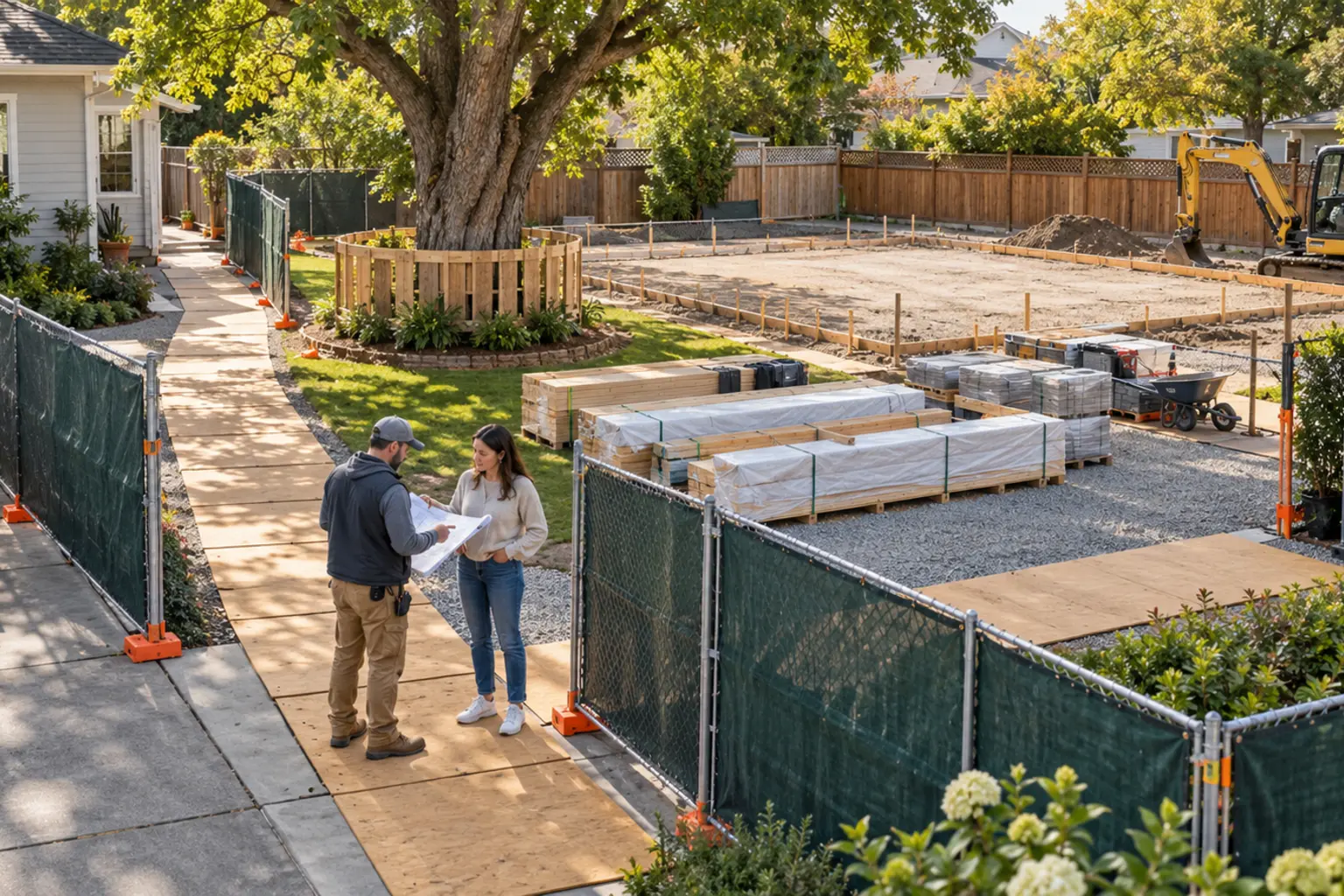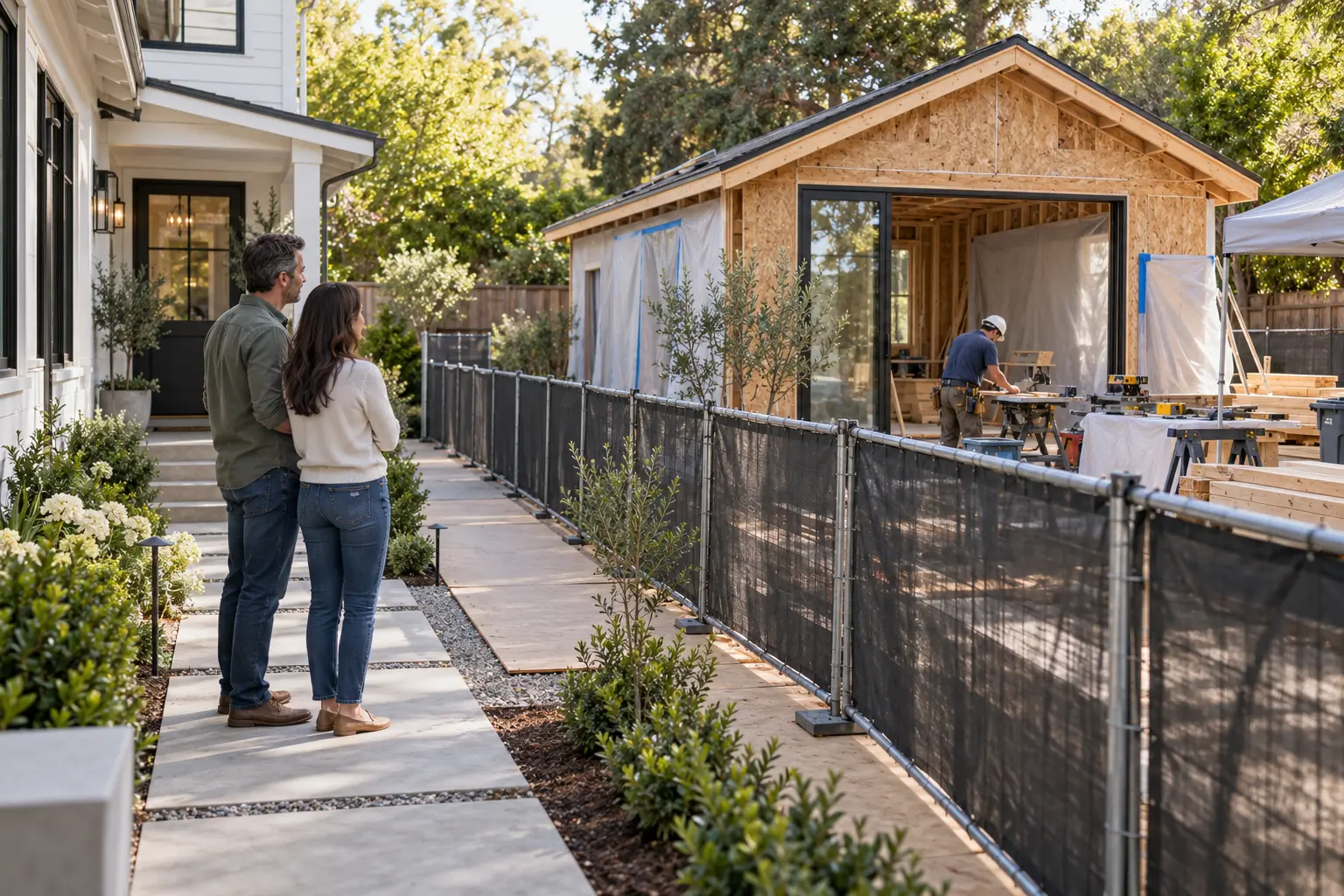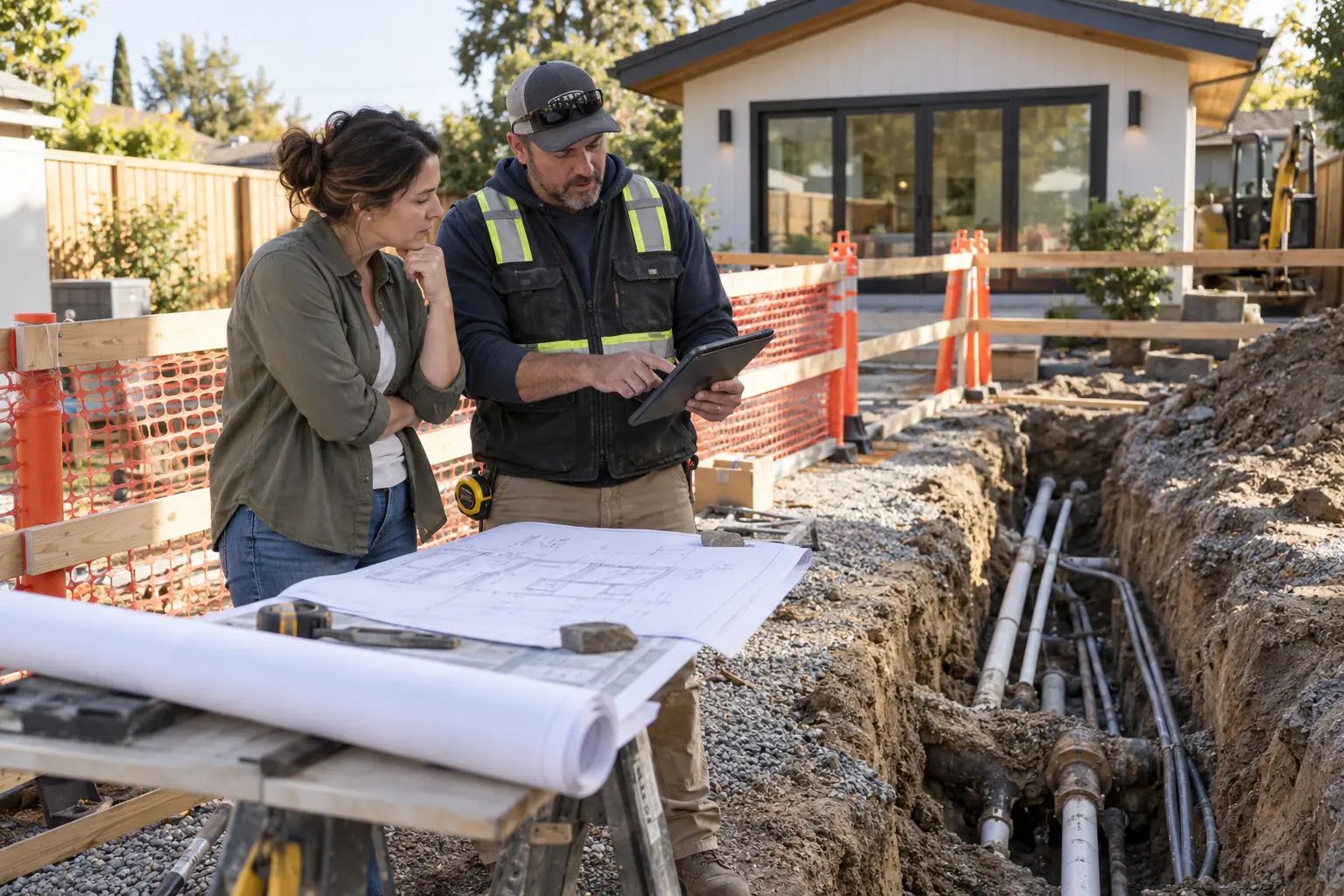
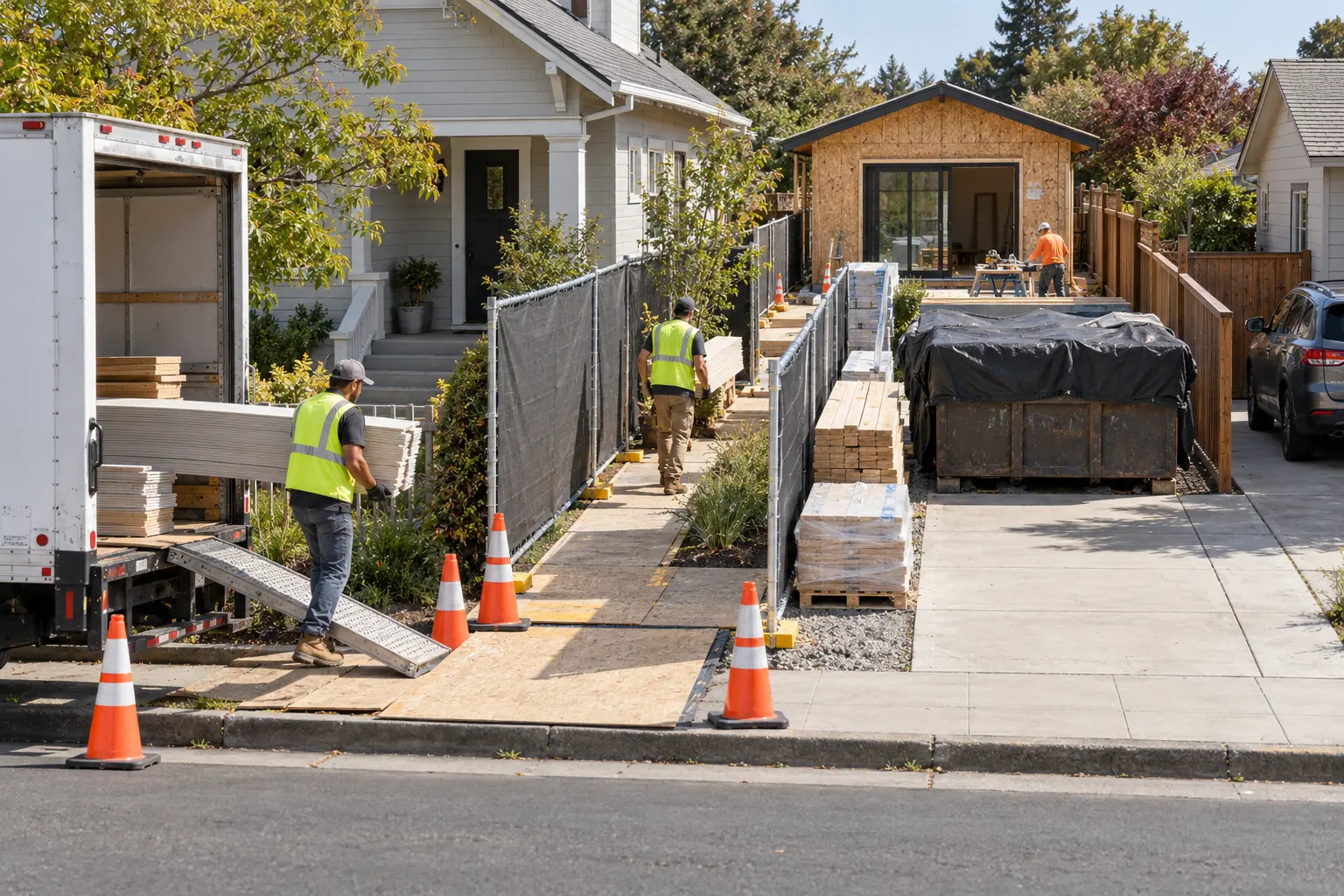
Access is a construction constraint, not an afterthought. An ADU project needs a safe route for crews, excavation, concrete, framing, deliveries, debris and utility work while protecting the main home, neighboring property and public right-of-way.
Plan Access Before the Contract Is Final
Confirm the route equipment and materials will take, the width and height restrictions, gates or fencing to be removed, and any overhead or underground obstacles. A narrow side yard can change the construction method, duration and cost.
Staging and Deliveries
Decide where materials, dumpsters, portable toilets and equipment will be placed. The plan should address street parking, driveways, sidewalks, emergency access, delivery timing and restoration of lawns, paving, fencing and irrigation.
Neighbor Impacts
Construction can affect parking, noise, dust, visual privacy and temporary access. Give neighbors a practical heads-up, avoid promises the project team cannot control, and provide a single contact path for immediate site concerns.
Foundation Tip
Walk the proposed access and staging route with the contractor before mobilization. A route that works on paper may not work once trucks, gates, slopes, utilities and occupied-home access are considered.
How Foundation Can Help
Foundation can help homeowners identify early access, staging and neighbor-impact questions so they can be addressed before construction begins. The contractor remains responsible for means, methods, safety and the site-specific logistics plan.
Important Disclaimer
This article provides general planning information, not construction-safety, permitting, traffic-control or contractor advice.
Confirm project-specific requirements with the contractor and applicable agencies.
Sources
Occupational Safety and Health Administration — Construction Safety