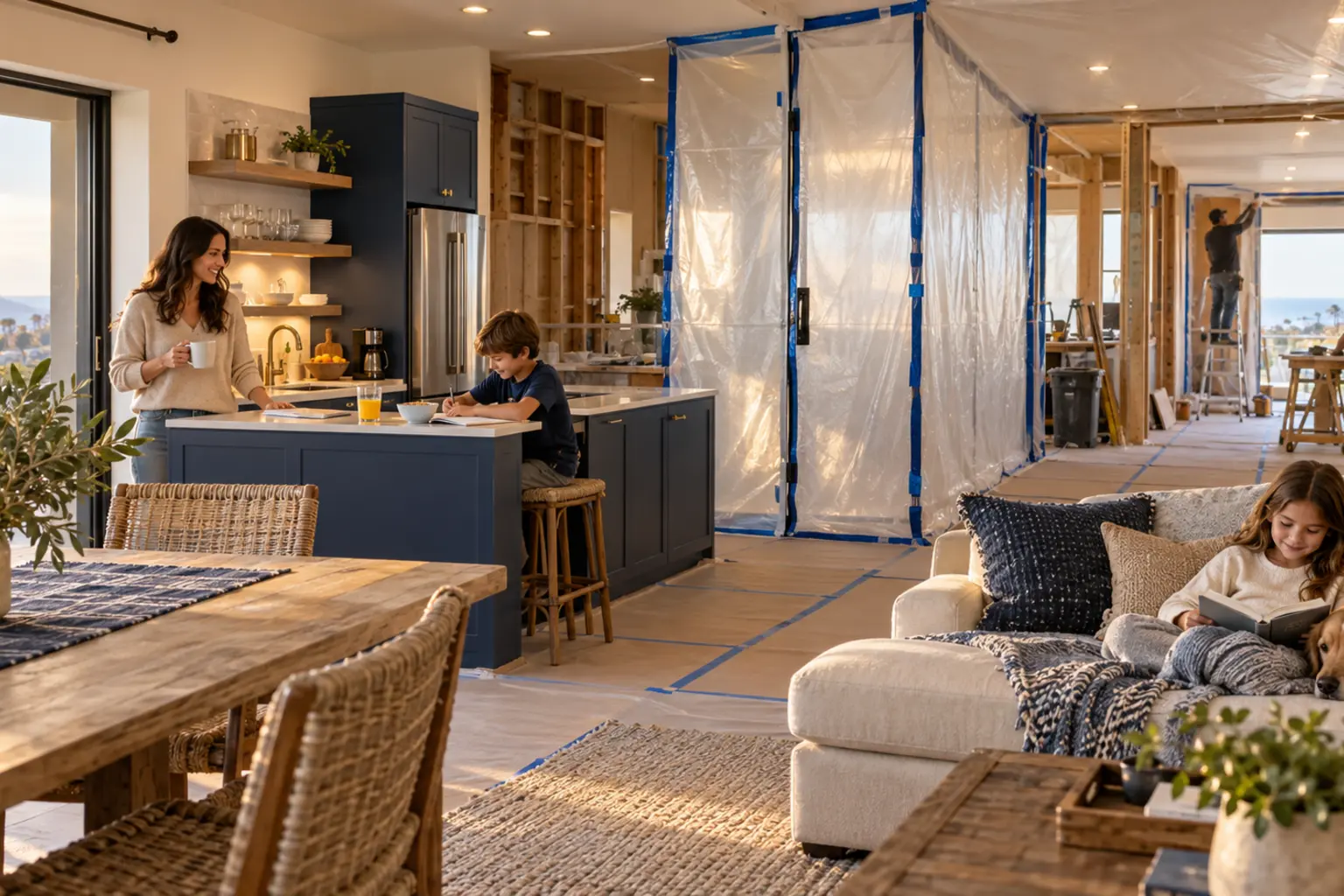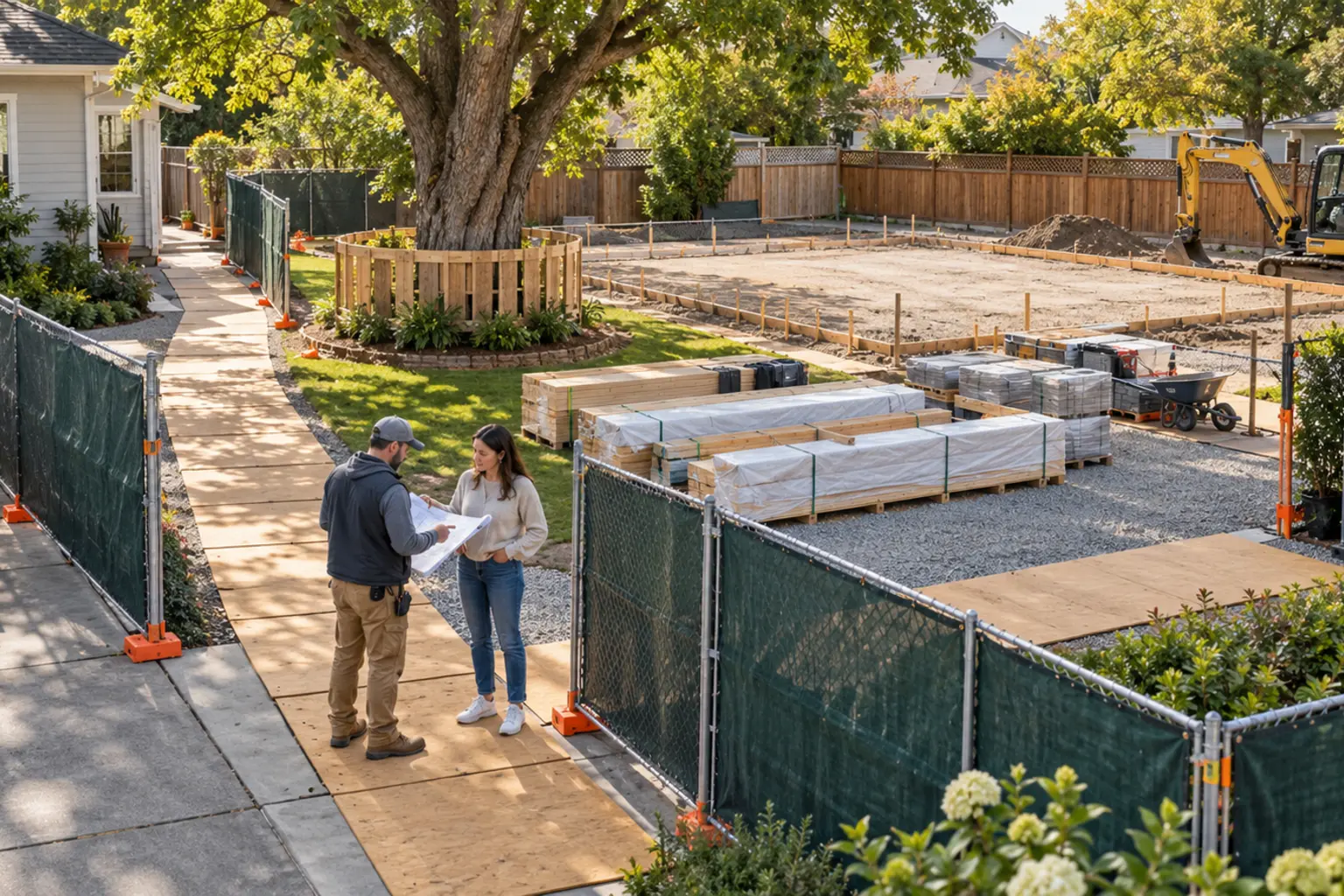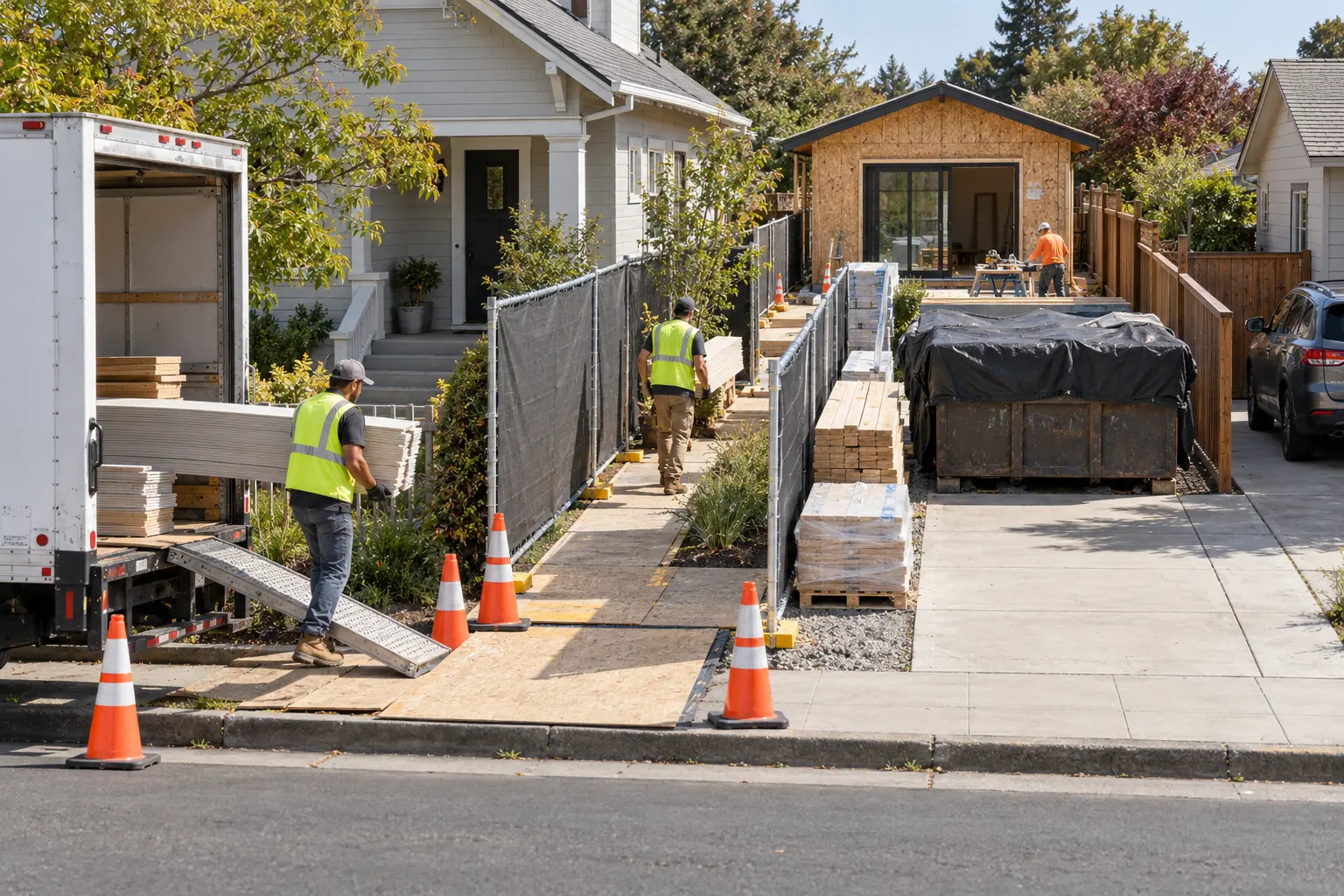
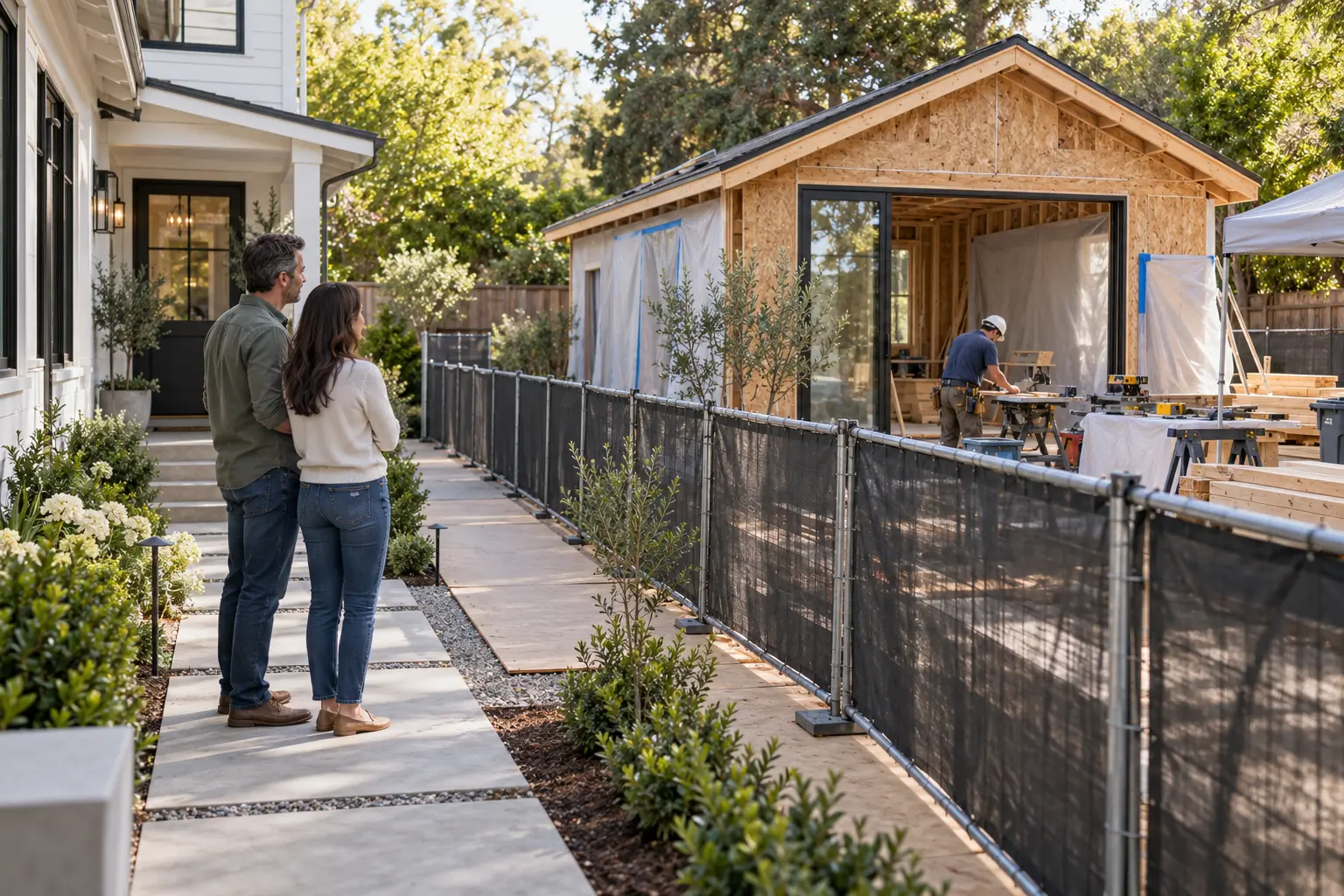
Building an ADU at home means construction is happening beside your everyday life. Even a well-run project brings noise, dust, deliveries, temporary access changes and decisions that need timely attention.
Set Expectations Before Work Begins
Ask the contractor for the anticipated sequence, normal work hours, communication method, site contact and the likely periods of greatest disruption. A project schedule is a planning tool, not a promise; weather, inspections, deliveries and unforeseen conditions can change it.
Plan Around Noise, Dust and Access
Demolition, excavation, concrete, framing and utility work are usually the loudest or most disruptive phases. Discuss dust-control measures, work-zone boundaries, access to the main home, parking, delivery windows and any temporary shutoffs.
For pets, children and visitors, establish a routine that keeps them away from active work areas and open gates.
Keep the Worksite Separate From Home Life
The contractor controls the worksite. Homeowners should not enter active areas or move materials, temporary protection or equipment without coordinating first. A defined path to the main home, secure barriers and daily cleanup expectations make a meaningful difference.
Use a Clear Communication Routine
Keep questions, selection decisions, changes and approvals in the agreed project channel. Raise concerns promptly with the designated contact, using photos and specifics where helpful. Written communication avoids confusion when several trades are active.
Prepare for Temporary Disruptions
Some work may require brief interruptions to power, water, sewer, gas, internet, parking or exterior access. Ask for notice whenever feasible and make a household plan for medical needs, remote work, pets and security.
Be a Good Neighbor During Construction
A simple heads-up to adjacent neighbors about the project, working hours and occasional access impacts is usually appreciated. The contractor should handle worksite operations, but homeowners can help reduce surprises and maintain a constructive relationship.
Foundation Tip
Choose one household point of contact and one contractor point of contact. A clear communication lane prevents small concerns from becoming unnecessary frustration.
How Foundation Can Help
Foundation can help homeowners anticipate the practical questions that affect living through construction, including access, utilities, household routines and scope clarity. The contractor remains responsible for site safety, means and methods, and construction operations.
Important Disclaimer
This article provides general planning information, not construction-safety, legal, utility or contractor advice. Confirm project-specific responsibilities with the construction team and applicable agencies.
Sources
Occupational Safety and Health Administration — Construction Safety