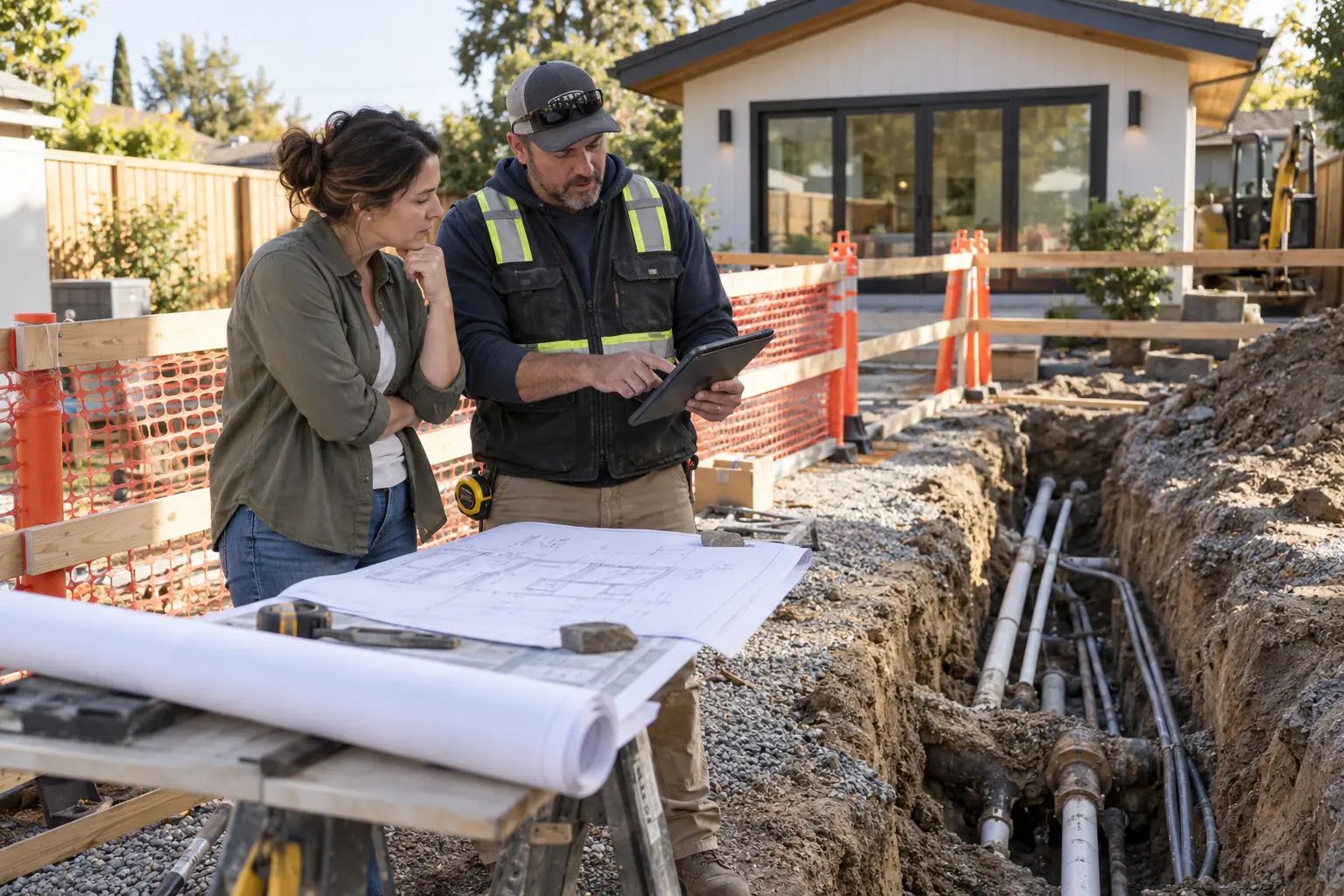
A change order is not automatically a sign that a project was poorly managed. It is the formal process for documenting a change in scope, price or time after the original agreement. The important question is whether the change was foreseeable, clearly explained and approved before the work proceeds.
Why ADU Projects Encounter Changes
ADUs often involve existing homes, backyards, buried utilities and constrained access. Conditions that are not visible during early planning can appear once demolition, excavation or utility work begins.
Common examples include:
- Unmarked or deteriorated utility lines, sewer laterals and irrigation
- Rock, unsuitable soil, groundwater or undocumented fill
- Hidden concrete, old foundations or buried debris
- Additional service upgrades, trenching or utility requirements
- Permit comments or agency requirements that change the approved scope
- Owner selections, layout changes or added work after pricing
Distinguish a Discovery From a Preference
A concealed site condition is different from an owner-driven change.
Both can affect cost and schedule, but they should be described separately. The written change should identify what changed, why it changed, the proposed solution, the price effect and any schedule impact.
Reduce Surprises Before Construction
Early investigation cannot eliminate every unknown, but it can reduce avoidable surprises. Surveys, utility investigation, site evaluation, structural and soils work where appropriate, clear equipment selections and complete scope coordination all improve the original budget.
Use a Clear Change-Order Process
Do not rely on a verbal field decision for work that changes cost or scope. A good process pauses the affected work when practical, documents the condition, provides pricing and schedule information, and receives written authorization before proceeding.
Foundation Tip
Keep a contingency in the overall ADU budget for real discoveries and owner decisions. Contingency is not permission for vague pricing; it is a practical allowance for uncertainty that remains after reasonable planning.
How Foundation Can Help
Foundation can help homeowners ask the right due-diligence and scope questions before construction so likely risk areas are visible earlier.
The contractor and project team remain responsible for the contract, site conditions and formal change-order process.
Important Disclaimer
This article provides general planning information, not legal, contractual, engineering, permitting or contractor advice. Contract language and change-order requirements should be reviewed for the specific project.
Sources
Federal Trade Commission — Hiring a Contractor