
What Is a Project Milestone?
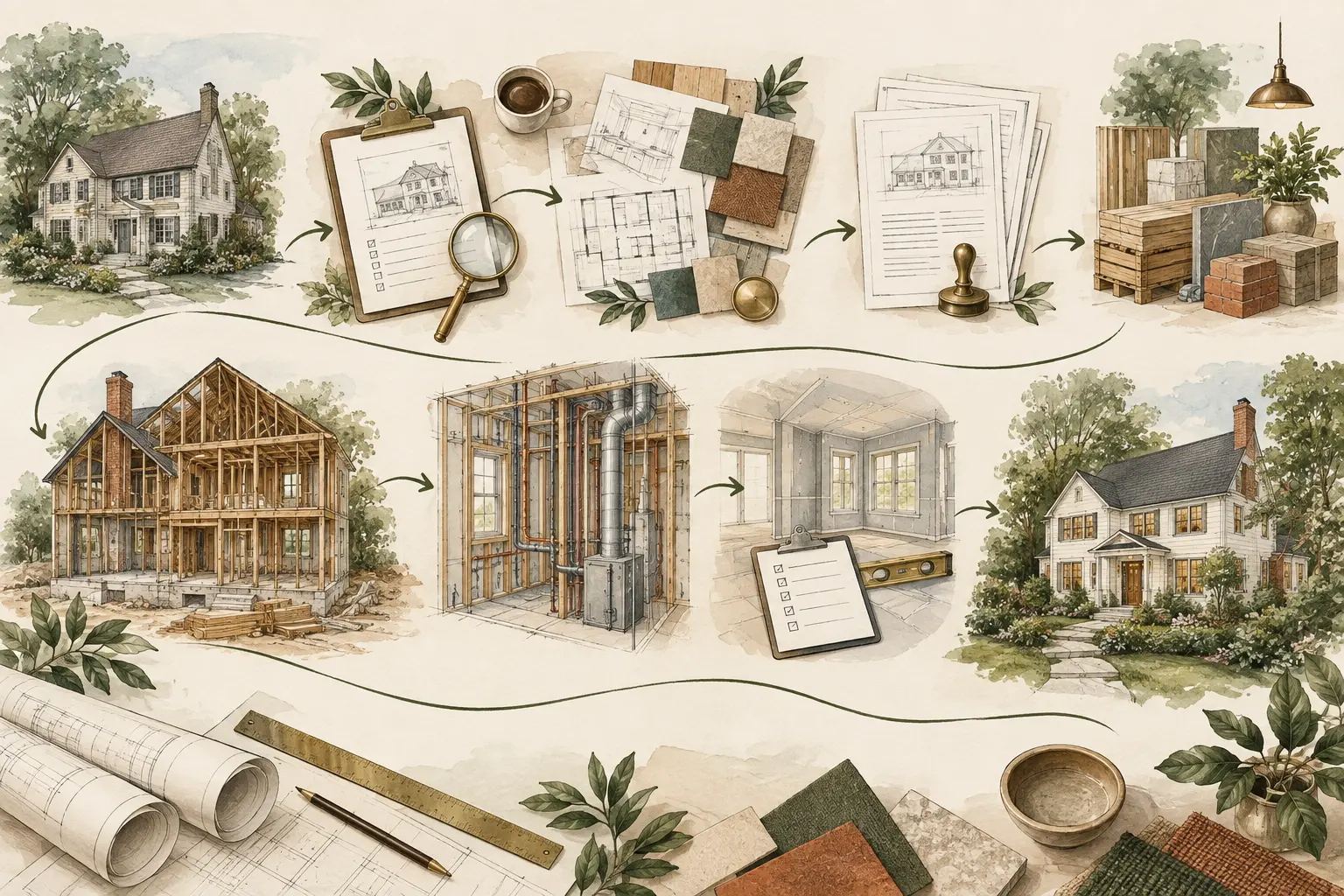
A milestone is a meaningful project checkpoint rather than a single task. It usually marks the completion of a group of related activities, an approval that allows the next stage to begin, or a transition from one type of work to another. Milestones help organize the project, but they do not replace the detailed construction schedule.
Milestones Are Different from Daily Activity
A busy jobsite can create the impression that the project is moving quickly, while a quiet day may appear to mean nothing is happening. Neither assumption is necessarily correct. Progress may depend on an inspection, shop drawing, material delivery, off-site fabrication, or curing time that is not visible in the home.
- Activity describes what is happening today.
- A schedule shows when tasks are expected to occur and how they relate.
- A milestone confirms that an important stage or approval has been reached.
- A deadline identifies when a decision, delivery, or obligation must be completed.
Typical Whole-Home Renovation Milestones
Every project is organized differently, and some stages may overlap. The following checkpoints are common examples—not a universal sequence or a substitute for the contractor's project-specific schedule.
Construction Start Permits, contracts, initial selections, access, protection, and other preconstruction requirements are sufficiently complete for work to begin.
Demolition Complete Planned removals are substantially finished and concealed conditions can be evaluated before reconstruction proceeds.
Structural and Framing Work Complete Major structural changes, wall layouts, openings, and framing are ready for the systems that will be installed inside them.
Rough Plumbing, Electrical, and HVAC Complete Pipes, wiring, ductwork, equipment connections, and other concealed systems are installed before walls are closed.
Typical Milestones, Continued
Rough Inspections Approved Required inspections are completed so insulation, drywall, or other covering work can proceed. Corrections may be required before approval.
Drywall and Interior Surfaces Complete Walls and ceilings are closed, finished, and ready for the next layers of interior work.
Cabinetry, Trim, and Built-Ins Installed Major fixed interior components are in place, allowing countertops, finish plumbing, appliances, and related work to follow.
Finish Installation Underway Tile, flooring, paint, fixtures, devices, hardware, and appliances begin transforming the project from construction space into a finished home.
Final Inspections and System Testing Required approvals and operational checks are completed before the project is ready for final turnover, subject to any remaining corrections.
Substantial Completion The home can generally be used for its intended purpose even though minor corrections, touchups, documentation, or punch-list work may remain.
Final Completion and Closeout Agreed punch-list items, closeout documents, final approvals, warranties, and other contract requirements are completed.
Why Milestones Sometimes Move
Milestone dates are planning targets based on the information available at the time. Hidden conditions, inspection corrections, material availability, design decisions, weather, scope changes, or coordination between trades can affect when a checkpoint is reached. A moved milestone does not automatically mean the project is poorly managed, but the reason and downstream effect should be communicated clearly.
Understand What Must Happen Before the Next Stage
Most milestones depend on predecessor work. Drywall cannot begin simply because the material is on site; rough systems, required testing, inspections, corrections, and insulation may need to be complete first. Asking what must happen before the next milestone often provides more useful information than asking only for a completion date.
Connect Decisions to Milestones
Many homeowner decisions have a last responsible date tied to construction progress. Plumbing fixtures may affect rough-in locations, decorative lighting may affect electrical work, and appliance specifications may affect cabinets and utilities. Ask when information is needed—not merely when the item will be installed—so decisions do not delay the milestone that depends on them.
Milestones and Payments
Some contracts connect progress payments to milestones. The payment terms should clearly describe what event triggers the payment and how completion will be verified. A milestone payment does not necessarily mean every small item in that phase is perfect or complete, but it should correspond to the contract's stated level of progress. Questions about unclear or disputed payment terms should be resolved before the payment becomes due.
Coach's Perspective
Homeowners often judge progress by what looks finished. In reality, some of the most important milestones occur while the home still looks incomplete. Approved rough inspections, properly coordinated mechanical systems, and verified dimensions may not be visually exciting, but they create the foundation for everything that follows. Focus on whether the project is completing the right work in the right order—not only on how close the rooms look to the final photographs.
Questions to Ask About Project Milestones
- What are the next two or three major milestones?
- What must be completed or approved before each one is reached?
- Which homeowner decisions or selections are tied to those milestones?
- Are any inspections, long-lead materials, or third-party approvals on the critical path?
- How will I know when a milestone is complete?
- If a milestone moves, what effect does that have on the remaining schedule?
Common Misconceptions
A quiet jobsite means the project is stalled. Progress may be occurring through inspections, fabrication, coordination, procurement, or required curing time away from the visible work area.
Reaching a milestone means every detail in that phase is finished. Minor corrections or follow-up items may remain as long as the project has satisfied the defined requirements for moving forward.
Milestone dates can never change. They are useful planning targets, but they may adjust when project conditions or dependencies change.
Foundation Tip
During each project update, ask three questions: What milestone did we just complete? What is the next milestone? What could prevent us from reaching it? Those answers usually provide a clearer picture of project health than a list of individual tasks.
Closing Thought
Project milestones turn a long renovation into understandable stages. By tracking meaningful checkpoints, the decisions tied to them, and the work required before the next phase can begin, homeowners can follow progress with greater confidence without getting lost in every daily activity.