An ADU budget should not end when construction is complete.
The finished unit may change property taxes, insurance, utility consumption, maintenance needs and the cost of operating the property. A rental ADU can also create vacancy, turnover, management and tax-reporting responsibilities; model those assumptions alongside the guide to ADU rental income, property value, and financial expectations.
These costs vary by property, jurisdiction, utility provider, use and ownership structure. The goal is not to predict one universal annual amount, but to identify the categories that belong in a realistic long-term plan.
Separate Project Costs From Ongoing Costs
Some expenses occur during design and construction, while others continue after the ADU receives final approval.
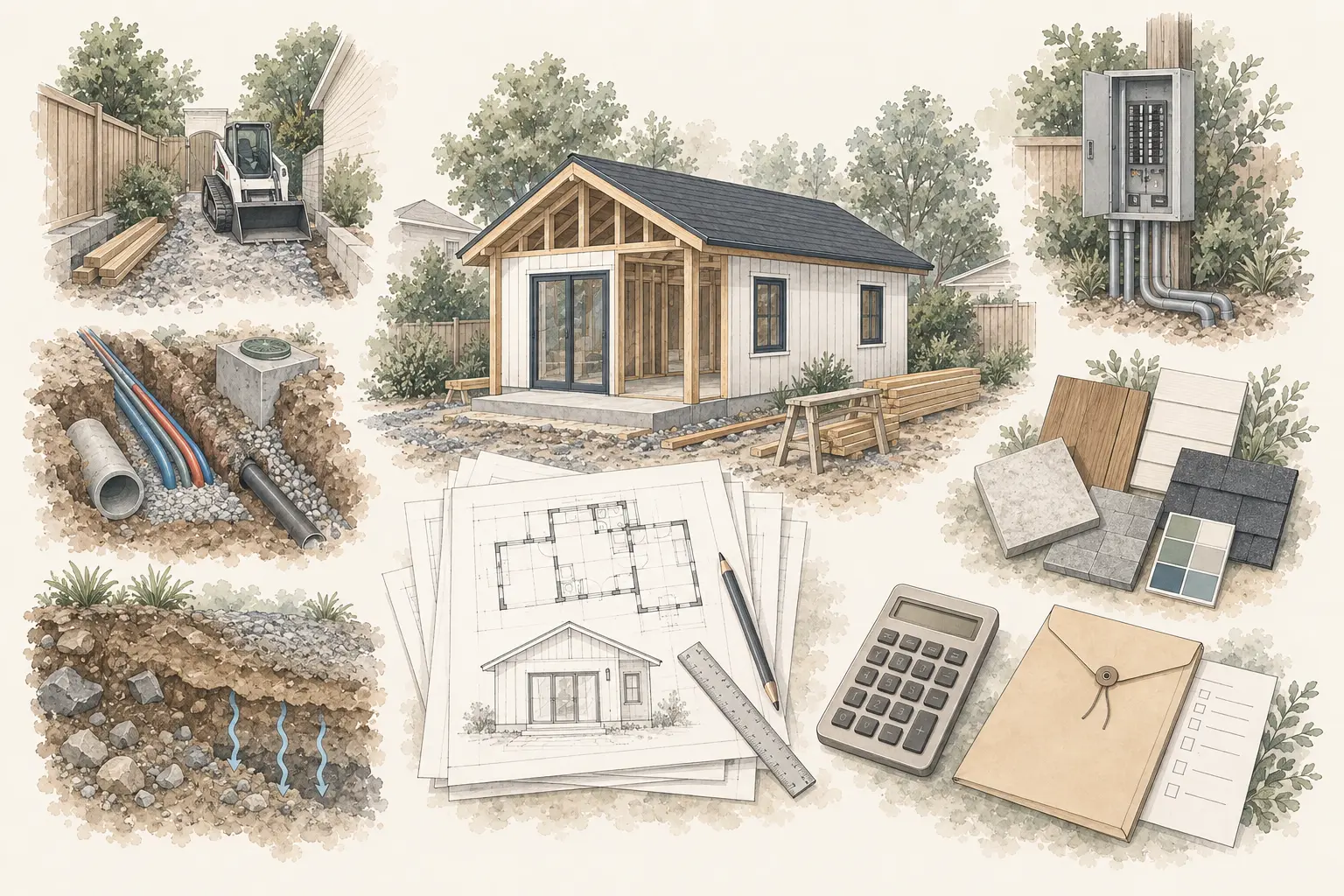
One-time or project-phase costs may include:
- Permit and plan-review fees
- Utility capacity, connection or meter fees
- Trenching, service upgrades and new utility equipment
- Impact fees when legally applicable
- Testing, inspections and commissioning
- Initial landscaping, fencing and access improvements
Ongoing costs may include:
- Property taxes and supplemental assessments
- Electricity, water, sewer, gas, trash and communications
- Insurance premiums and liability coverage
- Routine maintenance and repairs
- Replacement reserves for major systems and finishes
- Landscaping, pest control and shared-site upkeep
- Rental management, vacancy and turnover costs
- Accounting, legal and compliance expenses
- Loan payments and financing-related costs
Do not treat a connection fee paid during construction as an annual utility cost, or omit an annual expense because the first bill arrives after the project is finished.
Property Taxes May Increase After Construction
An ADU can create new taxable value even when the remainder of the property is not reassessed.
In California, completion of new construction can produce a supplemental assessment based on the increase in assessed value attributable to the work. The San Diego County Assessor explains that the supplemental value is generally the difference between the prior assessed value and the new assessment, prorated for the remaining portion of the fiscal year.
Construction cost, market evidence, project characteristics and the assessor’s rules can influence the added assessed value. The amount spent on the ADU does not automatically equal the amount added to the assessment.
A homeowner may receive both a supplemental tax bill and a later increase in the regular annual property-tax bill. Build room for both rather than assuming the tax change will appear only once.
Ask the local assessor:
- When the project is considered complete for assessment purposes
- How unfinished construction is treated at the annual lien date
- How the added value will be determined
- When a supplemental assessment may be issued
- How to review or appeal the assessed value
- Whether any property-specific exclusion may apply
Utility Consumption Can Change More Than Expected
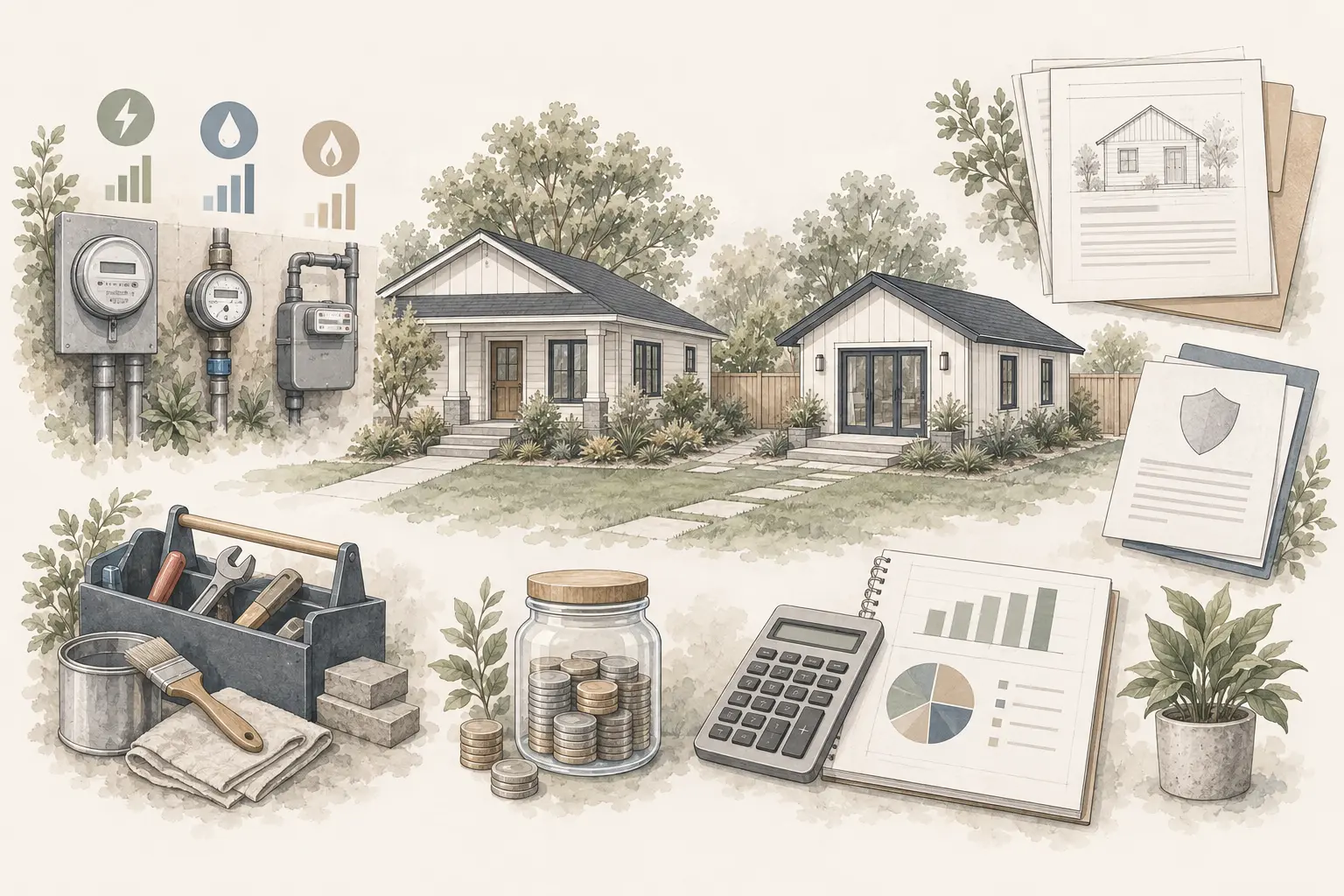
A second dwelling adds occupants, appliances, lighting, heating, cooling and hot-water demand. Outdoor lighting, irrigation, pumps, electric-vehicle charging or shared laundry can add further consumption.
Estimate usage by reviewing the proposed equipment and likely occupancy rather than applying a simple percentage to the main home’s current bills.
Important questions include:
- Will the ADU use electric or gas space heating and water heating?
- Will it have its own laundry equipment?
- How efficient are the windows, insulation, appliances and mechanical systems?
- Will solar generation or battery storage serve one dwelling or both?
- Will the main electrical service require a higher capacity?
- Could higher total consumption place the property in a different rate tier or plan?
- Who will pay for shared outdoor, irrigation or common-area usage?
Utility rates and billing structures change. Confirm current tariffs, fixed charges, seasonal pricing and service rules directly with each provider.
Owner-Paid and Tenant-Paid Utilities Affect Rent Differently
For a rental ADU, the lease structure should clearly identify which utilities are included in rent and which are paid directly or reimbursed by the tenant.
Including utilities can simplify marketing and billing, but the owner carries the risk of unexpected consumption and rate increases. Separate tenant billing can provide a clearer price signal but may require separate service or a lawful, understandable allocation method.
Do not compare an all-utilities-included rent with a comparable property where the tenant pays every utility without adjusting the analysis.
Insurance Should Be Reviewed Before Occupancy
An ADU changes the improvements, occupancy and potential liability exposure on the property. A standard homeowners policy should not be assumed to cover every new condition automatically.
Notify the insurance professional before construction begins and again before the unit is occupied or rented. The carrier may need updated construction value, square footage, use, rental status and information about fire protection, access or detached structures.
Discuss:
- Dwelling and other-structure limits
- Replacement-cost assumptions
- Owner-occupied, family-use and tenant-occupied scenarios
- Landlord or rental-property endorsements
- Loss-of-rent or fair-rental-value coverage
- Personal liability and umbrella limits
- Coverage during construction and after completion
- Flood, wildfire, earthquake or other location-specific risks
- Whether tenants should carry renters insurance
Coverage, exclusions and underwriting rules vary by carrier and property. Obtain written confirmation from a qualified insurance professional.
Maintenance Is an Operating Cost, Not a Surprise
A new ADU may require little repair work initially, but every building component has a service life.
Routine maintenance may include:
- Heating and cooling service
- Water-heater maintenance
- Roof, gutter and drainage inspection
- Sealant, paint and exterior-finish upkeep
- Plumbing leak checks
- Appliance repair
- Smoke and carbon-monoxide alarm replacement
- Pest control
- Landscape and irrigation maintenance
- Cleaning of shared walks, yards and trash areas
Keep warranty information, product manuals, paint colors, finish schedules, permits, inspection records and contractor contacts in an organized property file.
Create a Replacement Reserve
A replacement reserve is money set aside for predictable but irregular expenses that do not occur every month.
Potential future replacements include:
- Roofing and waterproofing
- Heating and cooling equipment
- Water heater
- Major appliances
- Flooring and interior paint
- Windows and exterior doors
- Electrical or plumbing equipment
- Fencing, gates, paving and drainage components
A reserve should reflect the expected service life and replacement cost of the actual systems installed. A low-maintenance design can reduce future obligations, but it does not eliminate them.
Rental ADUs Have Additional Operating Expenses
Gross rent is not the same as net income. A rental model should subtract the costs of keeping the unit legally, physically and financially operational.
Possible rental expenses include:
- Vacancy allowance
- Advertising and tenant screening
- Leasing or property-management fees
- Cleaning and repairs between tenants
- Lock changes and security updates
- Legal and accounting services
- Licensing, registration or inspection fees when applicable
- Utilities paid by the owner
- Insurance and property-tax increases
- Replacement reserves
- Uncollected rent or payment delays
Turnover can create several costs at once while income stops. Maintain cash reserves that do not depend on the next tenant moving in immediately.
Rental Income Can Create Tax and Recordkeeping Obligations
The Internal Revenue Service generally treats residential rent as taxable income and provides rules for rental expenses, depreciation and mixed personal and rental use.
Costs such as maintenance, insurance, taxes, interest, utilities and professional services may receive different tax treatment depending on the facts. Construction and improvement costs may need to be capitalized and recovered over time rather than deducted immediately.
Personal use, below-market family arrangements, shared expenses and changes in use can complicate the analysis.
Keep records for:
- Construction and improvement costs
- Financing and closing costs
- Rent collected and deposits received
- Utility and operating payments
- Repairs and maintenance
- Insurance and property taxes
- Dates the unit is available, rented or used personally
- Professional and management fees
- Major replacements and capital improvements
Foundation Renovation Coaching does not provide tax advice. Review the property’s intended use and recordkeeping system with a qualified tax professional before relying on deductions or projected after-tax income.
Financing Payments Are Separate From Operating Performance
Loan principal and interest affect household cash flow, but they are not the same as the ADU’s physical operating expenses.
Track at least three views:
- Property operations before financing
- Debt payments and financing costs
- Total household cash flow after financing
Keeping these views separate helps a homeowner understand whether the unit is expensive to operate, expensive to finance or both.
Local Fees and Requirements Can Continue After Completion
Depending on the location and use, continuing charges may include trash service, sewer charges, stormwater or special assessments, rental registration, inspection programs or business-related fees.
A legally built ADU does not automatically authorize every rental type. Long-term and short-term rentals may be treated differently, and some jurisdictions restrict or regulate short-term use.
Verify current requirements with the local planning, building, tax, utility and rental-housing authorities.
Build an Annual ADU Operating Budget
Create a twelve-month budget that does not rely on perfect occupancy or unchanged prices.
Include:
- Property-tax increase and possible supplemental bill
- Insurance increase
- Owner-paid utilities and fixed service charges
- Routine maintenance
- Replacement reserve
- Landscaping and pest control
- Management, accounting and compliance expenses
- Vacancy and turnover allowance
- Loan payments in a separate financing section
- A contingency for unplanned operating costs
Test a base case and a more conservative case. The conservative case might use lower rent, higher utilities, a repair event or a period of vacancy.
Questions to Ask Before Finalizing the Plan
- What expenses begin during construction and continue after completion?
- What added assessed value should be included in the property-tax estimate?
- Will any supplemental tax bill arrive before the regular annual increase?
- Which utilities will be shared, separately metered or included in rent?
- What fixed monthly charges apply even when the ADU is vacant?
- How will insurance change for family use, owner occupancy or rental use?
- How much should be reserved for maintenance, turnover and replacement?
- What records will the tax professional need?
- What happens to the household budget if rent is lower or expenses are higher than expected?
Foundation Tip
Treat the ADU as a small building and, when rented, a small operating business. Build the annual ownership budget before committing to a construction budget.
How Foundation Can Help
Foundation Renovation Coaching helps homeowners identify and organize the decisions that should be made before professional design, financing and construction.
For an ADU project, Foundation can help homeowners:
- Separate one-time project costs from recurring ownership costs
- Build a preliminary annual operating-cost framework
- Compare shared and separate utility strategies at a planning level
- Identify questions for utility providers, assessors, insurers and tax professionals
- Test conservative rental and household cash-flow scenarios
- Review proposals for omitted utility, site and closeout scope
- Coordinate the operating assumptions with the project budget and long-term goals
Foundation does not provide tax, legal, insurance, utility-engineering, appraisal or investment advice. Property-specific conclusions should be confirmed with the appropriate agencies and qualified professionals.
The Best Time to Plan Operating Costs Is Before Design Is Final
Meter locations, mechanical systems, appliance choices, landscape design, durability and rental configuration can all affect future expenses.
Early decisions may determine whether the property is easy to bill, maintain, insure and operate for years. A complete plan considers both the cost to build the ADU and the cost to own it.
Financial and Jurisdiction Note
Taxes, utility rates, insurance requirements, rental rules and accounting treatment change over time and vary by property and location.
Verify current requirements with the relevant assessor, tax collector, utility providers, insurers, local agencies and qualified tax or legal professionals.