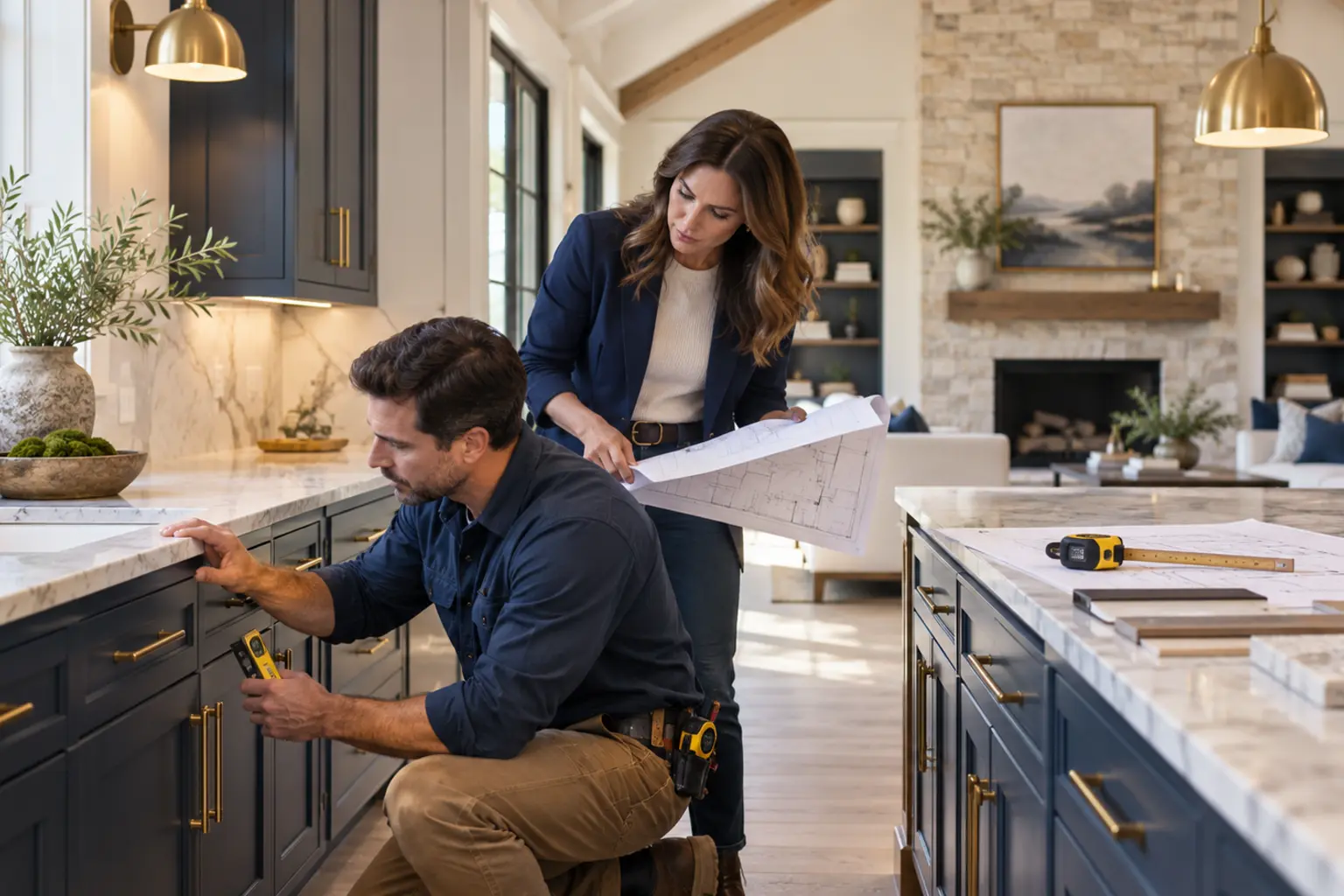

What Is the Final Walkthrough?
The final walkthrough is a scheduled review of the project when the work is substantially complete and the home can generally be used for its intended purpose. The homeowner and appropriate project representative observe the completed spaces, operate visible components, identify incomplete or deficient items, and confirm questions that must be resolved before closeout.
Substantial Completion Is Not Perfection
A project may be substantially complete even though minor corrections, touchups, documentation, or punch-list work remain. The meaning and consequences of substantial completion should come from the construction contract. It may affect occupancy, responsibility for utilities or security, warranties, insurance, retainage, and payment timing, so confirm the applicable terms before the walkthrough.
Confirm the Project Is Ready
A walkthrough is most useful when the contractor has completed an internal review and the home is clean, accessible, illuminated, and safe to examine. Repeatedly walking obviously incomplete spaces wastes time and makes meaningful details harder to see. Before scheduling, ask whether:
- Major contracted work is complete and permanent finishes are installed.
- Required inspections and known corrections are complete or clearly identified.
- Plumbing, electrical, HVAC, appliances, controls, and other systems can be operated.
- Construction debris and temporary protection have been removed where review is needed.
- Open change decisions and scope questions have been resolved or separated from walkthrough items.
- The contractor has completed a preliminary quality review and prepared known-item records.
Prepare Before You Arrive
- Review the contract scope, approved plans, specifications, selections, samples, and change orders.
- Bring prior concern lists and note which items were already corrected or remain open.
- Ask who will attend, how much time is reserved, and how observations will be recorded.
- Bring a phone or camera, notepad, charger, and any access information needed to test equipment.
- Wear practical clothing and shoes; do not bring children or pets into an active work area.
Use a Consistent Review Method
Move through the home in an agreed order—room by room, exterior to interior, or system by system. Finish one area before moving to the next so items are not duplicated or forgotten. Look from normal viewing positions and under normal lighting unless a contract requirement calls for a specialized test or tolerance.
Observe, Operate, and Ask
Observe Compare visible work with approved selections and details. Look for incomplete work, damage, alignment concerns, missing components, inconsistent finishes, and areas that need cleaning or touchup.
Operate Open doors, drawers, windows, and accessible hardware. Test lights, outlets where appropriate, plumbing fixtures, appliances, thermostats, fans, and controls with the contractor's guidance.
Ask Request an explanation when a condition may be incomplete, intentionally designed, within an accepted tolerance, or dependent on future work. Avoid deciding the cause or directing the repair during the walkthrough.
Review More Than Appearance
Finish details are easy to see, but operation and completeness also matter. Confirm that fixtures and equipment function, doors and drawers clear adjacent surfaces, controls are labeled, accessories are installed, and required safety devices are present. Specialized system testing, commissioning, code inspection, or professional review should occur separately when required; a homeowner walkthrough does not replace those services.
Document Observations Clearly
Each observation should identify a specific location and condition. Use room names, photographs, plan references, or numbered markers when helpful. “Paint issue in bedroom” is vague; “north bedroom, east wall near window: visible roller mark under normal room lighting” is easier to evaluate and assign. Record the observation first, then allow the responsible party to determine the corrective action.
Distinguish Types of Walkthrough Items
- Incomplete work: a contracted component or final step has not been completed.
- Deficiency or damage: completed work may not meet the agreed requirement.
- Question: clarification is needed before deciding whether action is required.
- New request: desired work was not included in the approved scope and belongs in the change process.
Prioritize Safety and Function
Identify safety, active water intrusion, security, sanitation, or essential-system issues immediately. Cosmetic and touchup items still matter, but may follow a different correction sequence; not every observation is an emergency.
Keep the Walkthrough Productive
- Reserve enough uninterrupted time and avoid stacking other appointments around the review.
- Use one person or agreed method to record items so there is a single working list.
- Stay with the review sequence instead of debating every repair method in the room.
- Describe observable conditions and reference the agreed standard when known.
- Separate incomplete or deficient work from preferences and new scope requests.
- Confirm the next communication step before leaving the site.
Coach's Perspective
The final walkthrough can feel emotional because it is the first time many homeowners see the project as a finished home. Slow down and use a repeatable method. Do not ignore a meaningful concern because the project is almost over, but do not let one small imperfection derail the entire review. Capture the observation, finish the walkthrough, and evaluate the response through the agreed process.
Questions to Ask Before the Walkthrough
- What milestone or contract event does this walkthrough represent?
- Has the contractor completed an internal review, and are known items already documented?
- Which inspections, tests, startups, or professional reviews are complete?
- Who should attend, and who has authority to accept or assign observations?
- How will items be recorded, confirmed, and communicated after the walkthrough?
- Are any payment, occupancy, warranty, or responsibility dates tied to this event?
Common Misconceptions
The final walkthrough means the project is completely finished. The project may be substantially complete while minor corrections, documentation, approvals, or closeout requirements remain.
Every visible imperfection is automatically defective work. Acceptance depends on the contract, approved documents, agreed samples, material characteristics, tolerances, and whether the work is actually complete.
The walkthrough is the homeowner's only chance to report a concern. Contract notice, correction, warranty, and claim provisions govern later issues. Homeowners should report concerns promptly rather than relying on a single event.
Foundation Tip
Ask for the contractor's pre-walk list before the final walkthrough. Reviewing already identified items lets everyone spend the scheduled time confirming the overall result and finding what the first review may have missed.
Closing Thought
A successful final walkthrough is organized, objective, and unhurried. When the home is ready, expectations are defined, and observations are documented clearly, the walkthrough becomes a useful bridge from active construction to correction, closeout, and occupancy.