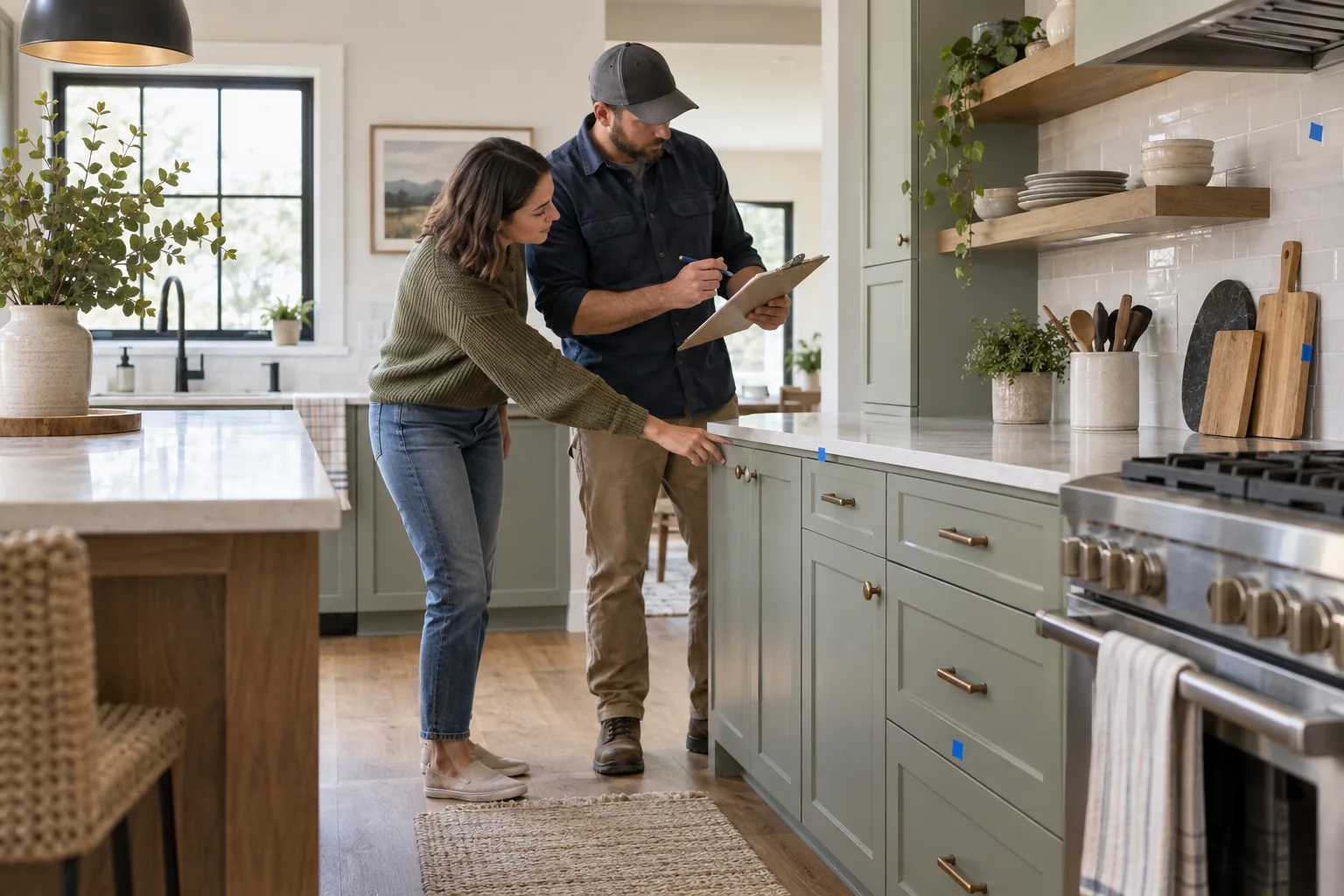

Treat Reoccupancy as a Project Milestone
A contractor's departure, substantial completion, final inspection, and homeowner move-in may occur on different dates. Confirm which milestone the contract and local authority require before occupying the home. Do not schedule movers solely from an optimistic construction date; use a confirmed readiness decision with appropriate contingency.
Confirm the Home Is Ready for Daily Use
Before returning, walk through the entire home from the perspective of normal daily life. The goal is not necessarily that every minor punch-list item is finished, but that remaining work can occur safely without disrupting essential use or damaging completed areas.
- Required occupancy approvals and critical inspections are complete.
- Doors, windows, stairs, guards, locks, alarms, and exterior access are secure.
- Water, drainage, electrical service, lighting, HVAC, and ventilation operate as intended.
- At least the necessary kitchen, bathing, laundry, and sanitation functions are available.
- Construction debris, hazardous materials, sharp objects, and major dust sources are removed.
- Remaining work areas are separated, scheduled, and compatible with occupancy.
Complete Cleaning Before Furnishings Arrive
Whole-home construction dust can migrate into cabinets, closets, ducts, fixtures, and concealed ledges. Clarify the contractor's cleaning scope and whether a separate post-construction cleaning is needed. Complete dust-generating corrections first whenever practical, then clean from high surfaces downward before rugs, window treatments, clothing, and upholstered furniture return.
Sequence the Move-In
Avoid treating move-in as one large delivery. A phased return gives the household room to verify access, identify missing components, and protect newly finished surfaces.
- Confirm access, parking, elevator, gate, and delivery restrictions.
- Install protective pathways appropriate for new floors and stairs.
- Complete final measurements before ordering or delivering tight-fitting furnishings.
- Bring essential beds, seating, kitchen items, and personal necessities first.
- Place major furniture before filling cabinets, closets, and storage areas.
- Remove protection promptly when it could trap moisture, dirt, or grit.
Learn the Whole-Home Systems
A whole-home renovation may change nearly every system. Complete training before the project team leaves, and record demonstrations when permitted. Every adult should know essential shutoffs and emergency steps.
- Main and local water shutoffs, electrical panel, gas controls, and emergency disconnects.
- HVAC zones, thermostats, ventilation, filtration, and condensate maintenance.
- Water heating, recirculation, leak detection, sump, irrigation, or filtration systems.
- Lighting controls, dimmers, shades, security, networking, audio, and smart-home systems.
- Appliance startup, special operating requirements, and required initial cleaning cycles.
Set Up Access and Digital Ownership
Transfer keys, remotes, alarm information, device accounts, administrator rights, and network credentials. Replace temporary construction codes, remove unnecessary access, and store recovery information securely.
Expect a Period of Adjustment
A redesigned home changes circulation, storage, lighting, acoustics, temperatures, and routines. Live in the spaces before making unnecessary modifications; the right adjustment may become clearer after several weeks.
Watch How the Entire Home Performs
Whole-home projects connect many rooms and systems. Observe patterns in temperature, drainage, doors, lighting, ventilation, unusual odors or sounds, and finish performance. Promptly report safety, leakage, electrical, security, or increasing-damage concerns.
Keep Three Different Lists
Outstanding Contract Work Accepted punch-list or closeout items that remain the project team's responsibility.
Possible Service or Warranty Concerns New symptoms that should be documented and evaluated through the applicable process.
Household Preferences Furniture changes, organization ideas, control adjustments, or added work discovered through daily use.
Separating these lists prevents personal preferences from obscuring legitimate completion or service issues and makes communication easier for everyone.
Schedule a Post-Occupancy Review
After the household has used the major spaces and systems, review open items, recurring observations, training questions, documentation gaps, and needed adjustments. Follow contract and warranty timing; a later review never replaces prompt notice of urgent concerns.
A Practical Reoccupancy Sequence
- Confirm approvals, essential systems, security, sanitation, and safe access.
- Agree on how remaining work will be completed around an occupied home.
- Finish dust-producing work and complete post-construction cleaning.
- Receive system training, closeout records, keys, controls, and digital access.
- Protect finished surfaces and coordinate deliveries in a deliberate order.
- Move in essentials first, then furniture, storage contents, and decorative items.
- Observe the whole home's performance and document concerns factually.
- Complete a post-occupancy review and organize future adjustments separately.
Coach's Perspective
Homeowners understandably want to return as soon as the house looks finished, but visual completion is only one part of readiness. An organized move-in is often less disruptive than working around cleaners, technicians, incomplete controls, and repeated deliveries. Give the transition the same attention as the construction schedule.
Questions to Ask Before Moving Back
- Is occupancy permitted, and are the home's essential functions dependable?
- Which items will remain open after move-in, and how will access be coordinated?
- Has the home received the level of cleaning needed before belongings return?
- Do we understand shutoffs, controls, maintenance requirements, and emergency steps?
- Have all keys, codes, accounts, manuals, warranties, and records been transferred?
- How will finished surfaces be protected during deliveries and installation?
- When will we review post-occupancy observations with the appropriate parties?
Common Misconceptions
If the house looks finished, it is ready for move-in. Readiness also depends on approvals, safe access, essential systems, cleaning, security, and the status of remaining work.
Everything must be unpacked immediately. A phased move-in provides room to verify systems, complete small corrections, and learn how the redesigned home functions.
Every concern noticed after move-in is a warranty problem. Some observations are open contract items, some require service evaluation, and others are household preferences or added scope.
Foundation Tip
Create a first-week folder with emergency contacts, shutoff locations, access information, system instructions, the open-item list, and space for observations. Keep it easy to reach until the household is comfortable operating the entire home.
Closing Thought
Moving back is when the plans become daily life. A deliberate return protects the work, builds confidence in the home's systems, and creates time to settle in before deciding what—if anything—still needs to change.