
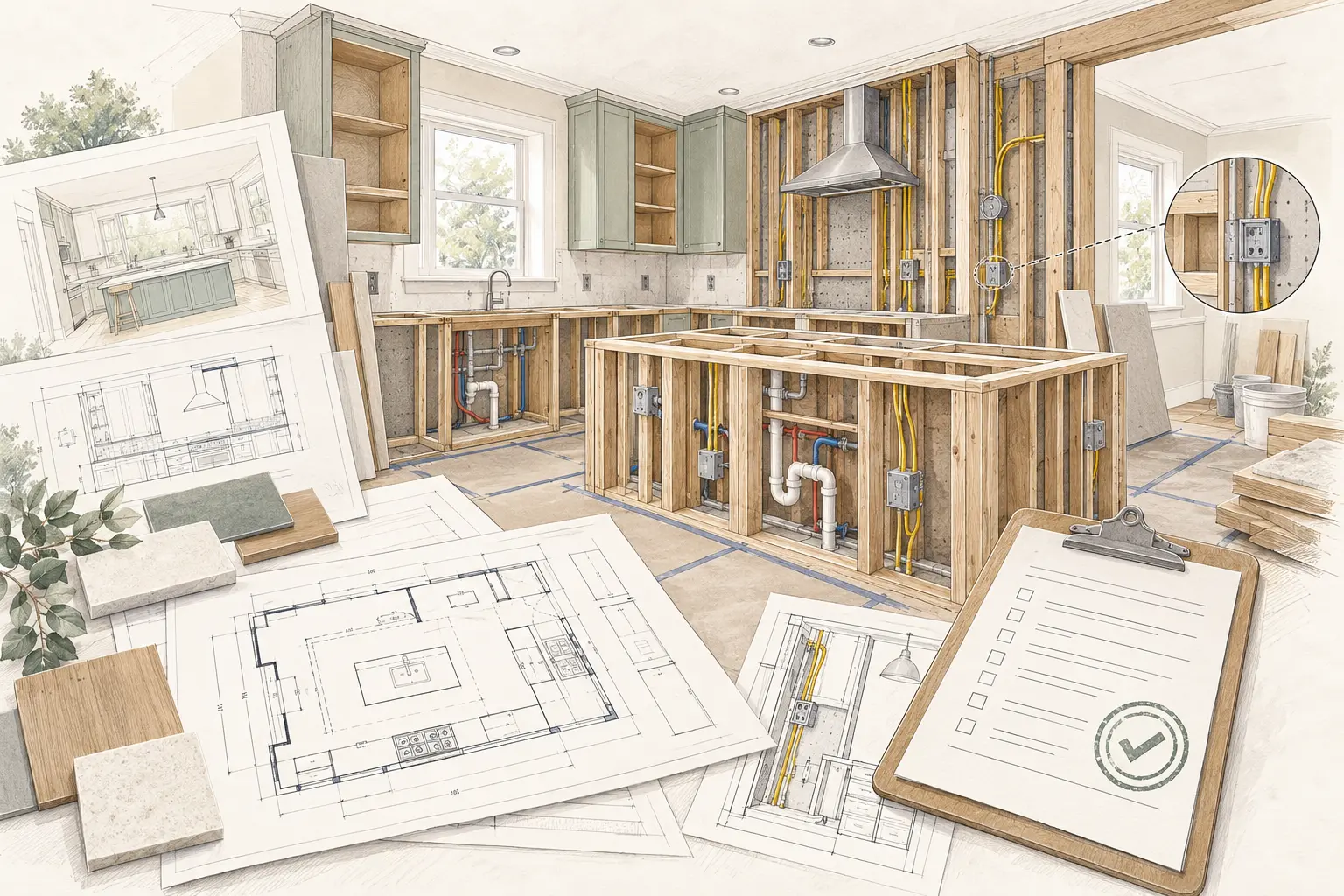
Why Permits Matter
Many homeowners view permits as an unnecessary obstacle, but their primary purpose is to help ensure that work meets applicable building, electrical, plumbing, and mechanical safety requirements.
Permits also create a record of approved work, which can be valuable when selling a home, filing insurance claims, or planning future renovations.
A well-managed permitting process should be viewed as part of a successful renovation—not simply another administrative task.
Key Factors to Consider
- Local Requirements: Permit requirements vary by city, county, and state.
- Scope of Work: Replacing finishes may have different requirements than relocating plumbing, electrical, or walls.
- Project Timeline: Permit review and inspections can affect the construction schedule.
- Contractor Responsibilities: Clarify who is responsible for obtaining permits and scheduling inspections.
- Cost: Permit fees are typically a small portion of the overall renovation budget but should be planned for.
- Future Home Sales: Properly permitted work may simplify future disclosures and transactions.
- Safety: Inspections help verify that critical systems have been installed correctly.
Common Inspections During a Kitchen Renovation
Building Inspection
May review framing or structural modifications.
Electrical Inspection
Reviews new circuits, wiring, outlets, and electrical safety.
Plumbing Inspection
Checks water supply, drain, and vent installations when plumbing is modified.
Mechanical Inspection
May review ventilation ducting or HVAC work associated with the remodel.
Final Inspection
Confirms the completed work complies with the approved permit before the project is closed.
Questions Your Contractor May Ask
- Will walls be removed or modified?
- Are plumbing fixtures or appliances being relocated?
- Will new electrical circuits or lighting be added?
- Is the ventilation system being changed?
- Has previous work in the kitchen been permitted?
- Does your homeowners association have additional approval requirements?
Looking Beyond the Permit
A permit is only one part of a successful renovation. Good planning, quality workmanship, clear communication, and proper project management remain just as important. While inspections provide valuable oversight, they are not a substitute for selecting qualified professionals and maintaining realistic expectations throughout the project.
Common Misconceptions
Permits are only a way to collect fees. Permit fees help fund the review and inspection process, whose primary purpose is public safety and code compliance.
Every kitchen remodel requires the same permits. Requirements depend on the location and the scope of work. Similar-looking projects may require different approvals.
If I hire a contractor, I don't need to ask about permits. Homeowners should understand which permits are required, who is obtaining them, and how inspections will be handled.
An inspection guarantees perfect workmanship. Inspectors verify compliance with applicable codes, but they do not evaluate every aspect of craftsmanship or project quality.
Skipping permits saves money. Avoiding permits can create problems during future home sales, insurance claims, or when correcting unapproved work.
Foundation Tip
Early in the planning process, ask your contractor what permits are expected, who will obtain them, how inspections will be scheduled, and whether permit review could affect the project timeline. Understanding the process before construction begins helps reduce surprises later. Confirm the permit and inspection requirements for your project with your local building department and qualified project team before construction begins.
Closing Thought
Permits and inspections are an important part of many kitchen renovations. While they may add time and administrative steps to a project, they also provide oversight that helps protect your home, your investment, and the people who will use the space for years to come.